Russian retailers are winning pricing power in a weak consumer market by pushing more own-brand products, a shift that is lifting sales faster than the broader grocery and household goods market and giving chains a margin buffer at a time when discretionary demand is under pressure.
Russian grocers boost private-label sales in weak market

Sales of products sold under retail chain brands and in-house production rose 9% in volume terms in the first half of 2026, while revenue climbed 14%, according to NTech. That comfortably outpaced the overall retail market, where sales increased just 2.1% by volume and 6.4% in value. The private-label and own-production share of retail turnover also edged higher, showing that the gain is not a one-off trade-down effect but a structural reallocation of basket share toward cheaper, retailer-controlled goods.
That matters because private-label products are the cleanest way for supermarkets to defend profitability when shoppers are becoming more value-conscious. Retail chains typically capture better economics on these items than on branded goods from manufacturers, with industry participants saying gross margin can be 5 to 10 percentage points higher. One consultant put average gross margin at about 35% for private label versus 26% for third-party brands, a spread that can meaningfully support earnings even when traffic is flat.
The beneficiaries are easy to identify. X5, the operator of Pyaterochka, Perekrestok and Chizhik, said the share of its own brands rose across all three banners in the first half, with Chizhik pushing above 50% of sales. That is the model investors should watch: discount-led formats and grocery chains with strong sourcing and logistics can widen the gap versus more traditional retailers by using own brands to steer mix, lock in loyalty and replace low-velocity products with higher-turnover items.
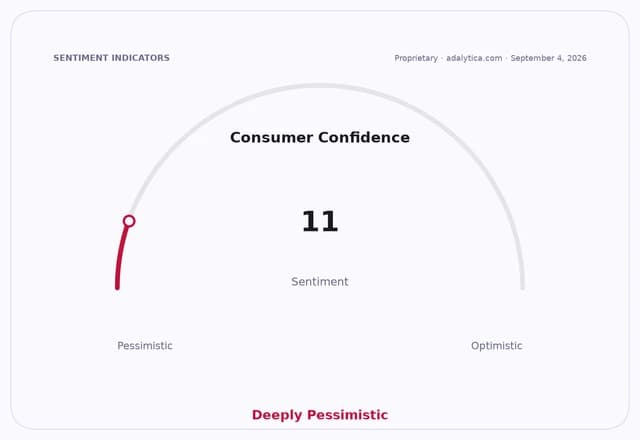
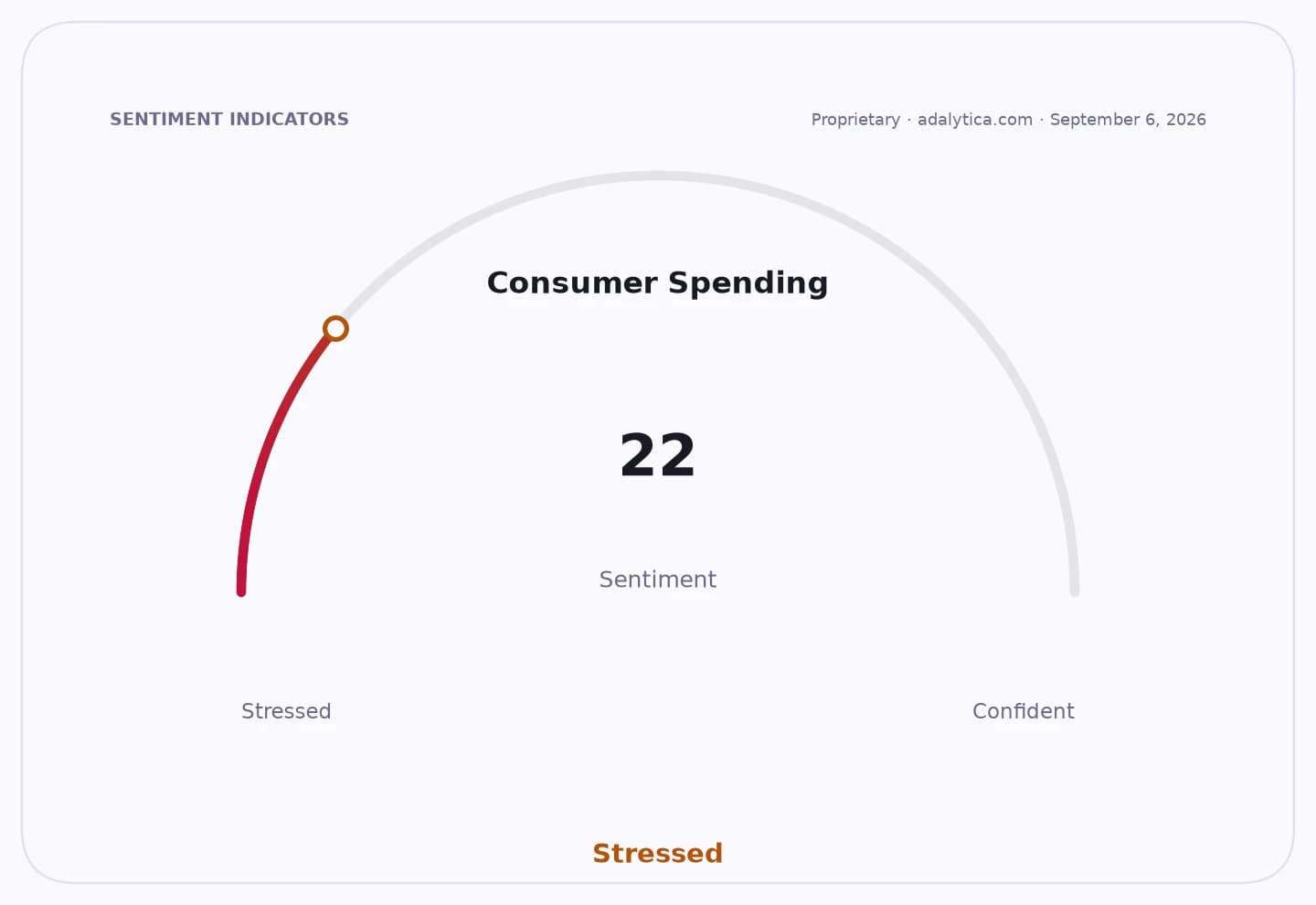
The broader consumer backdrop reinforces the trend. Confidence remains deeply depressed by conventional measures and spending sentiment in the data context is in “extreme fear,” which is exactly the environment in which private label gains share. Consumers are not just choosing cheaper goods; they are normalizing a new shopping pattern in which chain brands are no longer a fallback but a default.
For investors, the implication is straightforward: the market underestimates how powerful own brands can be in a high-cost, low-growth retail environment. Chains with scalable private-label platforms should keep taking share, while branded suppliers risk losing shelf power and pricing leverage. In Russia, the same dynamic is already visible in Europe and the hard-discount model globally — and it is still early.
The next catalyst is margin flow-through. As retailer brands expand into more categories and price tiers, the mix shift should support profitability even if top-line growth stays modest. The clearest long-term winners are the grocers and discounters that can build their own-brand architecture fastest; the losers are manufacturers and weaker retailers that still depend on national brands to do the traffic work.
| Entity | Gains | Losses |
|---|---|---|
| X5 and other grocers | ▲Higher gross margin | ▼Branded suppliers’ shelf power |
| Hard discounters | ▲Faster private-label mix | ▼Traditional supermarkets |
| Consumers seeking value | ▲Lower prices | ▼Premium brand owners |
| Consumer goods manufacturers | ▲— | ▼Share and pricing leverage |