Farmers in northern Russia are bringing in wheat, rapeseed and barley, but the bigger story is that a strong harvest is not translating into cash, underscoring a deepening squeeze in the country’s grain economy and a potentially tighter global supply backdrop.
Russian Harvest Squeeze Supports Wheat Prices
The mismatch matters because agriculture is being hit from both sides: production is holding up, yet farm-gate prices are too weak to cover costs, while diesel shortages and logistics bottlenecks threaten to slow the pace of harvest and exports. That combination raises the risk of stranded supply in one of the world’s biggest grain exporters and could keep international wheat prices elevated even if yields are solid.
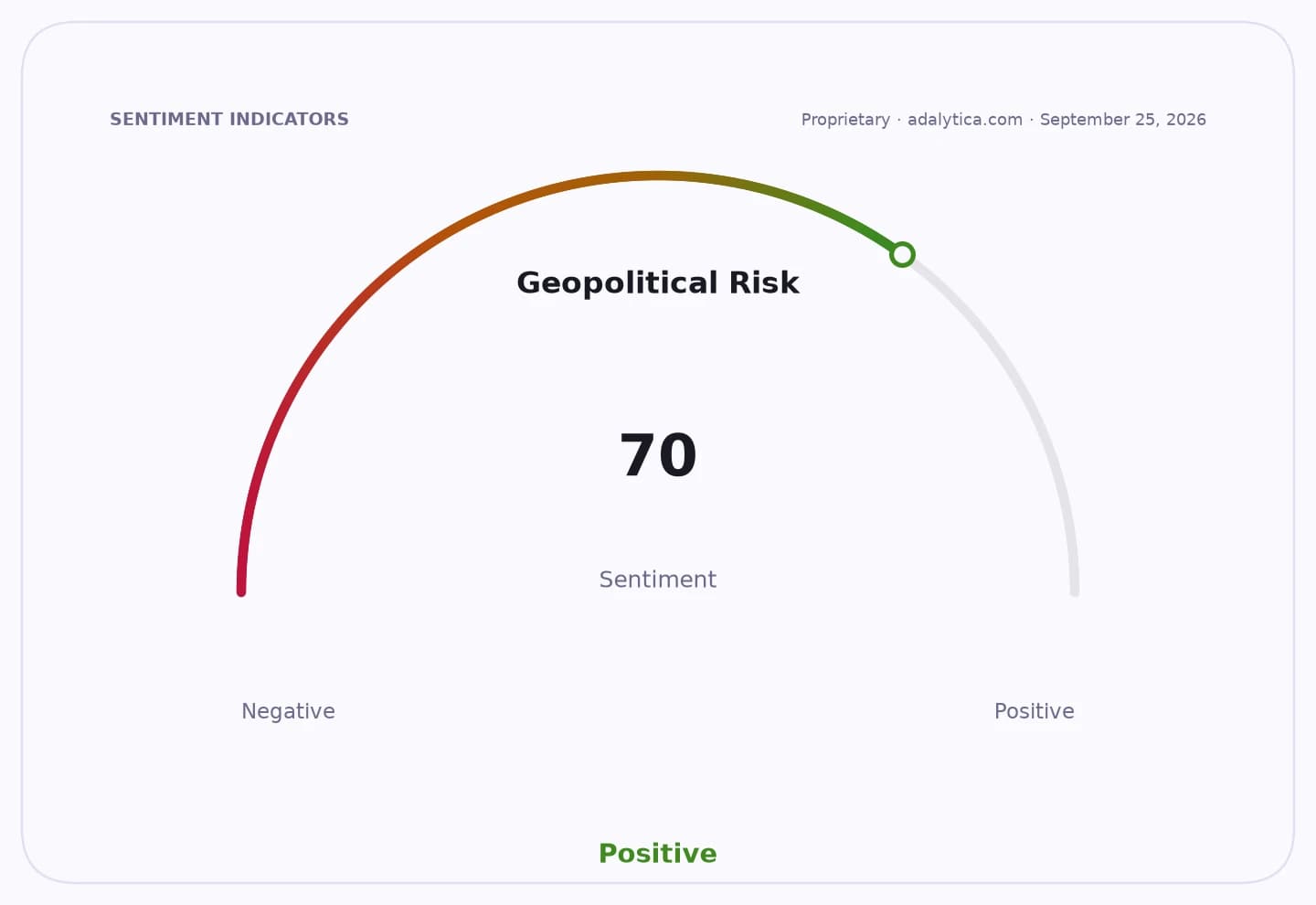
Sentiment IndicatorsⓘProprietary · adalytica.com · July 16, 2026
This is a snapshot — live sentiment, awareness and momentum for 130+ markets update continuously in the dashboard.Open AlphaPulse
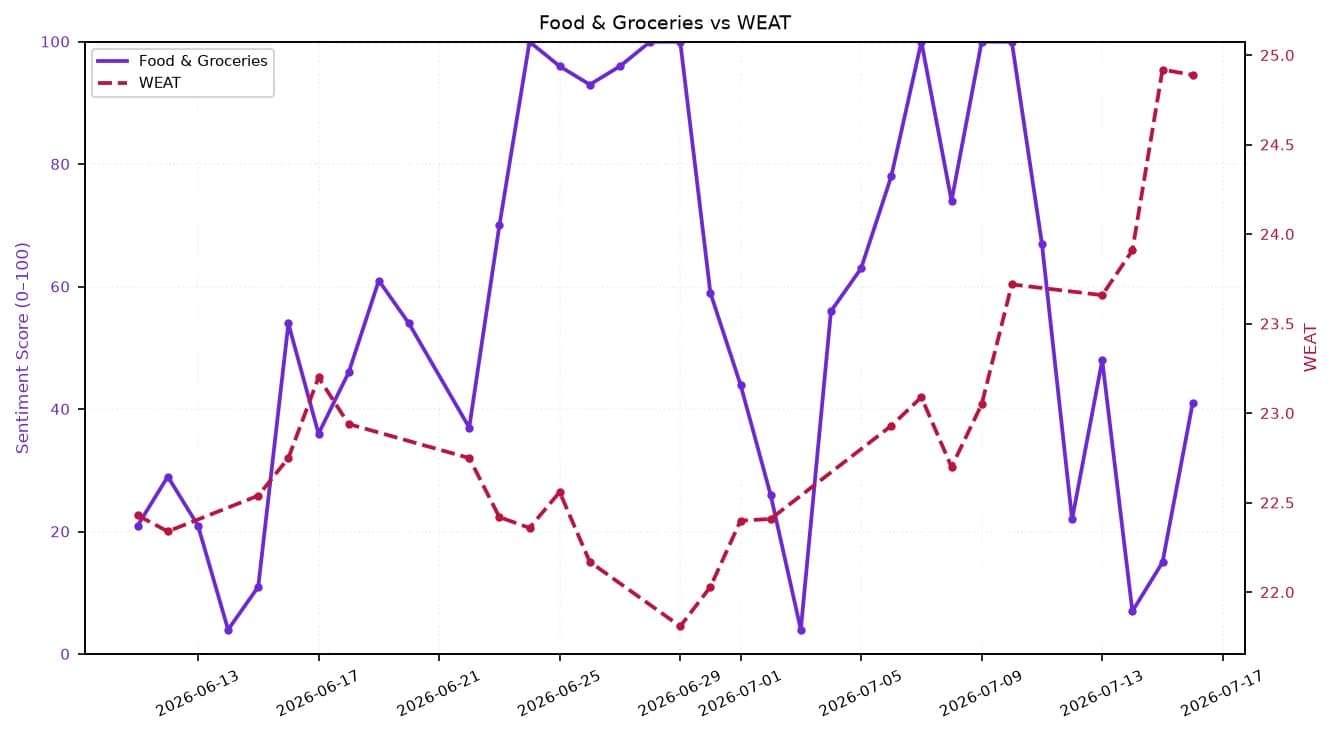
Benchmark grain funds are already reflecting that tension. The WEAT wheat ETF has climbed to about $24.89 from below $21 in late September, while CORN has recovered to $17.62 after dropping to a recent low of $16.47 in late June. Soybeans, tracked by SOYB, are also higher at $25.37. The move in wheat has been the most pronounced, consistent with a market still sensitive to weather, war-related disruptions and export frictions around the Black Sea and the Kerch Strait.
For producers, the problem is profitability rather than volume. Farmers can harvest more grain, but if local buyers are paying too little and fuel is scarce, margins can remain negative. That creates an incentive to delay sales, cut spending on inputs or reduce acreage next season, all of which can tighten supplies further. It also helps explain why food and grocery sentiment remains only neutral even as the broader supply picture deteriorates.
The macro picture is less benign than the raw harvest data suggest. Producer prices in the US are forecast to rise again, with the PPIACO index seen at 295.84 in July after a recent 286.83, while consumer prices are projected at 335.51, pointing to a broader inflation environment in which staples can remain sensitive to supply shocks. For grain markets, the key issue is not just the size of the crop, but whether it can move efficiently from field to port.
That is where the fuel shortage becomes economically important. Diesel is essential to combine harvesters, trucks and grain handling, and any interruption can delay delivery at precisely the moment when the market needs confidence that supply will reach buyers. If harvest logistics stumble, exporters could miss windows, local prices could weaken further and global importers may be forced to pay up for coverage.
Investors are watching two trade-offs. The bullish case is that a constrained Russian harvest-to-export pipeline keeps wheat supported and sustains relative strength in grain-related ETFs and commodity baskets. The bearish case is that a large crop eventually reaches the market, pressuring prices again and leaving producers to absorb the margin pain. For now, the combination of strong output, weak farm-gate pricing and fuel stress suggests the market’s bigger risk is not a shortage of grain in the field, but a shortage of profitable grain.
What happens next will hinge on fuel availability, export logistics and whether adverse weather or geopolitical disruption worsens the bottlenecks. If those constraints persist, the harvest may be big on paper and small in market impact — a setup that favors grain price volatility and keeps farmers under pressure.
| Entity | Gains | Losses |
|---|---|---|
| Global wheat buyers | ▲Higher supply optionality | ▼Higher price volatility |
| Russian farmers | ▲Bigger harvest volumes | ▼Weak farm-gate margins |
| Grain exporters | ▲Potentially firmer world prices | ▼Delivery delays and logistics costs |
| Commodity bulls | ▲Supportive supply narrative | ▼Risk of a later price correction |