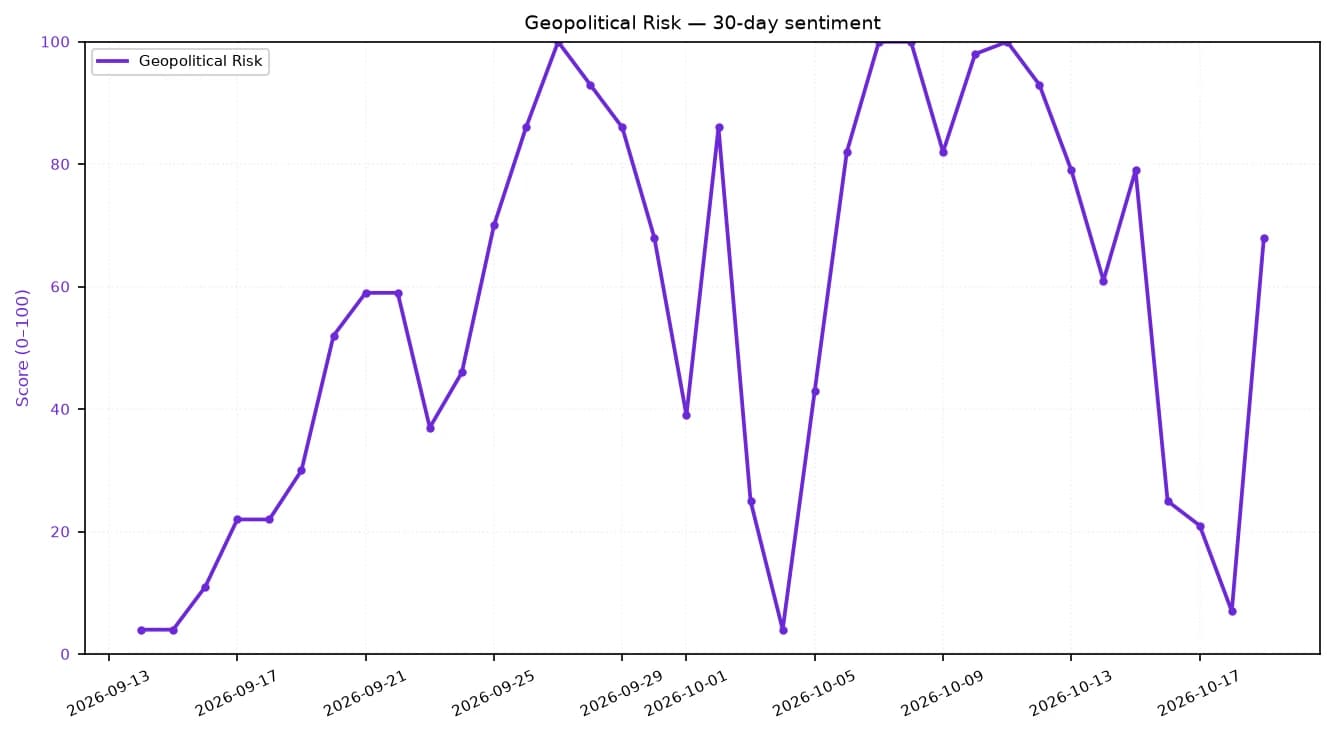
Russian wheat export prices slipped slightly this week, but the bigger market signal is that October loadings are expected to increase, a development that could keep pressure on global grain benchmarks even after recent weather and logistics disruptions elsewhere in the Black Sea region.
Russian wheat exports rise as prices ease

For buyers, a pickup in Russian shipments matters because Russia remains the dominant force in world wheat trade and any rebound in exports can quickly translate into softer pricing for importers in North Africa, the Middle East and Asia. For growers and grain merchants, it raises the risk that a seasonal supply increase will cap rallies in Chicago and European wheat, where futures have already eased on weaker U.S. pricing.
Sentiment IndicatorsⓘProprietary · adalytica.com · October 23, 2026
This is a snapshot — live sentiment, awareness and momentum for 130+ markets update continuously in the dashboard.Open AlphaPulse

The move comes against a mixed backdrop. European wheat prices have softened alongside Chicago futures, even as the market has been trying to balance expectations for stronger Russian and Ukrainian exports against persistent logistical constraints. The latest signal from Russia suggests supply from the Black Sea may prove more available than traders had been pricing in, at least in the near term.
That has direct implications for agriculture stocks and grain handlers. Shares of wheat-focused ETF WEAT have fallen to $22.87 from $26.49 earlier this month, with the fund now trading below both its 50-day moving average and its 200-day average, while its relative strength index has slid to 17.5, a level that typically indicates deeply oversold conditions. The decline reflects not just weaker futures, but a market increasingly attuned to the possibility that export flows from the Black Sea will keep replenishing supply.

Among crop-input and ag names, the read-through is more nuanced. Nutrien and Bunge have both retreated from recent highs, even as broader agricultural trading remains supported by volatility in oils, weather and freight. Bunge’s share price has slipped to $102.98 from a recent peak above $130, while Nutrien is at $69.40, near its 200-day moving average. Lower wheat prices can squeeze merchandising margins over time, but they can also support volume if importers accelerate purchases on cheaper offers.
The broader macro backdrop is not helping wheat bulls. U.S. crude has rebounded above $107 a barrel, adding to cost pressures across global food chains, while sentiment gauges on food and grocery spending have turned more constructive. Even so, the most immediate driver in wheat remains supply. If Russian export volumes accelerate in October, the market will likely test whether lower prices are enough to clear inventories without another weather shock or policy shift.
For investors, the key question is whether Russia’s stronger shipment pace marks a temporary seasonal rebound or the start of a larger export campaign that resets price expectations into year-end. If the latter, wheat prices could stay under pressure despite intermittent geopolitical risk, favoring importers and processors over producers and traders positioned for a sharper rally.
| Entity | Gains | Losses |
|---|---|---|
| Wheat importers | ▲Cheaper supply | ▼Higher replacement costs |
| Russian exporters | ▲More shipments | ▼Lower unit pricing |
| Grain merchants/processors | ▲Higher volumes | ▼Softer pricing power |
| Wheat producers | ▲— | ▼Price pressure on crops |