A court-backed expropriation in Samsun has put a specific parcel in Atakum district on a path out of private hands, underscoring how municipal infrastructure and planning decisions can directly reshape land values in one of the Black Sea region’s more active urban markets.
Samsun Expropriation Signals Policy Risk for Property
The most important development is not the legal filing itself but the signal it sends to investors and landowners: public authorities are still willing to use expropriation to clear the way for projects tied to local development strategy. In practical terms, that shifts bargaining power toward the municipality and away from the defendants holding the share in the parcel, while raising the odds that the land will be absorbed into a broader public-use or redevelopment plan.
Sentiment IndicatorsⓘProprietary · adalytica.com · July 20, 2026
This is a snapshot — live sentiment, awareness and momentum for 130+ markets update continuously in the dashboard.Open AlphaPulse
That matters economically because land acquisition is often the first and most contentious step in urban investment. When a municipality secures title through expropriation, it can move faster on roads, housing, public facilities or mixed-use projects that may have been delayed by fragmented ownership. For a city like Samsun, where district-level planning shapes the pace of construction and the direction of private capital, such decisions can influence everything from local employment to future tax receipts and surrounding property prices.
The broader property backdrop is supportive but still uneven. US home-price data show national prices continue to edge higher, with the S&P CoreLogic Case-Shiller index at 332.678 in April and forecasted to rise further, while housing starts are volatile and the July projection points to a modest pullback to 1.33 million units. That combination suggests a market that remains structurally tight but highly sensitive to financing conditions and project execution.
For investors, the expropriation is a reminder that real estate returns increasingly depend on policy risk as much as on macro trends. In Turkey, local government action, court rulings and administrative orders can affect land banks, redevelopment timelines and the value of nearby assets. Developers with exposed parcels may face higher legal and carrying costs, while owners sitting near public infrastructure plans could see both upside from eventual area improvement and downside from forced sale risk or constrained timing.
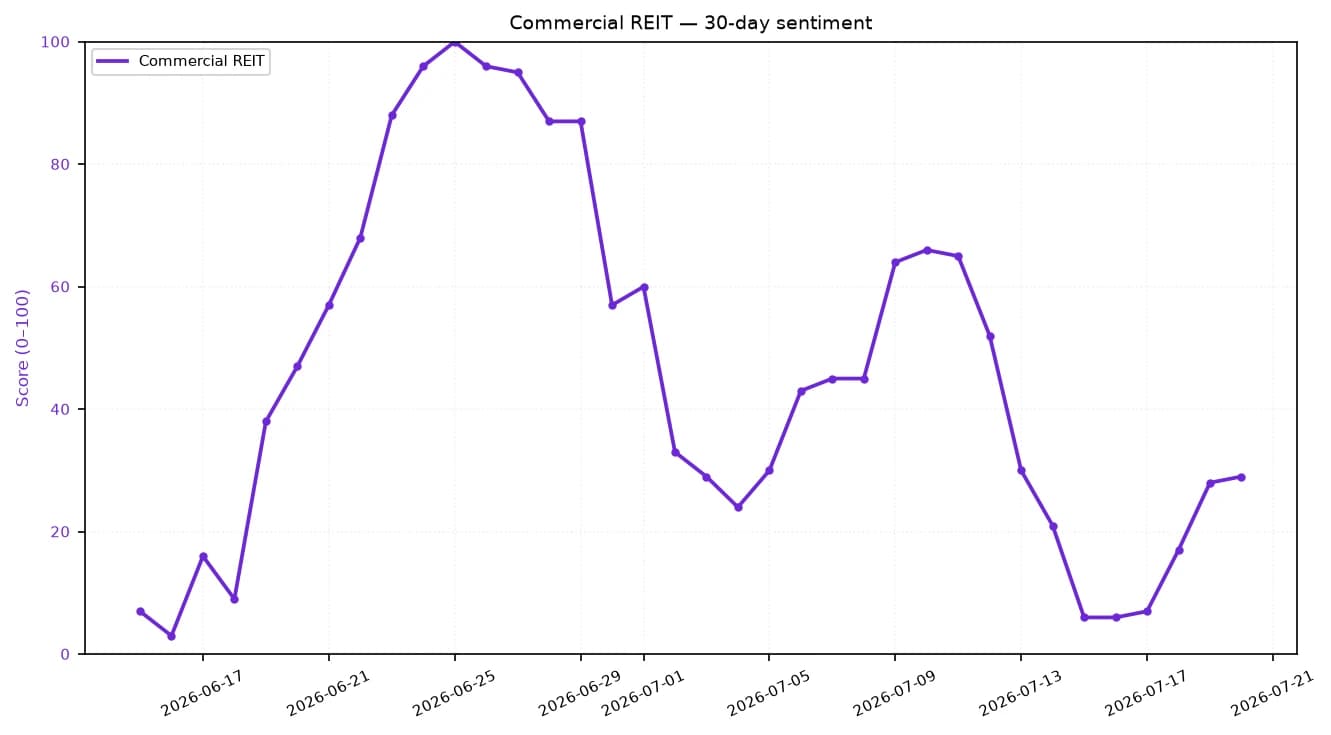
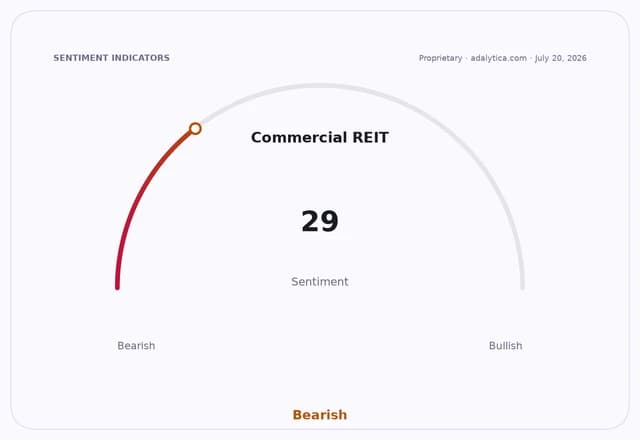
Listed real estate proxies reflect that tension. VNQ has climbed to about 99.5, above its 50-day and 200-day moving averages, suggesting broad REIT sentiment remains constructive even as Adalytica’s Commercial REIT Sentiment gauge sits in “Fear” at 29, with awareness still elevated. IYR and XLRE also trade above their longer-term trend lines, showing investors are still willing to own property exposure, but the signals point to a market that is bullish on the sector while wary on the underlying policy and rate backdrop.
The interest-rate channel remains central. The 10-year Treasury yield is forecast near 4.53%, and TLT’s Adalytica snapshot shows “Extreme Fear,” reflecting the headwind from higher long-term yields for capital-intensive property assets. That matters because expropriation-driven development only creates value if projects can be financed at acceptable returns; higher funding costs can quickly erode the economics of even favorable land assembly.
The immediate winners are the municipality and, potentially, future users of the site if the project unlocks more efficient land use. The losers are the defendants losing their share, and possibly adjacent private owners if the expropriation resets local pricing dynamics or accelerates broader redevelopment pressures.
What to watch next is whether the Samsun decision is an isolated land-acquisition case or part of a wider municipal push in Atakum. If more parcels are targeted, the market will likely read it as a stronger signal that public-led redevelopment is gathering pace, with implications for local builders, property holders and pricing across the district.
| Entity | Gains | Losses |
|---|---|---|
| Samsun Metropolitan Municipality | ▲land control | ▼negotiation leverage |
| Defendants/shareholders | ▲compensation certainty | ▼ownership rights |
| Local developers | ▲clearer project pipeline | ▼higher acquisition risk |
| Nearby property owners | ▲area redevelopment upside | ▼forced-sale spillover |