Saudi Aramco’s headquarters attack is a reminder that Middle East energy infrastructure remains a live geopolitical target, and that matters for oil prices, Asian fuel importers and the companies that depend on stable Saudi barrels.
Saudi Aramco Attack Raises Oil Supply Risk
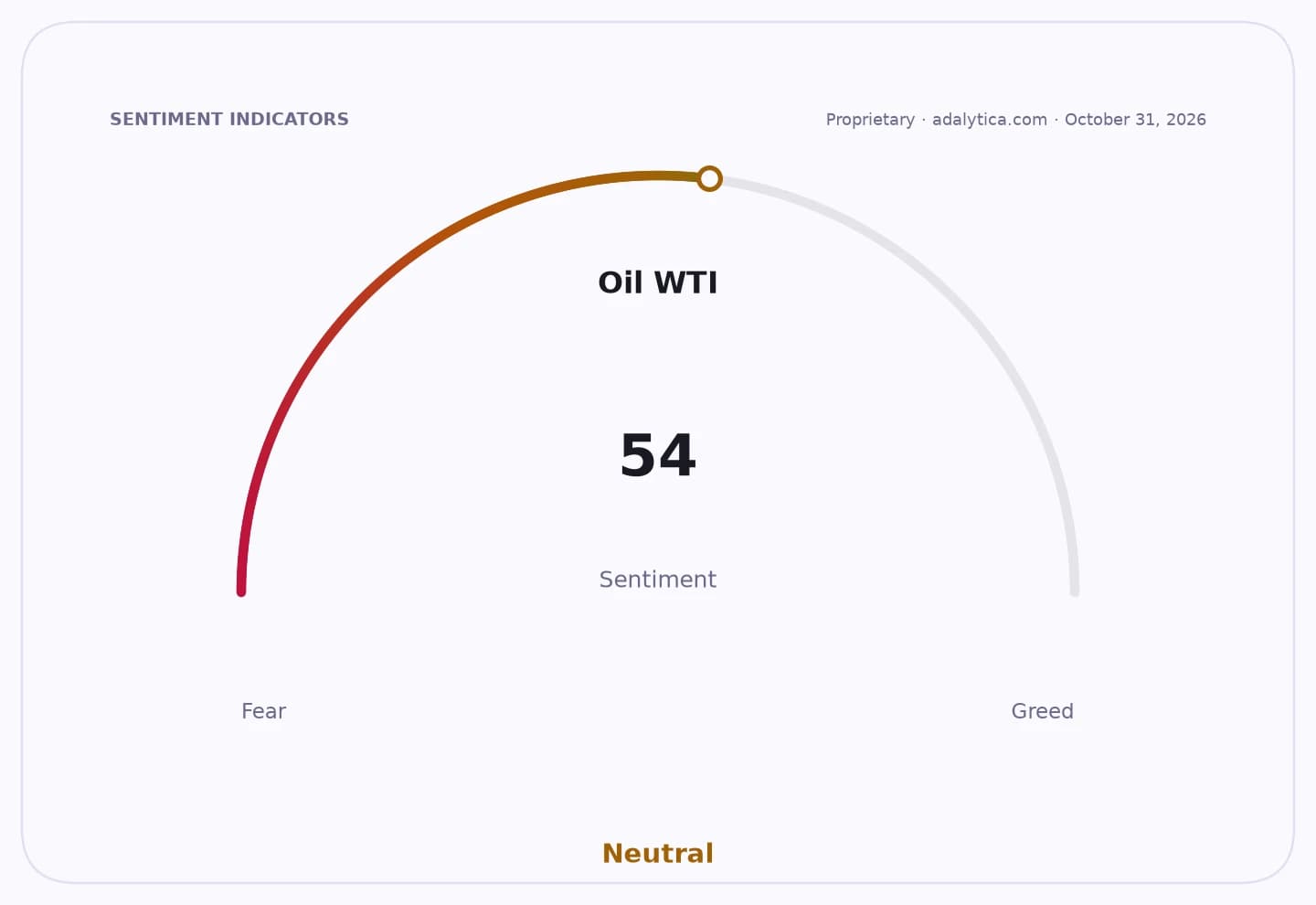
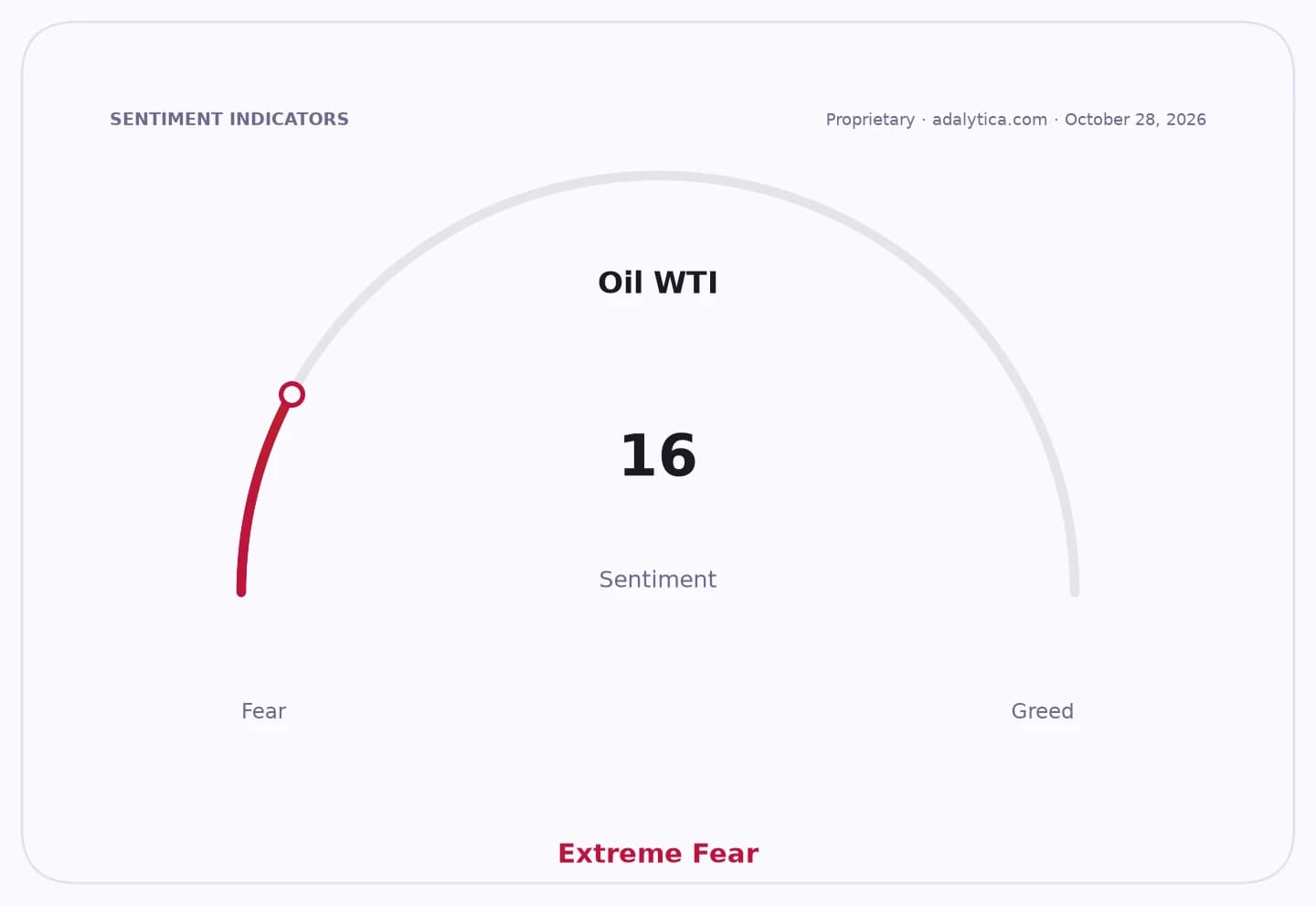
Oil WTI
The immediate issue is not whether the Dhahran complex can keep operating normally — Aramco has not confirmed any production disruption — but whether the latest strike broadens the market’s view of supply risk just as crude has already been repriced higher. Front-month U.S. crude was trading at $104.12 a barrel on Oct. 30, while Brent finished at $113.43, keeping both benchmarks well above their 50-day and 200-day moving averages and leaving momentum indicators elevated. That tells you the market is already paying for geopolitical insurance.
Sentiment Indicators
For investors, that is the real story: attacks on Saudi assets do not need to halt exports to move energy valuations. They reinforce a risk premium across crude, tanker rates, refining margins and defense spending, while squeezing import-dependent economies in Asia. Indonesia sits inside that second-order effect. It is one of the countries where Aramco operates, and it is also exposed to higher oil import costs if regional insecurity keeps pushing benchmark prices higher. That pressure eventually feeds into inflation, subsidies and the balance of payments.
The attack also lands against a more fragile energy backdrop than the market may be giving it credit for. Saudi Arabia has already said it plans to store crude in Singapore from 2027 to strengthen supply security to Asia, a sign that the kingdom itself is preparing for a world in which shipping lanes and upstream assets are less predictable. That is a major strategic shift. It suggests Riyadh wants more control over delivery resilience, not just production volume.
Oil WTI — 30-day sentimentadalytica.com
Explore this data interactively — full history, time series and cross-market comparisons.
Aramco’s scale is why this matters. The company’s global refining footprint reached 7.8 million barrels a day in gross capacity in 2025, while total liquids production averaged 10.68 million barrels a day. Even after a 2025 revenue decline to $415.82 billion and net income of $93.39 billion, Aramco remains the anchor of Saudi fiscal strength and a critical supplier to Asia. Any hint that its command-and-control infrastructure is vulnerable can ripple far beyond one building in Dhahran.
The market underestimates how often geopolitics creates durable winners before it creates a headline-driven spike. If this conflict keeps spilling into energy infrastructure, the beneficiaries are likely to be U.S. oil producers, tanker owners, storage plays, and defense contractors tied to base protection, drones and missile defense. The losers are Asian refiners, fuel importers and emerging markets with weak external accounts.
My view: this is not the moment to dismiss Middle East risk as another short-lived flare-up. It is the kind of catalyst that keeps oil elevated, supports energy equities and forces Asia to pay up for supply security. Position for a more volatile, more expensive barrel.
| Entity | Gains | Losses |
|---|---|---|
| Oil producers | ▲Higher crude prices | ▼— |
| Tanker and storage firms | ▲Stronger freight and storage demand | ▼— |
| Asian importers, including Indonesia | ▲— | ▼Higher fuel bills |
| Refiners and consumers | ▲— | ▼Margin pressure, inflation |