Saudi Aramco’s decision to shut its Jazan refinery after a Houthi attack is the clearest sign yet that the Red Sea conflict is moving from a shipping threat to a direct supply shock for global energy markets.
Saudi refinery outage lifts oil risk premium
The immediate economic significance is twofold: one of Saudi Arabia’s key refining assets has been taken offline, and the assault has heightened the risk premium embedded in crude and products prices at a time when the market is already sensitive to any interruption in Middle East flows. With benchmark oil having pushed above $100 a barrel in the wake of the attack, traders are once again being forced to price not just barrels lost, but the possibility of broader disruption to export routes, tanker traffic and downstream fuel supply.
Sentiment IndicatorsⓘProprietary · adalytica.com · July 29, 2026
This is a snapshot — live sentiment, awareness and momentum for 130+ markets update continuously in the dashboard.Open AlphaPulse
That matters because the Jazan complex is not just another industrial site. It sits in a strategic part of the kingdom’s energy system and is tied to crude processing as well as wider logistics in a region where infrastructure is increasingly exposed to asymmetric attacks. Damage at the refinery, along with reports of strikes on transportation facilities and tankers in the Red Sea, suggests the Houthis are trying to expand the cost of the conflict beyond Israel-linked shipping and into the core oil trade that underpins Gulf revenues and global supply security.
For investors, the first read-through is bullish for oil and energy equities, but the reaction is likely to remain volatile. WTI-linked products such as USO have already been on a sharp roller-coaster, while energy shares in the XLE have outperformed on rising price expectations. The latest spike underscores the value of upstream producers and integrated oil majors with spare capacity and strong free cash flow generation. It is less constructive for refiners, airlines, chemical companies and consumers, which face higher feedstock and fuel costs if disruption persists.
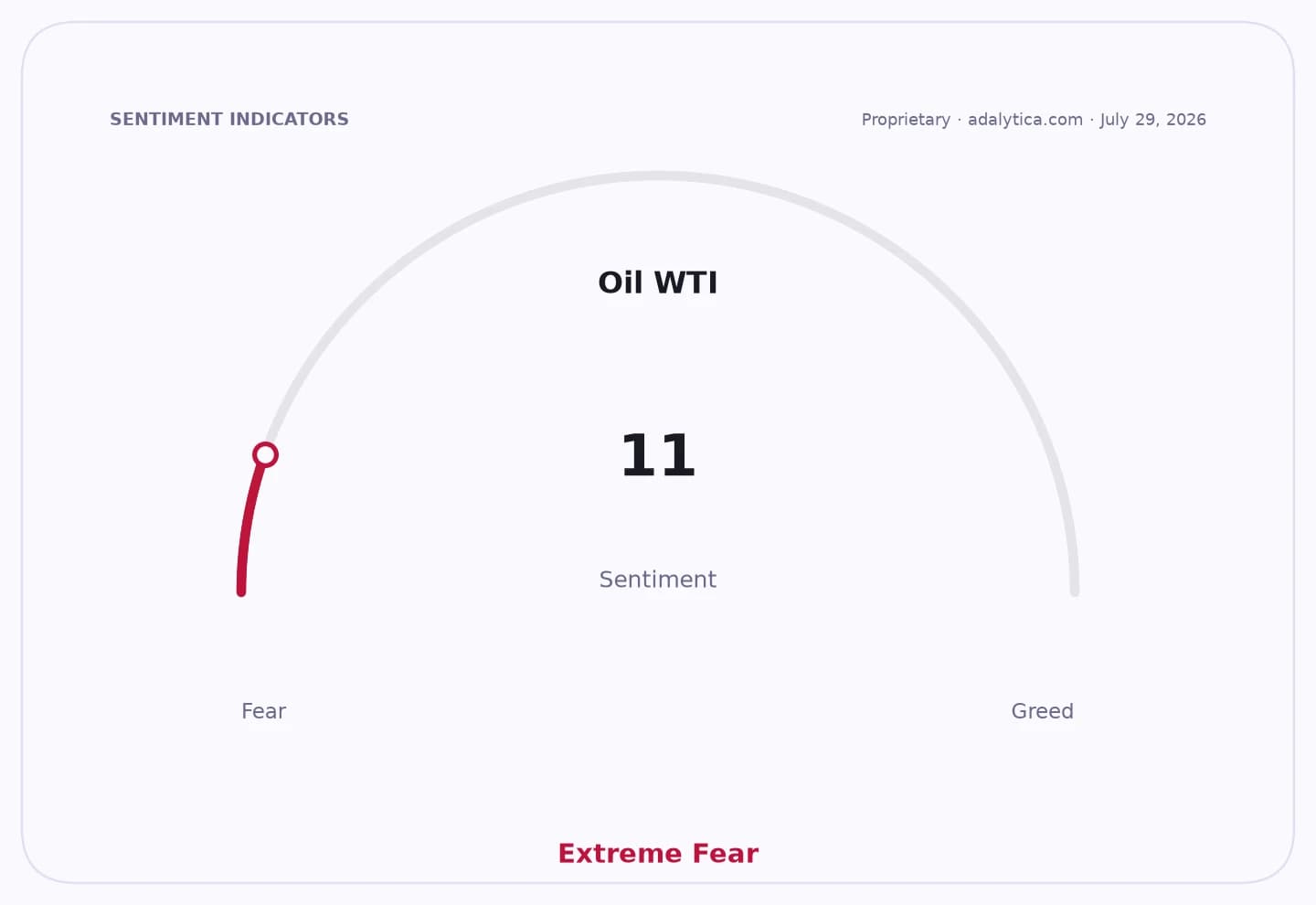
The price action also shows how quickly geopolitical stress can overwhelm normal market signals. WTI has been trading with extreme swings, while technical readings on oil-linked instruments point to stretched conditions after the latest jump, with elevated RSI levels and momentum indicators confirming that traders are chasing risk rather than waiting for fundamentals to settle. Adalytica’s Oil WTI Trade Signals snapshot shows sentiment in “Extreme Fear” even as awareness remains elevated, a combination that often accompanies disorderly, headline-driven markets rather than stable trend formation.
The broader narrative is that the energy market is once again in a regime where security of supply matters as much as inventory balances. The Red Sea has become a transmission channel for geopolitical risk, and attacks on Saudi infrastructure raise the stakes for insurers, shippers and policymakers trying to keep flows moving. The fact that other facilities, including refineries outside the Gulf, have also been hit or suspended operations reinforces the point: the vulnerability is not isolated, and the market is being forced to assign a higher probability to further outages.
For now, the key question is whether Saudi Arabia can contain the physical damage quickly and restore operations without a longer interruption. If it can, the price surge may prove temporary. If attacks continue or spread, investors should expect a more durable risk premium across crude, refined products and energy-linked equities, with the biggest winners likely to be producers and the biggest losers consumers, transport companies and refiners exposed to higher input costs.
| Entity | Gains | Losses |
|---|---|---|
| Oil producers | ▲Higher realized prices | ▼Demand destruction risk |
| Energy equities (XLE) | ▲Earnings tailwind | ▼Volatility in sentiment |
| Refiners | ▲Potential margin support from tight products | ▼Asset outages and repair costs |
| Consumers/importers | ▲None | ▼Higher fuel and shipping costs |