Shenzhen’s decision to launch a 10 billion yuan fund for chips and emerging industries is another reminder that China is treating semiconductors less like a cyclical sector and more like a strategic asset.
Shenzhen Fund Boosts China’s Chip Ambitions

That matters because the city is not just trying to help one or two companies bridge a funding gap. It is trying to accelerate an ecosystem — from chip design and manufacturing to the broader network of emerging industries that sit around artificial intelligence, advanced electronics and industrial upgrading. In a world where chips are the bottleneck to AI, cloud and next-generation manufacturing, local capital can shape where supply chains are built, who gets to scale and which firms gain staying power.
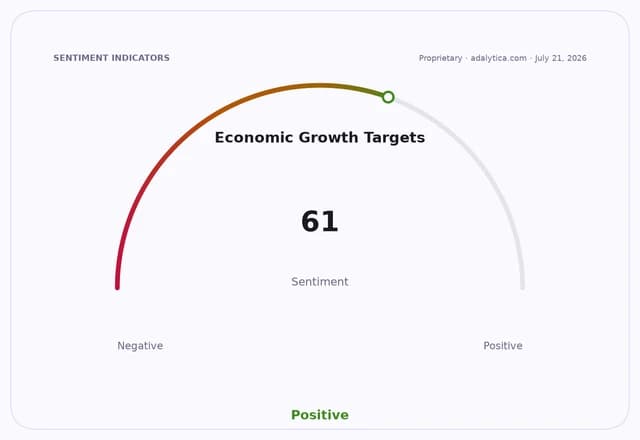
Sentiment IndicatorsⓘProprietary · adalytica.com · July 21, 2026
This is a snapshot — live sentiment, awareness and momentum for 130+ markets update continuously in the dashboard.Open AlphaPulse

For investors, the immediate takeaway is that policy support is still a critical force in the semiconductor trade. Chinese chip names, from foundries to equipment suppliers, can benefit when local governments backstop investment, especially as access to foreign technology remains constrained. That does not erase the risks — competition is intense, returns can be uneven and the industry is still vulnerable to export controls and financing missteps — but it does improve the odds that domestic champions keep building.
The timing is also notable. Global semiconductor stocks have been buoyed by the AI boom, with investors chasing every sign that demand for memory, logic and advanced packaging can stay hot. Taiwan Semiconductor Manufacturing has continued to post strong revenue growth, while Nvidia remains at the center of the AI infrastructure buildout. A new Shenzhen fund does not change that global demand picture, but it reinforces the idea that China wants a bigger share of the value chain, and it is willing to use public money to get there.
That is why the move matters economically. Semiconductors spill over into productivity, industrial output and export competitiveness. A deeper domestic chip base can reduce reliance on imported technology, support manufacturing jobs and help China keep building in areas like AI hardware, automotive electronics and smart devices. In the long run, that is the kind of industrial policy that can outlast any single market cycle.
For investors, the right way to think about this is not as a quick trade, but as another data point in a long-running secular race. The AI and chip boom is still creating winners globally, but government backing in China means the competitive map is getting more crowded, not less. That tends to reward the strongest companies, the broadest ecosystems and the most patient shareholders. Worth watching.
| Entity | Gains | Losses |
|---|---|---|
| Shenzhen-backed chip startups | ▲Fresh capital | ▼Funding pressure |
| Chinese semiconductor supply chain | ▲More investment | ▼Reliance on imports |
| Global chip leaders | ▲Stronger demand narrative | ▼More competition from China |
| Foreign equipment suppliers | ▲Some equipment sales | ▼Smaller China market access |