Shopify’s recognition in EcommerceViews’ 2026 list of best e-commerce platforms for digital products is a reminder that the next phase of online commerce is not about storefronts alone — it is about owning the rails for software, media and other downloadable goods, where recurring margins and creator-led distribution are becoming increasingly valuable.
Shopify Seen as Digital Commerce Infrastructure Leader
That matters because digital products are one of the highest-quality corners of e-commerce: no shipping costs, no inventory drag and far better operating leverage than physical retail. Platforms that can simplify checkout, tax handling, delivery and customer management for those sellers can turn a niche use case into a sticky, high-frequency revenue stream. In a market still looking for the cleanest beneficiaries of secular digitization, that is exactly the kind of embedded workflow investors should pay attention to.
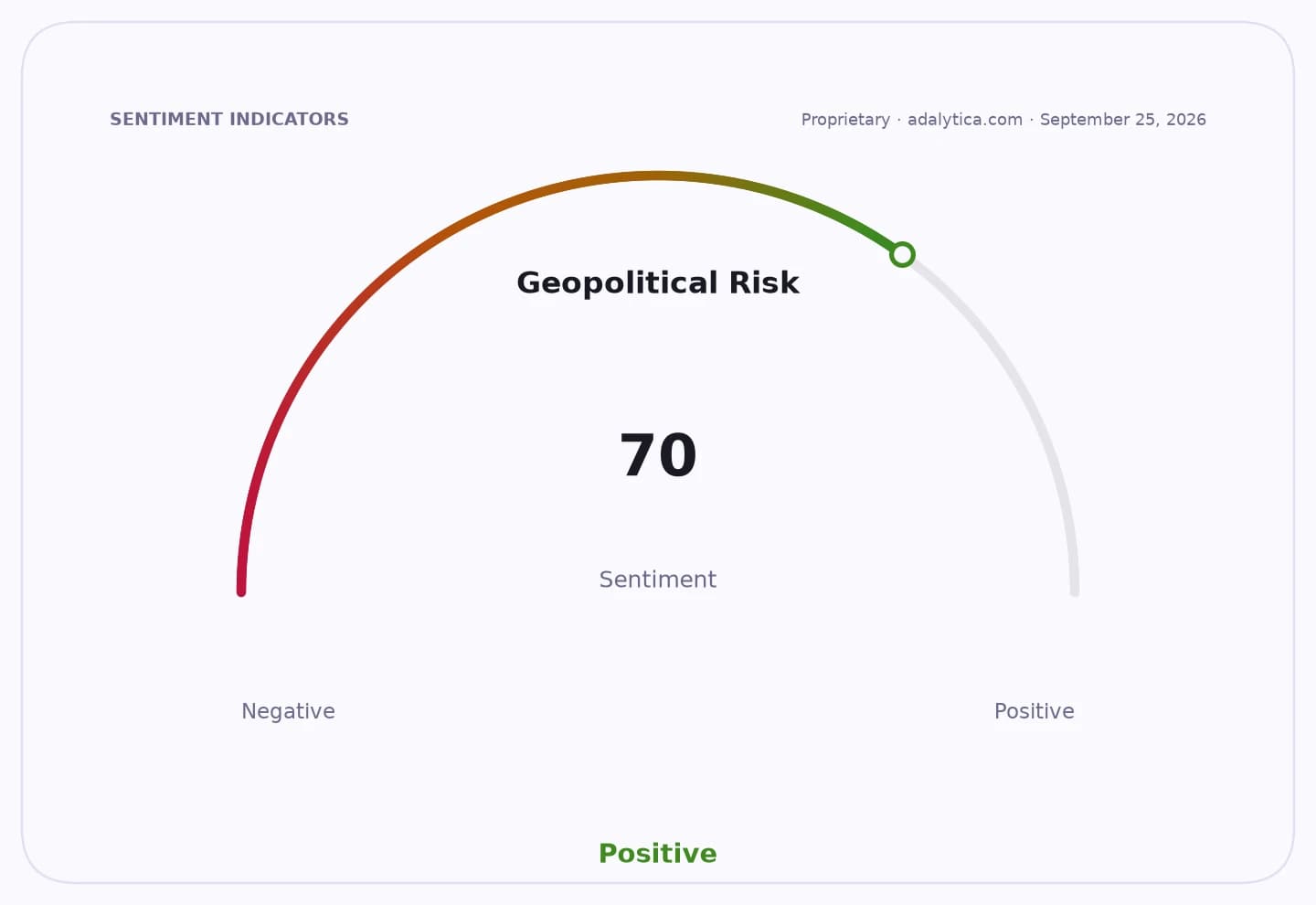
Sentiment IndicatorsⓘProprietary · adalytica.com · July 24, 2026
This is a snapshot — live sentiment, awareness and momentum for 130+ markets update continuously in the dashboard.Open AlphaPulse
The bigger investment case is that Shopify remains one of the market’s best pure plays on small-business commerce infrastructure, even as the stock has whipsawed. The shares had fallen as low as 112 earlier this week before rebounding to 123.03 on July 21 and then slipping back to 112.00 on July 23, leaving the stock below its 50-day moving average of 113.20 and far under its 200-day average of 134.26. That backdrop tells you the market is still pricing Shopify as a cyclical growth name, not a platform compounder with multiple expansion potential. I think that is a mistake.
The technical picture reinforces the point. Shopify’s RSI has cooled to 38.1, down from overbought levels seen earlier this year, while the MACD remains positive but weakening. In plain English, the stock has been reset without the business losing its strategic relevance. That is often where the best entry points emerge for long-term investors: when short-term price action is damaged, but the underlying platform continues to deepen its role in commerce workflows.
This is also where the competitive narrative matters. OpenCart’s inclusion in a best-platform ranking underscores how fragmented the digital-products market remains and how many merchants are still shopping for an answer. That fragmentation is good for the category leaders because it keeps switching costs high and leaves room for a handful of infrastructure winners to capture share. Shopify does not need to own every digital storefront to win; it only needs to remain the default operating system for a growing slice of serious merchants.
The backdrop is even more supportive when viewed against broader market signals. Adalytica’s U.S. dollar trade signals show fear in the currency, which tends to be a tailwind for globally exposed growth platforms and exporters of software-like services. At the same time, the S&P 500 trade snapshot remains neutral, suggesting investors have not yet fully rotated back into high-quality growth exposure. That leaves room for differentiated names with real operating leverage to rerate as macro uncertainty eases.
Investors should also watch the second-order beneficiaries. If digital-product selling continues to migrate onto better platforms, the winners extend beyond the platform layer to payments, creator tools, tax automation, fraud prevention and commerce software. Adobe remains important to the content side of the equation, but Shopify is the cleaner toll-road on monetization. eBay, by contrast, is still fighting to prove it can participate in the next generation of commerce infrastructure rather than just defend a mature marketplace base.
My thesis is simple: the market is underestimating how powerful digital-product commerce can become as a margin-rich growth engine, and Shopify is one of the best-positioned enablers of that shift. The OpenCart recognition is not a headline about one software product. It is evidence that digital commerce is still early, still fragmented and still producing new winners.
For investors, the actionable takeaway is to use weakness in Shopify to build exposure to the infrastructure layer of e-commerce, not the merchant layer. That is where the compounding will happen over the next several years.
| Entity | Gains | Losses |
|---|---|---|
| Shopify | ▲More platform credibility | ▼None obvious |
| Digital-product sellers | ▲Easier distribution | ▼Legacy storefront friction |
| Payments/commerce software peers | ▲Bigger ecosystem spend | ▼Commoditized point tools |
| eBay | ▲Niche relevance | ▼Mindshare in next-gen commerce |