Silver ended Thursday lower, extending a sharp pullback from this year’s highs even as the broader case for precious metals remains intact for long-term investors. The move matters because silver is not just a monetary hedge like gold; it is also an industrial metal, so when it weakens alongside rising Treasury yields and a firmer dollar, it can signal less urgency to own havens and less enthusiasm for the reflation trade.
Silver Pullback Tests Precious-Metals Momentum
The U.S. 10-year Treasury yield was forecast around 4.58% for July 16, while the 2-year yield was seen near 4.16%, levels that keep the opportunity cost of holding non-yielding metals elevated. Oil also remained firm, with U.S. crude recently rebounding toward the high $70s a barrel, a mix that can support inflation fears in theory but also tends to pressure risk assets when borrowing costs stay restrictive. In that setting, silver’s slide looks less like a breakdown in the long-term story and more like a pause after an overheated run.
Sentiment IndicatorsⓘProprietary · adalytica.com · July 17, 2026
This is a snapshot — live sentiment, awareness and momentum for 130+ markets update continuously in the dashboard.Open AlphaPulse
That cooling is visible in the market action. iShares Silver Trust, or SLV, closed at $50.39, down from $52.21 and well below its recent peaks, while its 50-day moving average has slipped to $62.45 and now sits below the 200-day average near $63.11. The ETF’s RSI reading of 43.6 suggests momentum has faded from overbought levels, and its price has retreated beneath the upper Bollinger Band, another sign that the market has stepped back from the frenzy seen earlier this year. For investors, that kind of reset can be healthy, but it also warns against assuming the metal will simply keep climbing in a straight line.
The same pattern is showing up in silver-related stocks. Americas Gold and Silver Corp. dropped to $3.74, far below its 50-day and 200-day averages, underscoring how quickly speculative appetite can evaporate in a volatile metals tape. That matters for investors who are tempted to chase miners when bullion runs hot: these names can compound gains in a bull market, but they can also magnify reversals when sentiment cools.
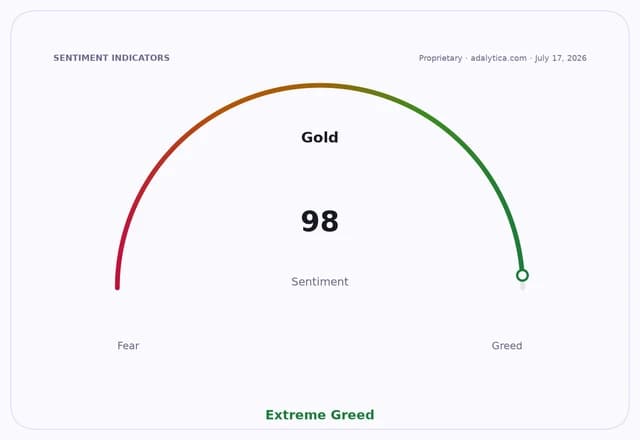
The broader precious-metals backdrop is mixed but still constructive over years, not days. Gold remains elevated, and Adalytica’s Gold Fear & Greed Index still reads 98, or extreme greed, even as its awareness gauge shows extreme fear, a combination that says positioning is still crowded even after the pullback. In other words, this is the kind of market where volatility can create opportunities, but only for investors who size positions sensibly and think in multi-year horizons. If you want exposure to silver, the better long-term approach is usually through diversification, not a single bet on the next swing in prices.
For now, Thursday’s close suggests silver is being pulled by the same forces that have buffeted gold: higher yields, a choppier dollar and profit-taking after a powerful rally. That does not end the investment case for precious metals, especially if geopolitical tensions or softer growth revive haven demand, but it does argue for patience. Investors looking to build wealth over 3 to 10 years should treat the pullback as something to watch, not something to fear, and keep silver on the watchlist rather than trying to time the next burst higher.
| Entity | Gains | Losses |
|---|---|---|
| Treasury yield holders | ▲Better income | ▼Less demand for bullion |
| Silver buyers | ▲Lower entry prices | ▼Missed recent upside |
| Silver miners | ▲Potential rebound if metal stabilizes | ▼Leverage to price decline |
| Gold and silver bulls | ▲Possible long-term accumulation | ▼Short-term momentum traders |




