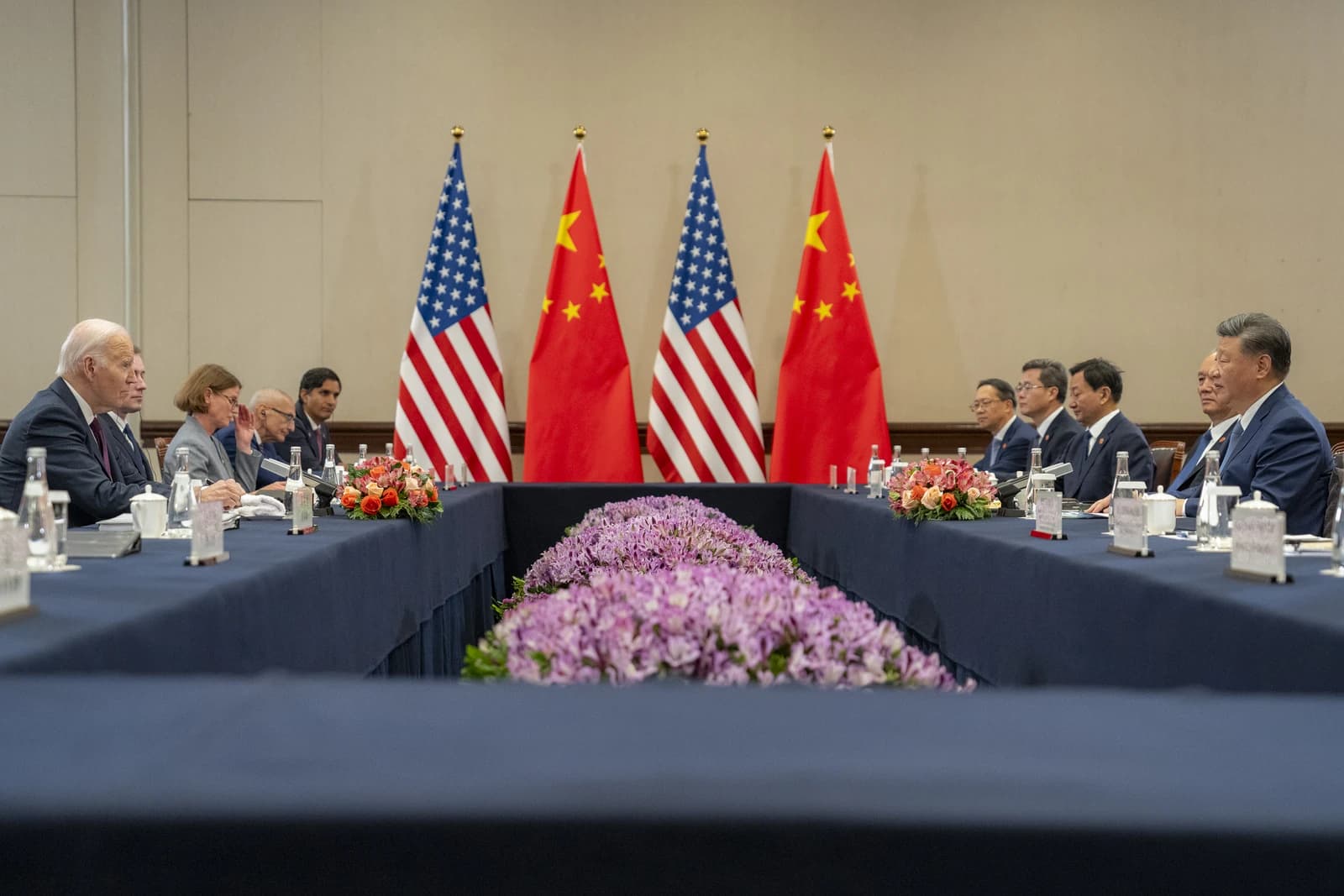
Singapore and China are doubling down on economic and diplomatic ties just as global fragmentation, trade friction and geopolitical risk intensify, a push that matters for investors betting on Asia’s growth and supply-chain resilience.
Singapore and China reaffirm economic ties in Shenzhen
Prime Minister Lawrence Wong and President Xi Jinping used their meeting in Shenzhen to reaffirm a relationship that both sides say is already deeply embedded in trade, investment and government-to-government cooperation. Wong said Singapore can build on three long-running joint projects in China — the Suzhou Industrial Park, the Sino-Singapore Tianjin Eco-City and the Chongqing Connectivity Initiative — to expand economic ties further.
Sentiment Indicators
Xi called for cooperation to rise to “new heights” at a time when the world is undergoing “profound changes unseen in a century,” while Wong said such dialogue is especially valuable amid heightened geopolitical tensions. The message was clear: both governments want to preserve open channels and practical cooperation even as Washington, Beijing and other powers navigate a more contested global order.
That matters economically because Singapore is one of Asia’s most important trade, finance and logistics hubs, and China remains a key destination for its capital, services and corporate activity. A firmer Singapore-China relationship can support cross-border investment, infrastructure links and business confidence at a time when companies are diversifying supply chains and hedging against policy shocks.
CCP Policy Direction vs FXIadalytica.com
Explore this data interactively — full history, time series and cross-market comparisons.
The meeting came alongside Wong’s warning at the Apec leaders’ session against letting the Asia-Pacific fracture into “competing economic blocs.” Xi, for his part, pledged US$20 million to support Apec’s practical cooperation, underscoring China’s bid to keep regional institutions relevant even as larger strategic rivalry deepens.
For investors, the significance is less about a single deal than about the policy backdrop for Singapore-linked assets, regional industrial activity and China-facing multinationals. The more both sides emphasize stability and working-level cooperation, the more it can cushion sentiment around cross-border trade, manufacturing and investment flows.
The backdrop is still uneasy. Adalytica’s China CCP Policy Direction Sentiment gauge sits at 11, in “Extreme Fear,” while its Global Stability Sentiment also reads 11, underscoring how fragile confidence remains despite the diplomatic optics. Against that backdrop, Singapore’s careful balancing act — deepening ties with China while urging openness across the wider Asia-Pacific — is likely to stay central to its foreign and economic policy.
The next read-through comes in Wong’s meeting and working lunch with Premier Li Qiang in Beijing, which will show whether the Shenzhen warm words turn into concrete economic follow-through.
| Entity | Gains | Losses |
|---|---|---|
| Singapore | ▲stronger China access | ▼isolation risk from bloc politics |
| China | ▲regional legitimacy | ▼diplomatic friction from fragmentation |
| Investors in Asia trade | ▲clearer policy signals | ▼uncertainty from geopolitical shocks |
| Rival blocs / protectionists | ▲— | ▼influence from open-cooperation agenda |