Slovakia’s government is back in talks after the summer break just as voters weigh whether to cut short the parliament’s term, a political test that matters well beyond Bratislava because it could reshape fiscal policy, EU relations and market confidence in a euro-area member state.
Slovakia Government Talks Resume After Summer Break
The immediate significance is not the procedural vote itself, but the possibility that Slovakia could move closer to an early election at a time when Europe is already wrestling with fragmented coalitions, tighter fiscal rules and elevated political noise across the bloc. For investors, that raises questions about continuity in budget planning, the pace of economic reform and how reliably Slovakia will steer within the eurozone’s framework.
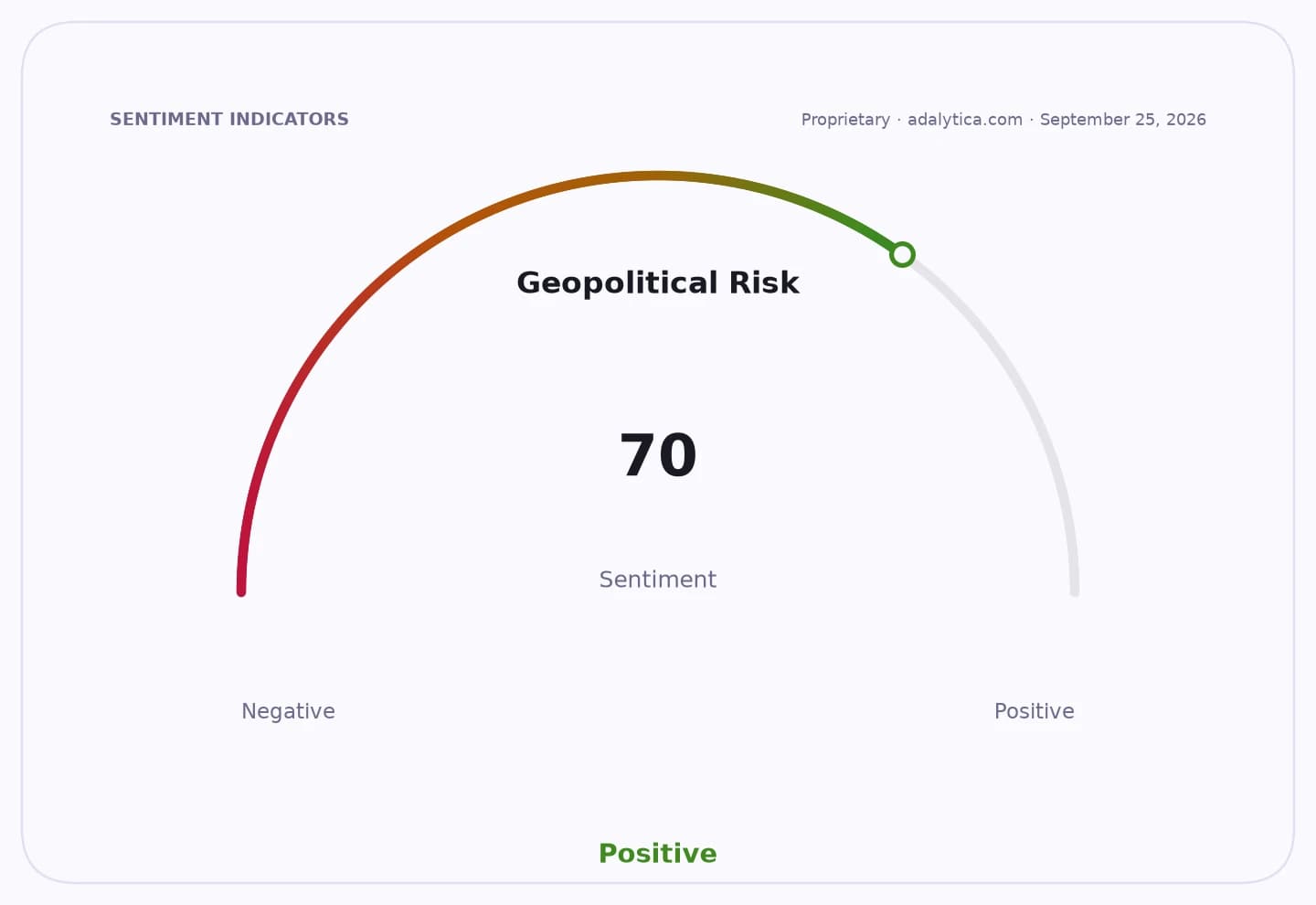
Sentiment IndicatorsⓘProprietary · adalytica.com · August 19, 2026
This is a snapshot — live sentiment, awareness and momentum for 130+ markets update continuously in the dashboard.Open AlphaPulse
The stakes are especially relevant because euro-area fiscal credibility has become a focal point again. Adalytica’s EU fiscal debt rules sentiment gauge sits at 86, in “extreme greed,” while the euro sentiment reading is also elevated at 76 despite a one-day drop. That combination suggests markets remain highly attentive to policy continuity in Europe even as optimism has improved over the past week. In that context, any sign of political instability in Slovakia can feed broader sensitivity around sovereign discipline and coalition durability.
Slovakia’s importance to investors is less about size than about transmission. As a eurozone economy, domestic political shifts do not create currency risk in the old sense, but they can affect bond spreads, investment sentiment and the government’s ability to deliver on spending and reform commitments. If early elections become more likely, investors may begin to price in a slower legislative agenda and a higher risk that fiscal consolidation gets delayed.
There is also a broader growth angle. Slovakia’s economy is closely tied to trade, manufacturing and cross-border activity inside the European Union. Political uncertainty can weigh on business confidence just as the country is benefiting from the euro’s role in supporting tourism and regional integration. That matters because the government’s negotiating position after the break will influence whether it can preserve policy continuity or whether it becomes hostage to a sharper political reset.
The bull case is that renewed talks defuse the immediate crisis and keep the government intact long enough to maintain policy continuity. The bear case is that the citizen vote accelerates political fragmentation, weakens parliamentary authority and complicates Slovakia’s fiscal and economic agenda at a time when Europe can least afford another source of uncertainty.
For investors, the key watchpoint is whether negotiations produce a durable governing arrangement or merely postpone an election risk that could return with more force later this year. A stable outcome would support the case for tighter sovereign risk premia and steadier domestic sentiment; a breakdown would likely revive scrutiny of Slovakia’s policy credibility inside the euro area.
| Entity | Gains | Losses |
|---|---|---|
| Government negotiators | ▲More time to secure deal | ▼Pressure for early election |
| Stable coalition supporters | ▲Policy continuity | ▼Political reset risk |
| Opposition parties | ▲Election momentum | ▼Status quo preservation |
| Investors in Slovak assets | ▲Clarity if talks succeed | ▼Higher uncertainty if talks fail |