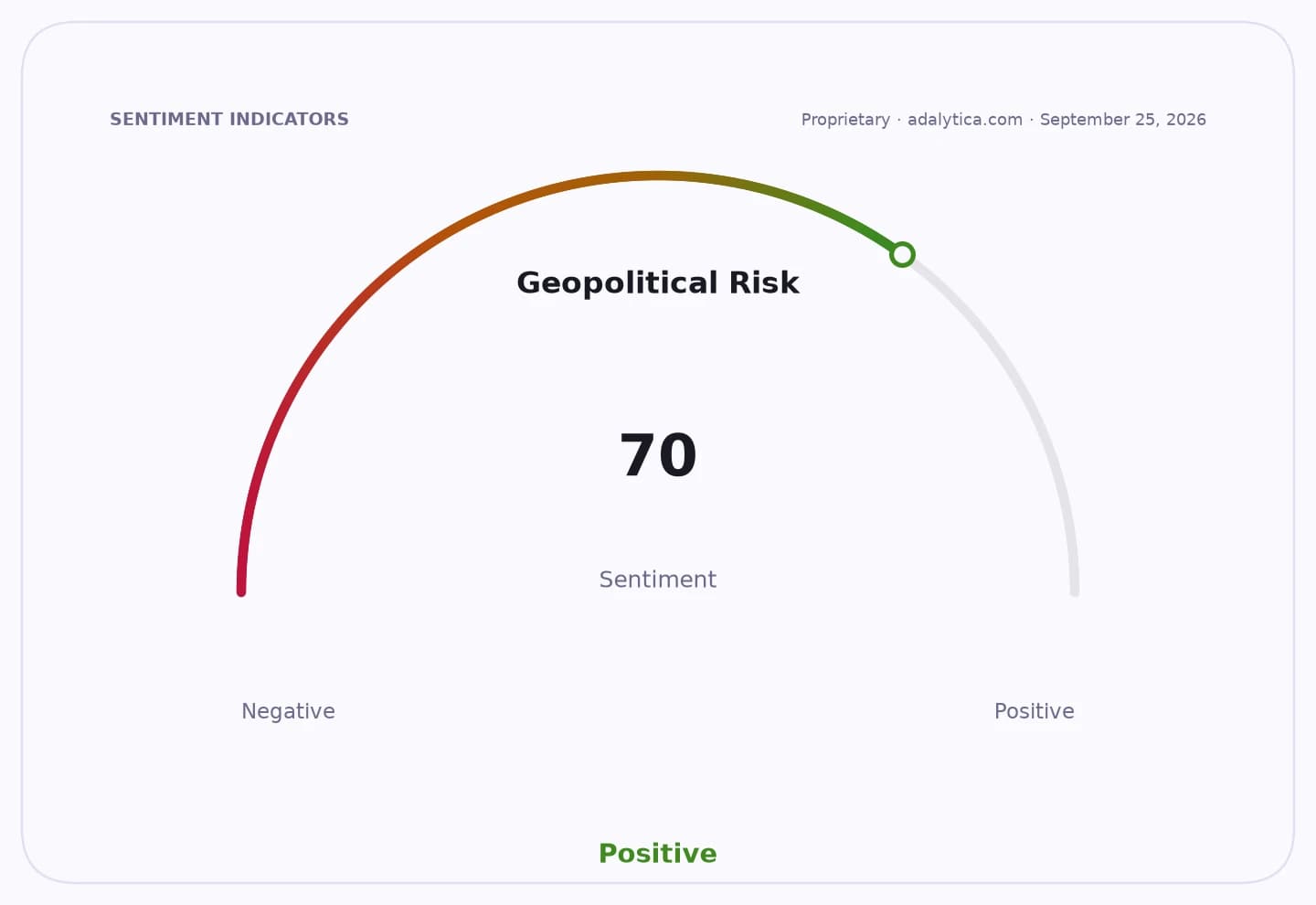
Money supply and credit growth in June slowed, underscoring a cooling liquidity backdrop that can restrain demand, soften inflation pressure and keep central bankers from shifting to easier policy too quickly.
Slower Money Growth Signals Cautious Policy

The latest central bank data point to a more subdued expansion in broad money and lending to the economy, with the forecast for M2 growth in June at 0.41% to 23,146.92 after a 1.09% rise in May, while overall money supply remains up from 22,686.2 in March. Slower credit creation typically translates into less fuel for consumption, investment and asset prices, making the reading economically important even if it does not yet signal outright stress.
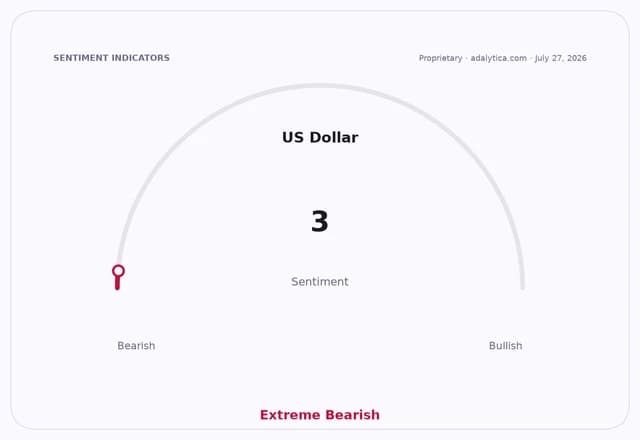
Sentiment IndicatorsⓘProprietary · adalytica.com · July 27, 2026
This is a snapshot — live sentiment, awareness and momentum for 130+ markets update continuously in the dashboard.Open AlphaPulse
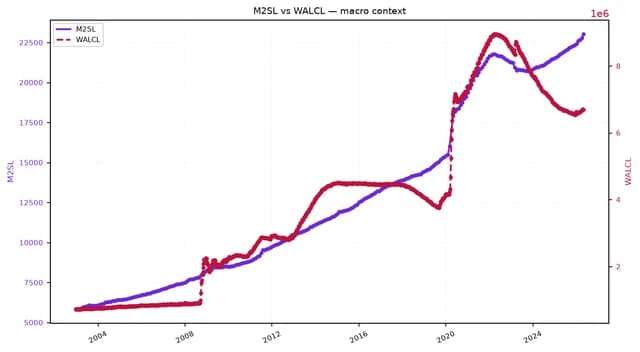
For investors, the message is that liquidity support is easing rather than accelerating. That can weigh on rate-sensitive assets and borrowers that depend on cheap funding, even as it may reassure policymakers that inflation risks are not being reignited by excess credit. The central bank’s balance sheet also remains far below its pandemic-era peak, at about 6.74 trillion, after peaking above 8.7 trillion in 2021, suggesting officials are still operating with a more restrained liquidity stance than in previous years.
At the same time, the labor market remains relatively stable, with unemployment at 4.2% in June versus 4.3% in May, which gives policymakers some room to watch incoming data before making any abrupt move. The combination of slower money growth, moderating credit and steady employment points to an economy losing a little momentum but not yet flashing recessionary signals.
That backdrop should keep traders focused on the next batch of inflation, lending and activity data for clues on whether the slowdown in liquidity is temporary or the start of a broader deceleration. Any further easing in money and credit growth would strengthen the case for a cautious policy path and could cap upside in cyclical stocks, banks and other lenders tied to loan demand.
| Entity | Gains | Losses |
|---|---|---|
| Central bank | ▲More room to stay cautious | ▼Pressure to cut rates quickly |
| Borrowers | ▲Lower inflation risk | ▼Slower credit availability |
| Savers | ▲Potentially steadier real returns | ▼Less liquidity-driven asset support |
| Cyclical stocks | ▲Policy stability | ▼Weaker demand outlook |