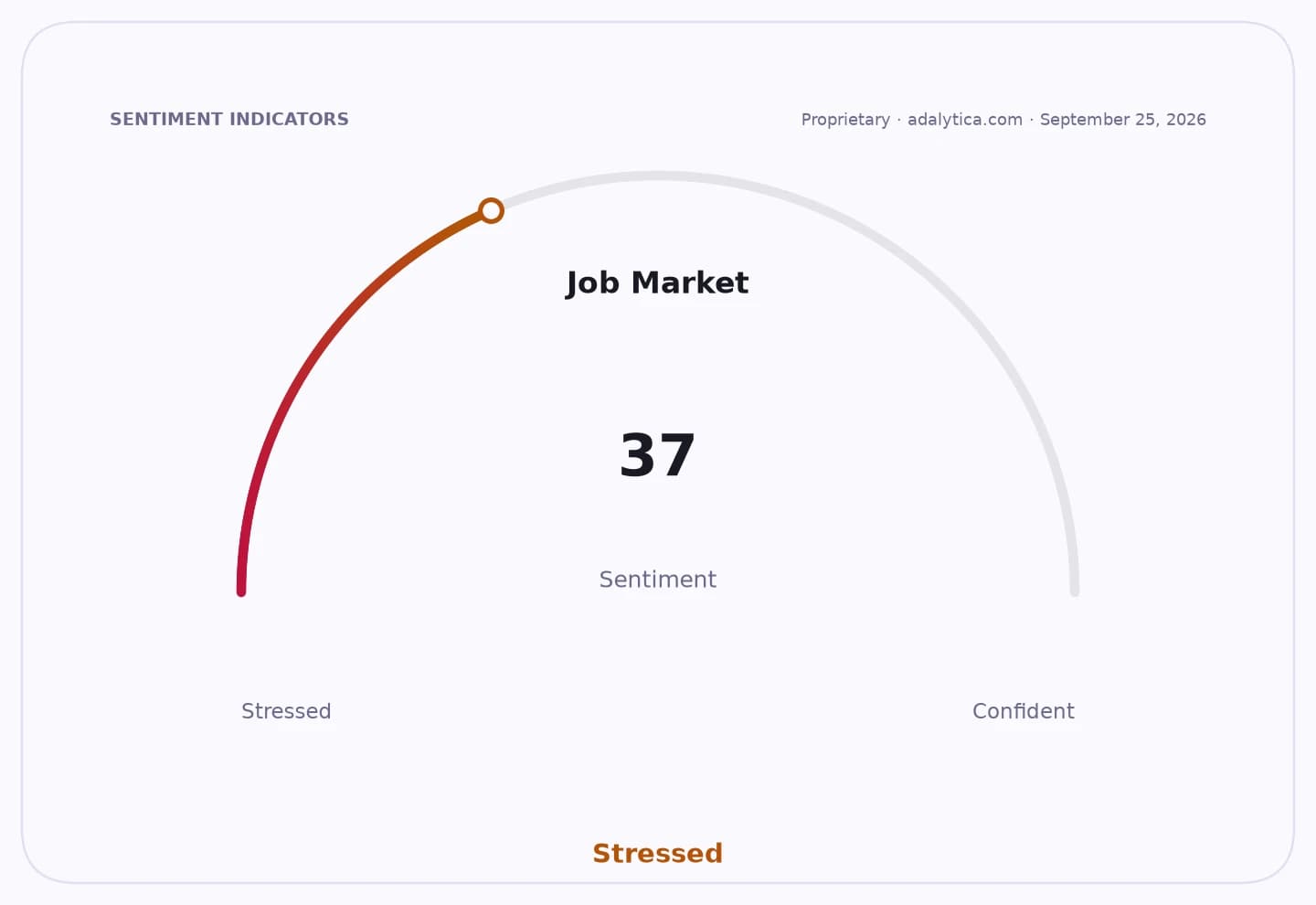
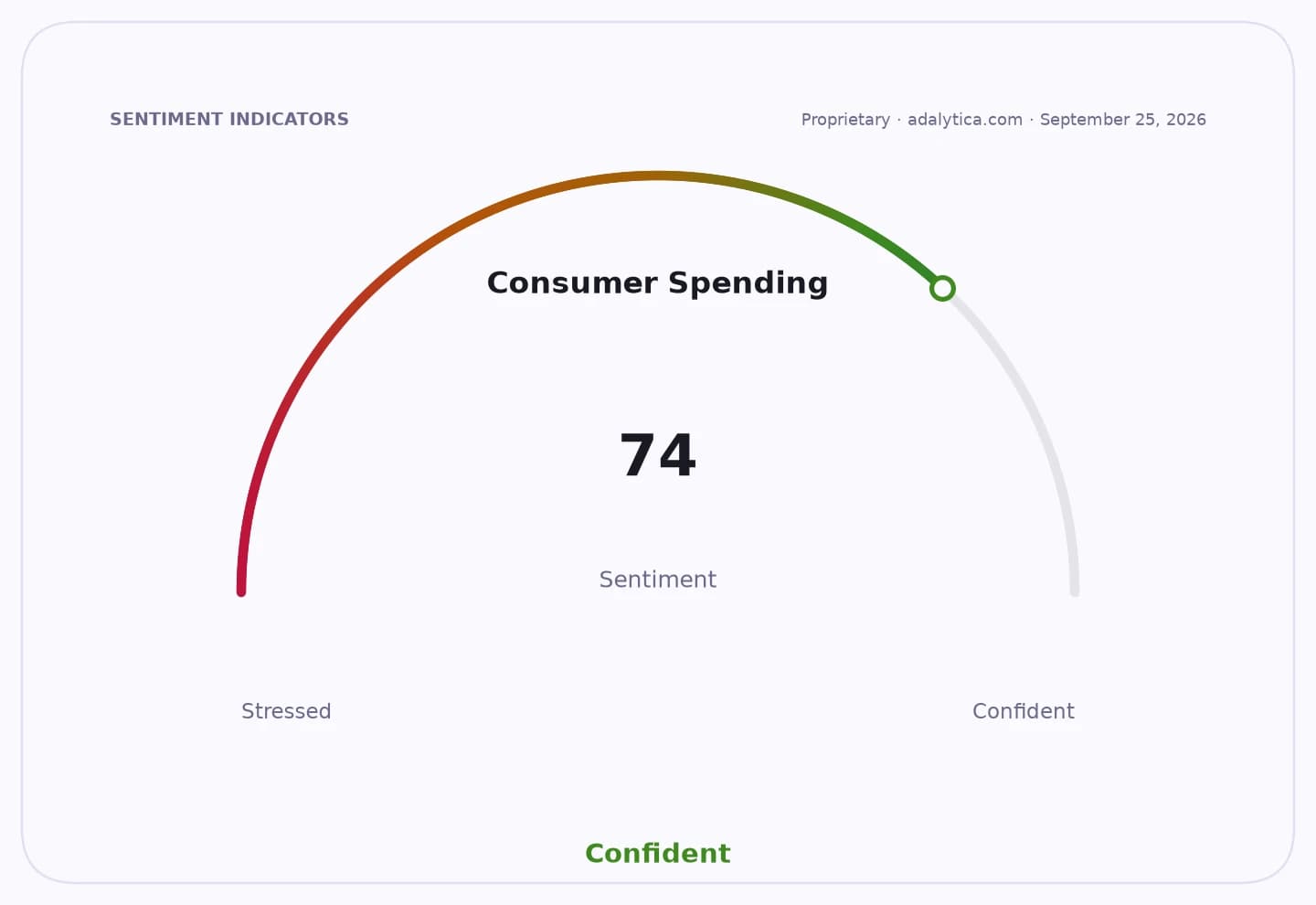
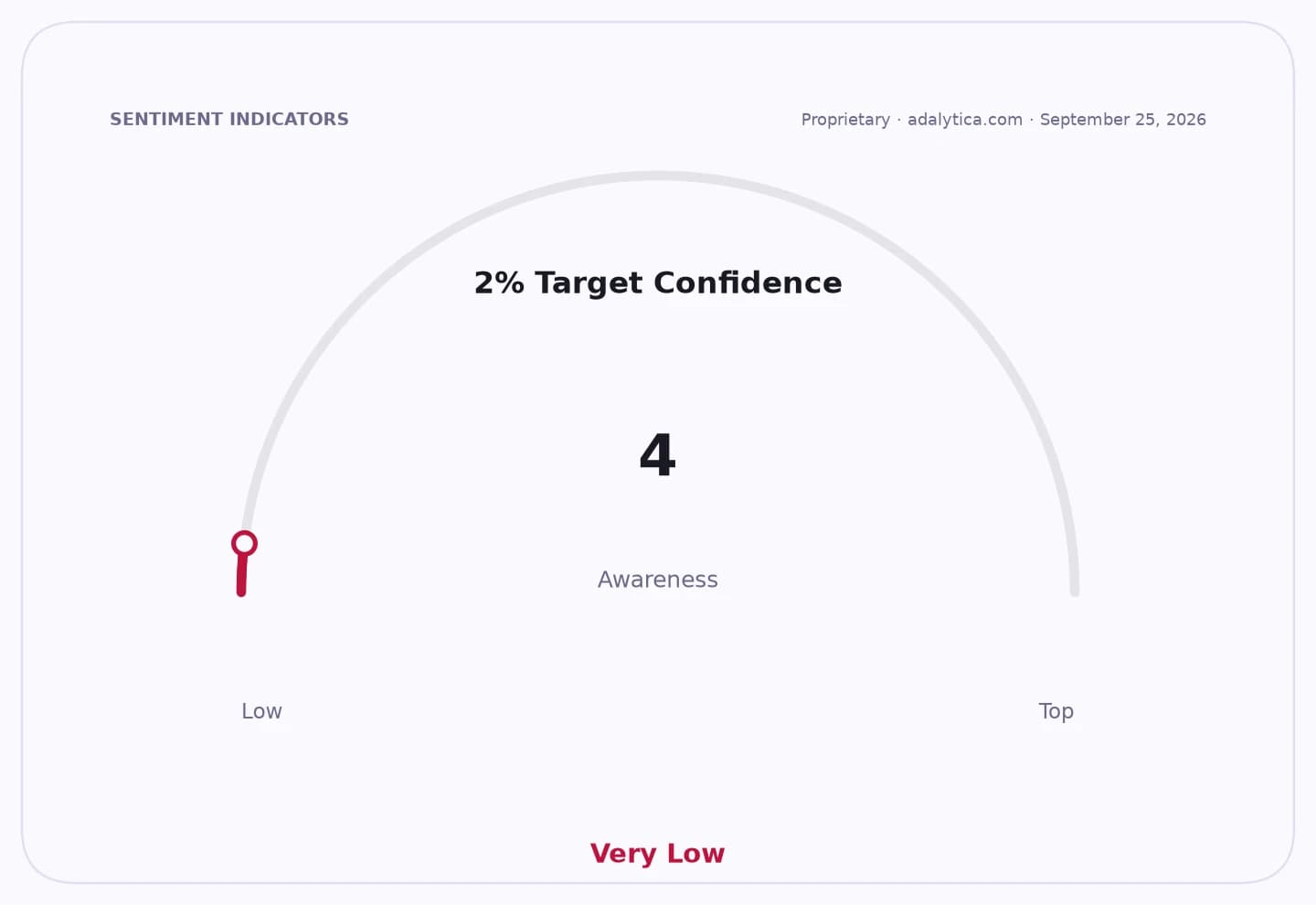
The U.S. labor market is entering a softer phase: payroll growth over the next six months is expected to total about 110,000 jobs, down 15%, even as job applications climb above 6.7 million, the highest level since 2021.
Softening U.S. labor market may aid margins
That combination matters because it points to a labor market that is still expanding, but with less momentum for wage growth, consumer spending and corporate hiring plans. A smaller pace of job creation alongside a surge in applications usually means employers have more leverage in recruiting, workers face more competition for openings, and the economy is moving away from the tight labor conditions that helped support pay gains after the pandemic.
Sentiment IndicatorsⓘProprietary · adalytica.com · July 20, 2026
This is a snapshot — live sentiment, awareness and momentum for 130+ markets update continuously in the dashboard.Open AlphaPulse
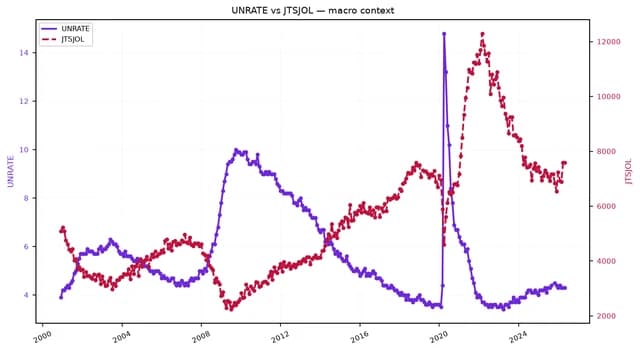
The broader backdrop reinforces that shift. The unemployment rate is forecast to edge down to 4.18% in July from 4.2% in June, suggesting no abrupt deterioration yet. But the job-openings series has been volatile and has settled far below the extremes of 2021 and 2022, when vacancies were at historic highs. Applications, by contrast, are moving back toward those earlier peaks, signaling that labor supply is becoming more active even as demand for workers cools.
For employers, that is a welcome change if they have been struggling to staff up. Retailers, restaurants and service companies have repeatedly flagged labor availability as a constraint, and bigger application pools should ease recruiting pressure and potentially slow wage escalation. That can support margins, particularly in consumer-facing businesses where labor costs remain one of the largest expenses.
For investors, the message is more mixed. A slower labor market reduces the odds of a wage-price reacceleration, which may help keep inflation contained and give the Federal Reserve more room to stay patient. But it also raises questions about the durability of consumer demand if hiring weakens further. With payroll gains expected to cool, sectors tied to discretionary spending, staffing and temporary labor are likely to feel the most immediate impact.
The market response in staffing stocks has already reflected that tension. ManpowerGroup, Kelly Services and Robert Half have all traded sharply higher in recent sessions, indicating investors are positioning for a market in which demand for labor support services may stabilize even as the overall job market loses heat. Technical readings on the shares show strong upside momentum, but also stretched conditions in some cases, suggesting investors are already pricing in a meaningful turn.
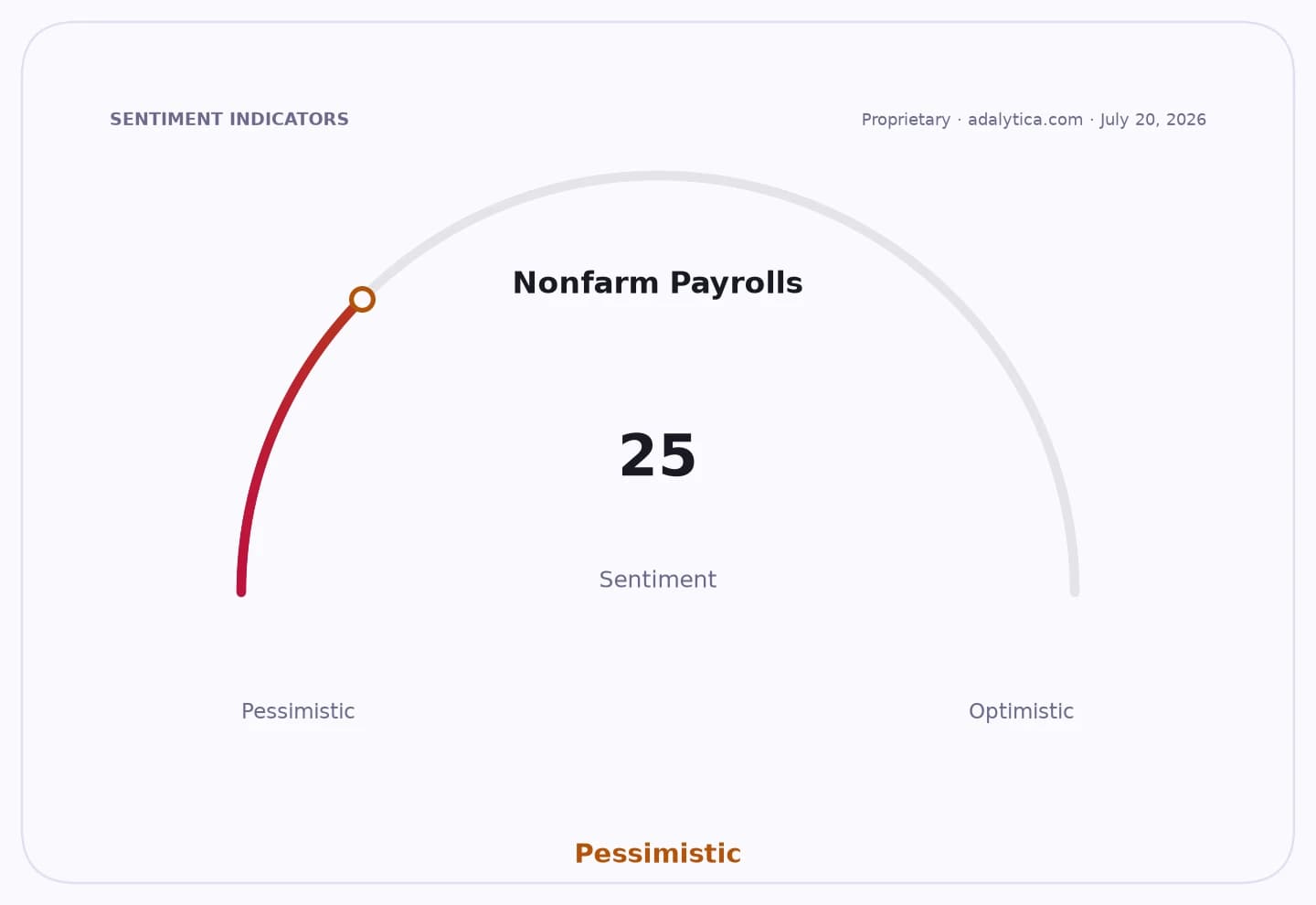
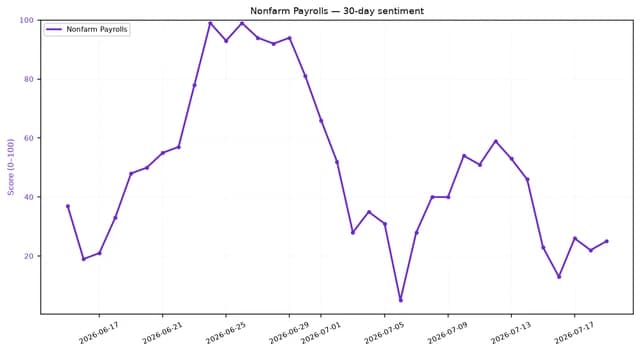
The Adalytica Nonfarm Payrolls Sentiment gauge is flashing “Fear” and “Extreme Fear” on awareness, underscoring how quickly expectations for the labor backdrop have deteriorated. That does not by itself imply recession, but it does reflect rising concern that the labor market is shifting from tight to merely adequate.
The key question now is whether this is a controlled normalization or the start of a more abrupt slowdown. If applications keep rising while hiring remains subdued, workers may find it harder to switch jobs and secure wage gains, while companies gain breathing room on labor costs. If openings continue to recover without a corresponding pickup in payroll growth, the labor market may prove resilient. Investors will be watching the next jobs report and weekly hiring trends for signs of which side of that divide is winning.
| Entity | Gains | Losses |
|---|---|---|
| Employers | ▲easier hiring | ▼less pricing pressure |
| Job seekers | ▲more openings to apply for | ▼tougher competition |
| Staffing firms | ▲higher demand for placement help | ▼weaker urgency if hiring slows |
| Fed / bond bulls | ▲lower wage inflation risk | ▼slower growth signal |