African governments are again being forced into damage control as xenophobic violence in South Africa and mounting diplomatic tensions expose how brittle cross-border cooperation remains on the continent.
South Africa Tensions Weigh on Regional Risk Appetite
The immediate economic issue is not just a security problem but a confidence problem: when foreign nationals are attacked and governments respond by repatriating citizens, trade, labor mobility and investment assumptions all come under pressure. Nigeria’s decision to bring back nearly 1,500 nationals after the recent unrest is a reminder that regional integration in Africa can be disrupted quickly by domestic political stress, with spillovers for employers, consumers and investors that depend on stable movement across borders.
Sentiment IndicatorsⓘProprietary · adalytica.com · July 26, 2026
This is a snapshot — live sentiment, awareness and momentum for 130+ markets update continuously in the dashboard.Open AlphaPulse
The call by minority groups in Ghana for a briefing from the foreign minister underscores how quickly such incidents become broader tests of state legitimacy. Public demands for transparency around Ghana-South Africa relations suggest the episode has moved beyond isolated violence and into the realm of bilateral diplomacy, where governments must balance domestic anger, diaspora protection and the commercial ties that underpin African trade. For countries trying to deepen intra-African commerce under the African Continental Free Trade Area, that tension matters: political trust is a prerequisite for open borders, and violence against migrants weakens it.
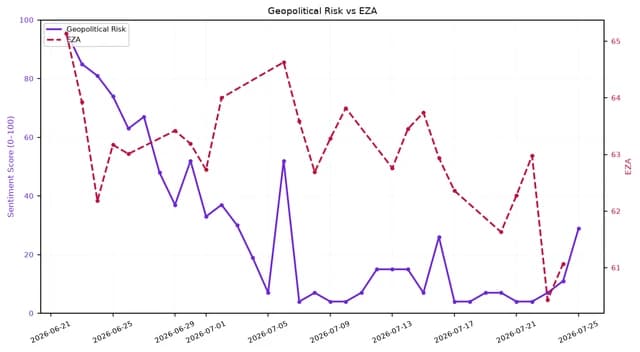
Markets are already pricing a more risk-averse backdrop. South Africa-focused equities, represented by the iShares MSCI South Africa ETF, have been volatile, with EZA slipping from above $74 in February to about $61 on Friday and trading below its 200-day moving average. The ETF’s relative weakness, alongside a softer reading in emerging-markets peer EEM, suggests investors remain selective on frontier and emerging-market exposure where domestic cohesion and policy execution can turn quickly. Conventional technical indicators also point to waning momentum, with EZA’s RSI in the mid-30s and MACD still negative, consistent with a market that has not fully recovered confidence.
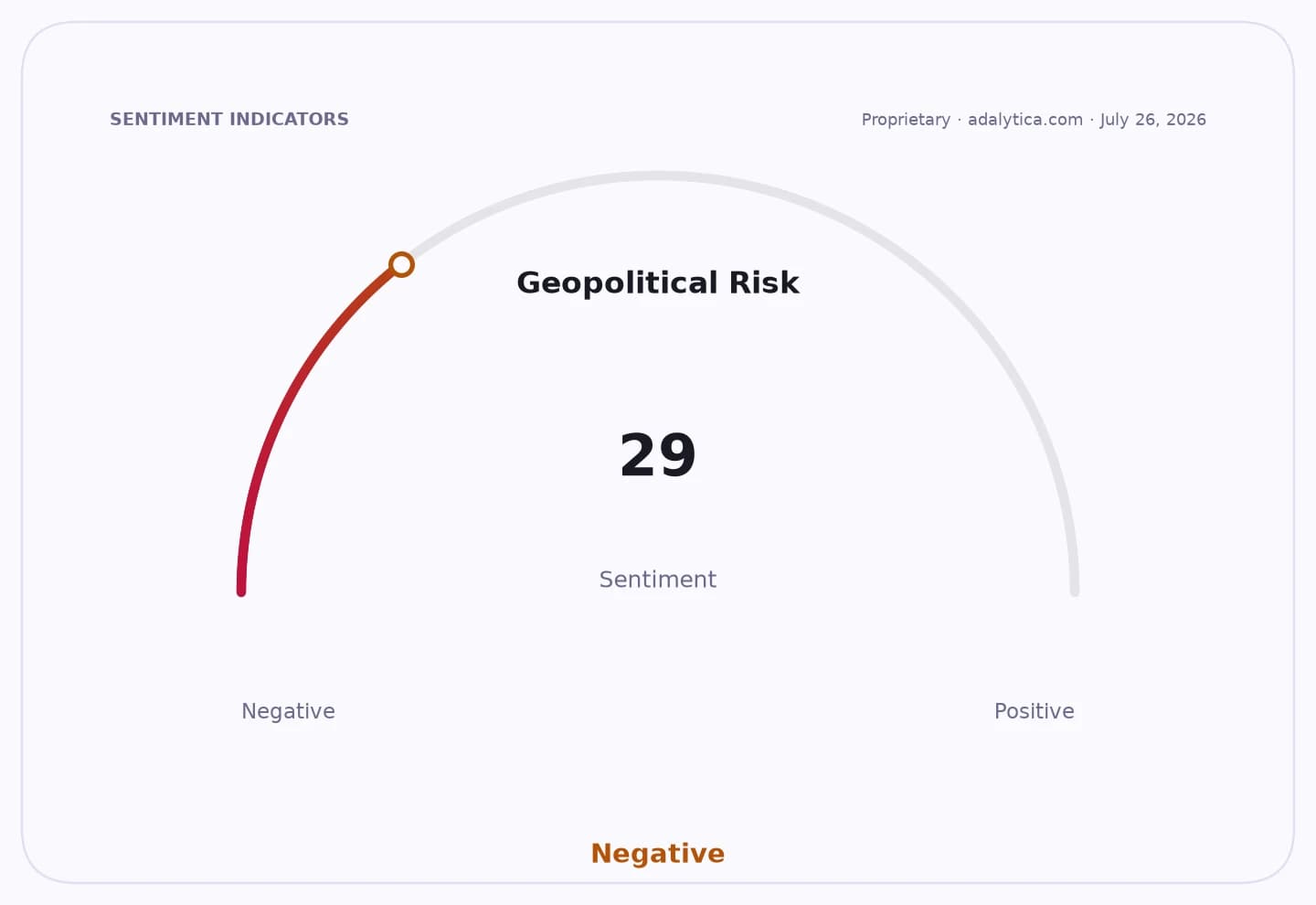
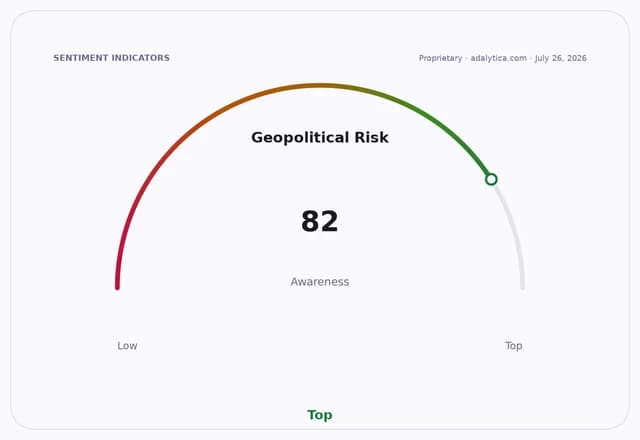
The broader macro signal is the same one that has been building through a year of elevated geopolitical stress. Adalytica’s Global Stability Sentiment gauge shows fear rising sharply in the latest snapshot, even as awareness remains high, indicating investors and policymakers are paying closer attention to instability risks rather than dismissing them. That matters for capital allocation across Africa, where sovereign risk, currency volatility and social unrest can quickly affect bond spreads, corporate earnings and tourism, retail and banking flows.
There is also a currency and funding angle. A weaker risk backdrop tends to support the dollar, and the broader market tone has been consistent with investors seeking safety when geopolitical friction worsens. For African issuers, that can tighten financing conditions and raise the cost of capital at the very moment governments need room to manage social pressures and external relations.
The bullish case is that the current diplomatic response — including the foreign minister’s expected briefing and active travel across the continent — shows governments are at least engaging before the crisis hardens into a wider rupture. The bearish case is that the pattern itself is the message: repeated episodes of xenophobia, retaliation and hurried repatriation reveal how fragile the nation-state remains in parts of Africa when economic stress meets identity politics.
For investors, the key question is whether this remains a headline risk or becomes a structural discount. If bilateral tensions deepen, the losers are likely to be cross-border businesses, airlines, banks and consumer companies with regional footprints. If diplomacy holds and safety assurances improve, the benefit goes to integrated African assets that depend on labor mobility, migrant remittances and the gradual normalization of continental trade.
| Entity | Gains | Losses |
|---|---|---|
| Regional governments | ▲diplomatic leverage | ▼credibility under strain |
| Cross-border businesses | ▲stability if ties improve | ▼disruption to operations |
| Migrant workers | ▲protection if policy responds | ▼exposure to violence |
| South African and Africa ETFs | ▲rebound on stabilization | ▼risk premium if tensions deepen |




