South Asia’s LNG market has been forced into a sharp reset after the Middle East conflict cut flows through the Strait of Hormuz, knocking the region off the demand-growth path and exposing how dependent it had become on Qatari and Emirati cargoes.
South Asia LNG demand falls after Hormuz disruption
Wood Mackenzie now expects LNG demand across South Asia to fall by about 6 million tonnes in 2026, reversing a prior forecast for 2.7 million tonnes of growth, or 7%. The downgrade matters because LNG had been central to the region’s power, fertilizer and industrial expansion plans, and the shock is now feeding directly into budgets, fuel switching and industrial output.
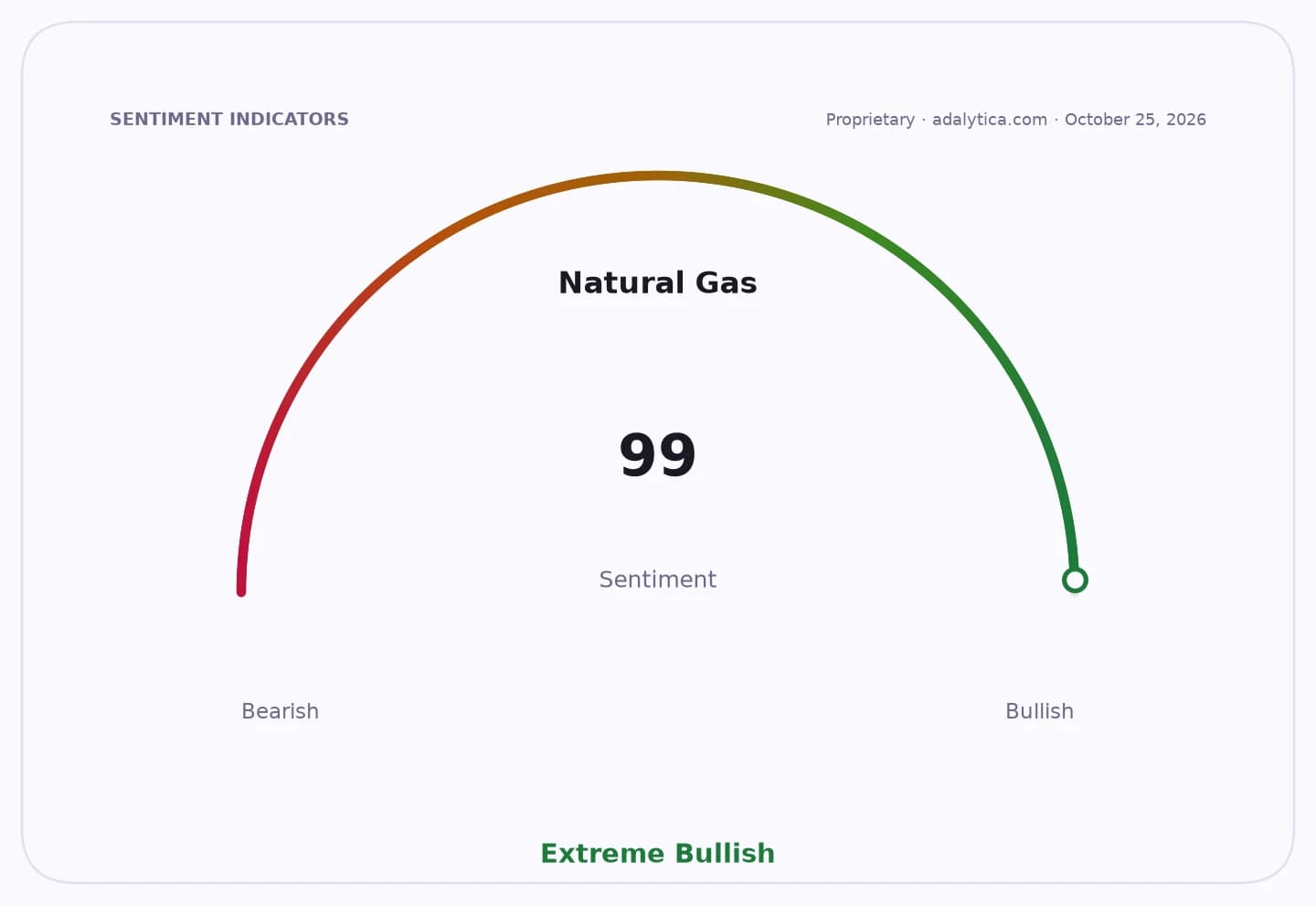
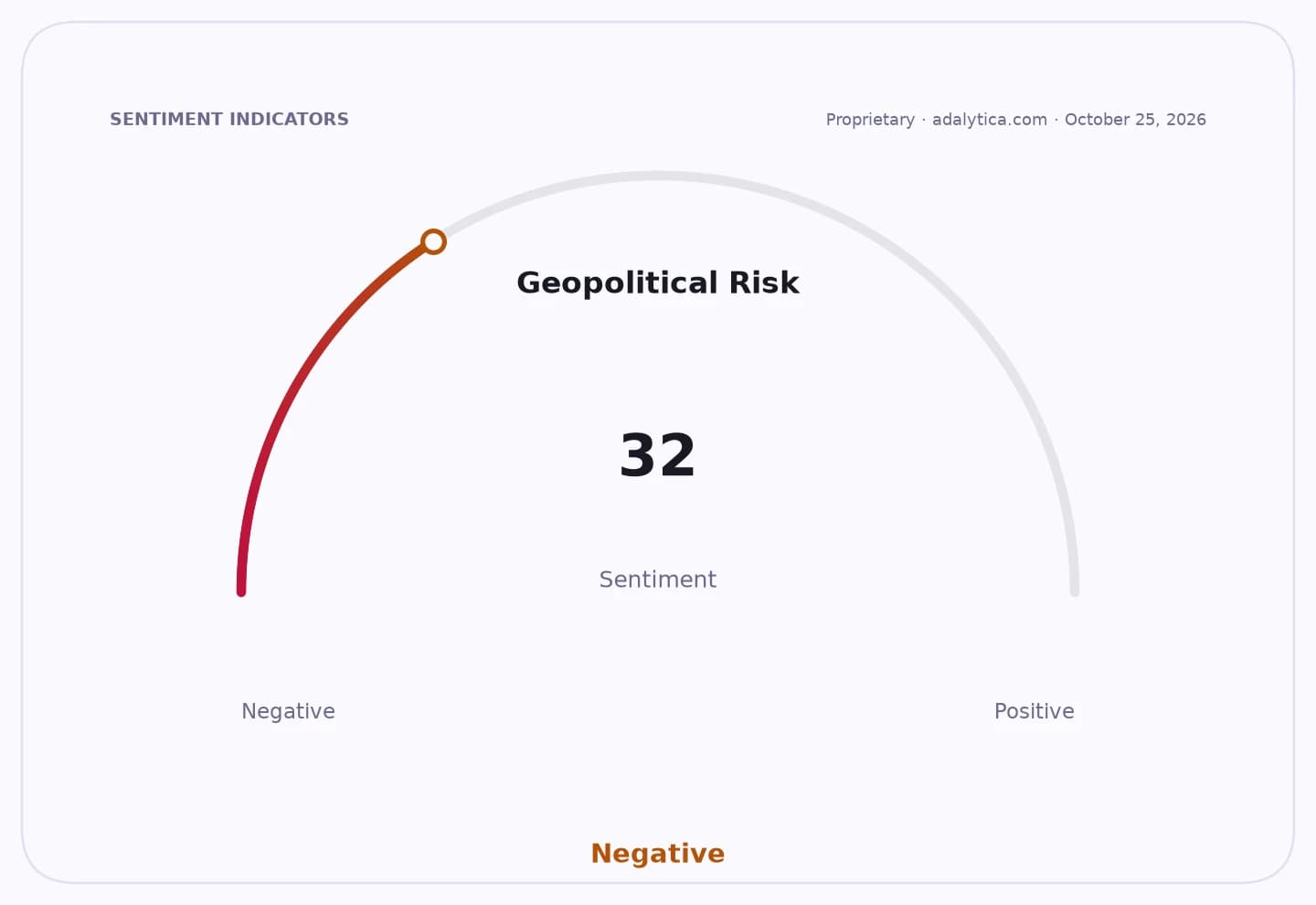
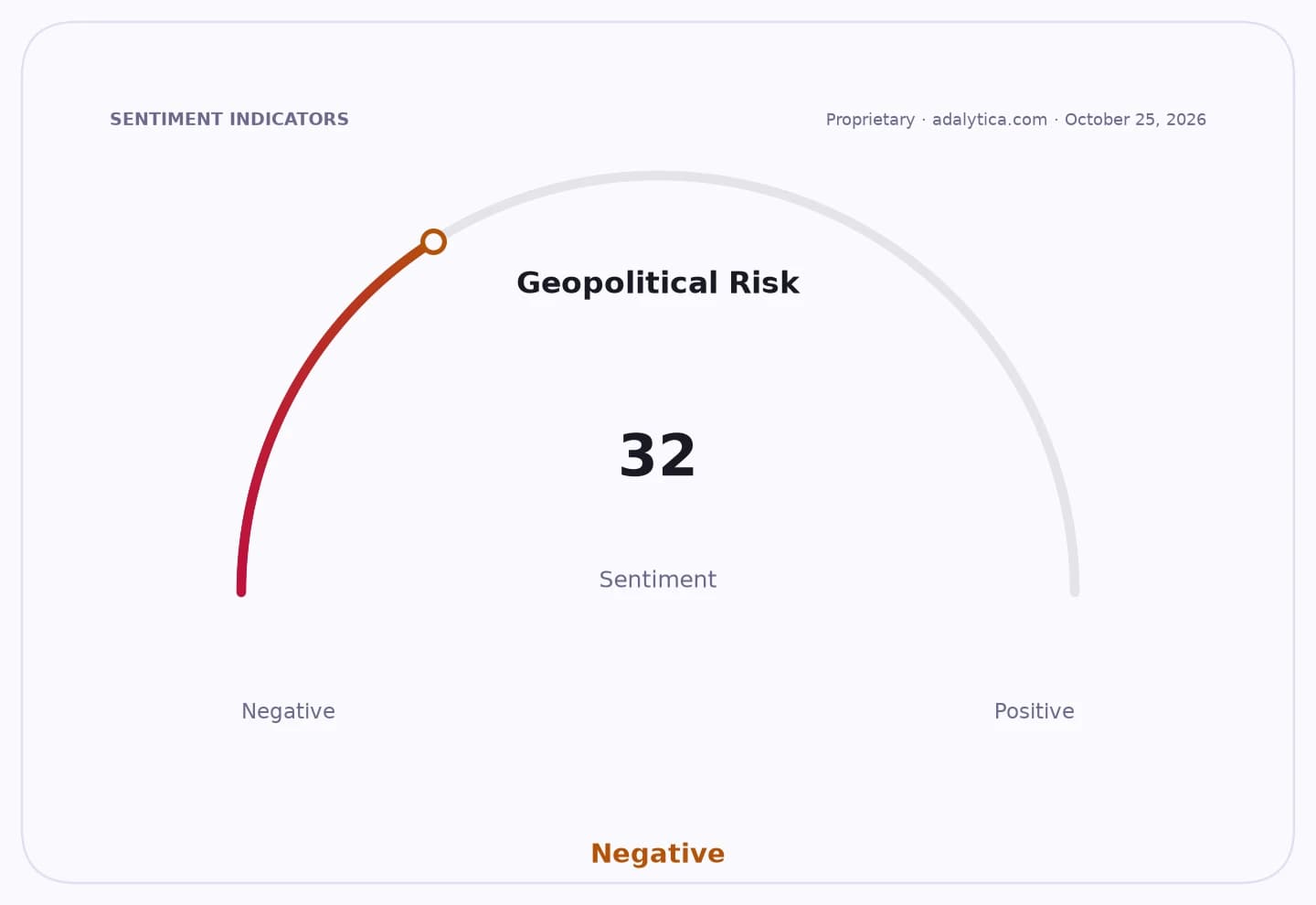
Sentiment IndicatorsⓘProprietary · adalytica.com · October 25, 2026
This is a snapshot — live sentiment, awareness and momentum for 130+ markets update continuously in the dashboard.Open AlphaPulse
The damage has been concentrated in the countries most reliant on imported gas and least able to absorb a spot-price spike. In 2025, nearly 90% of Qatari and UAE LNG shipments through the strait were headed to Asia, leaving South Asia especially exposed once transit was disrupted. The result was a widening gap between contracted and spot LNG prices that forced governments and utilities to either curtail demand or pay up at record levels.
Pakistan has taken the hardest hit. With 99% of its 2025 LNG imports sourced from Qatar, the closure reduced Pakistan-bound LNG by as much as 0.4 million tonnes a month from March to November 2026, according to Wood Mackenzie. The country responded by cutting demand, switching fuels and releasing withheld domestic gas, producing more than 2.5 million tonnes of gas demand destruction. It also re-entered the spot market in April after a two-year absence, but high prices limited the impact. Even so, it remains on the hook for daily floating storage and regasification unit take-or-pay charges whether cargoes arrive or not.
Bangladesh, lacking both spare domestic production and a diversified import portfolio, was pushed into the spot market under the worst possible conditions. Petrobangla bought cargoes from Gunvor and Vitol for March delivery at $23 to $28 per million British thermal units, while average spot LNG costs stayed above $18 from March through June. The higher fuel bill has strained subsidies, triggered power shortages and pushed the system toward coal at a time when the country can least afford it.
India fared better because it could ration demand selectively rather than bluntly. It protected city gas distribution while trimming supply to fertilizer, refinery and industrial users in March and April, a move that helped keep urea production elevated and preserved politically sensitive household supply. Tender prices still rose sharply, from $16.8 to $18.8 per mmbtu between March and June before reaching $26.4 by September, but demand for cargoes remained strong because industry and agriculture could not fully absorb the shock elsewhere.
The broader macro effect is that South Asian governments are being forced to choose between energy security and fiscal stability. Emergency measures such as rationing, tariff increases and extra budget allocations can delay the pain, but they do not resolve the structural issue: imported LNG is too expensive to serve as a reliable growth fuel unless countries have diversified sourcing, flexible pricing and stronger infrastructure. That is why the conflict has mattered beyond the immediate supply interruption — it has exposed a regional vulnerability that can now constrain growth, industrial competitiveness and public finances.
For investors, the implication is two-sided. Suppliers with flexible supply portfolios, trading desks and exposure to contracted Asian demand may benefit from volatility and higher spot prices, while buyers with concentrated sourcing and thin fiscal buffers face weaker margins and more policy intervention. LNG exporters and shipping companies have an opportunity to capture scarcity premiums, but the crisis also underscores how quickly demand destruction can emerge when prices outrun local affordability.
Wood Mackenzie’s longer-term warning is that the shortfall today may coexist with a larger LNG market later in the decade. It expects South and Southeast Asian gas demand to grow about 60% through 2040, but says that will only happen if buyers secure affordable supply and build more resilient procurement models. If they do not, the region could repeat 2026’s vulnerability in an even bigger and more interconnected market.
| Entity | Gains | Losses |
|---|---|---|
| LNG exporters with flexible supply | ▲Higher spot pricing power | ▼Less predictable demand |
| South Asian buyers | ▲Short-term supply lessons | ▼Near-term affordability |
| Qatar and UAE LNG sellers | ▲Tight-market leverage | ▼Transit-dependent volumes |
| Governments in Bangladesh, Pakistan, India | ▲Incentive to diversify | ▼Fiscal pressure and subsidies |