China’s latest clash with the Philippines in the South China Sea is doing more than rattling diplomacy: it is forcing investors to reconsider the economic value of Indonesia’s Natuna frontier, where security risk and resource potential are increasingly colliding.
South China Sea Tensions Lift Natuna Energy Theme
That matters because the South China Sea is no longer just a sovereignty dispute. It is a pricing, investment and logistics story. Escalating confrontations raise the odds of higher insurance costs, more cautious shipping routes and delayed capital spending across a region that still carries a large share of global trade. At the same time, they sharpen attention on offshore energy assets and related infrastructure in waters that sit close to one of Southeast Asia’s strategic choke points.
Sentiment IndicatorsⓘProprietary · adalytica.com · July 25, 2026
This is a snapshot — live sentiment, awareness and momentum for 130+ markets update continuously in the dashboard.Open AlphaPulse

For Indonesia, the opportunity is easy to miss if the focus stays only on territorial friction. Natuna’s economic potential rests on hydrocarbons, fisheries and its position along key maritime lanes. In a world where geopolitical risk is rising and the market is paying up for energy security, frontier assets near contested waters can become more valuable, not less — provided governments can protect access and attract capital.
The market is already telling part of that story. Indonesia Energy, which trades under the ticker INDO, has been climbing above its 50-day moving average and was trading near the upper end of its Bollinger Band range in the latest session, a sign that investors are again pricing in upside from its Brent-linked crude contract with Pertamina and its exposure to Indonesian production. The company’s stock has been volatile, but the setup is exactly the kind that can benefit from a geopolitical premium if regional tensions keep the energy-security bid alive.
Geopolitical Risk vs INDOadalytica.com
Explore this data interactively — full history, time series and cross-market comparisons.Open AlphaPulse
Global macro conditions reinforce the trade. Brent-linked oil near the mid-$80s a barrel and a U.S. 10-year yield above 4.6% keep the cost of capital high, which usually punishes weak balance sheets and rewards assets with immediate cash generation. That is a powerful backdrop for producers with real barrels in the ground and for shipping names that can exploit tighter trade flows, but it is also a warning that capital-intensive frontier development will need clear policy support to move forward.
Neptune Maritime-like plays are not the only beneficiaries. Tanker and bulk shipping companies such as Navios Maritime Partners can gain from rerouted traffic, longer voyages and firmer charter demand if the South China Sea remains tense, while import-dependent industries bear the burden of higher freight and insurance bills. The broader investment implication is that geopolitical risk is no longer a side issue for Southeast Asian energy and logistics; it is part of the valuation case.
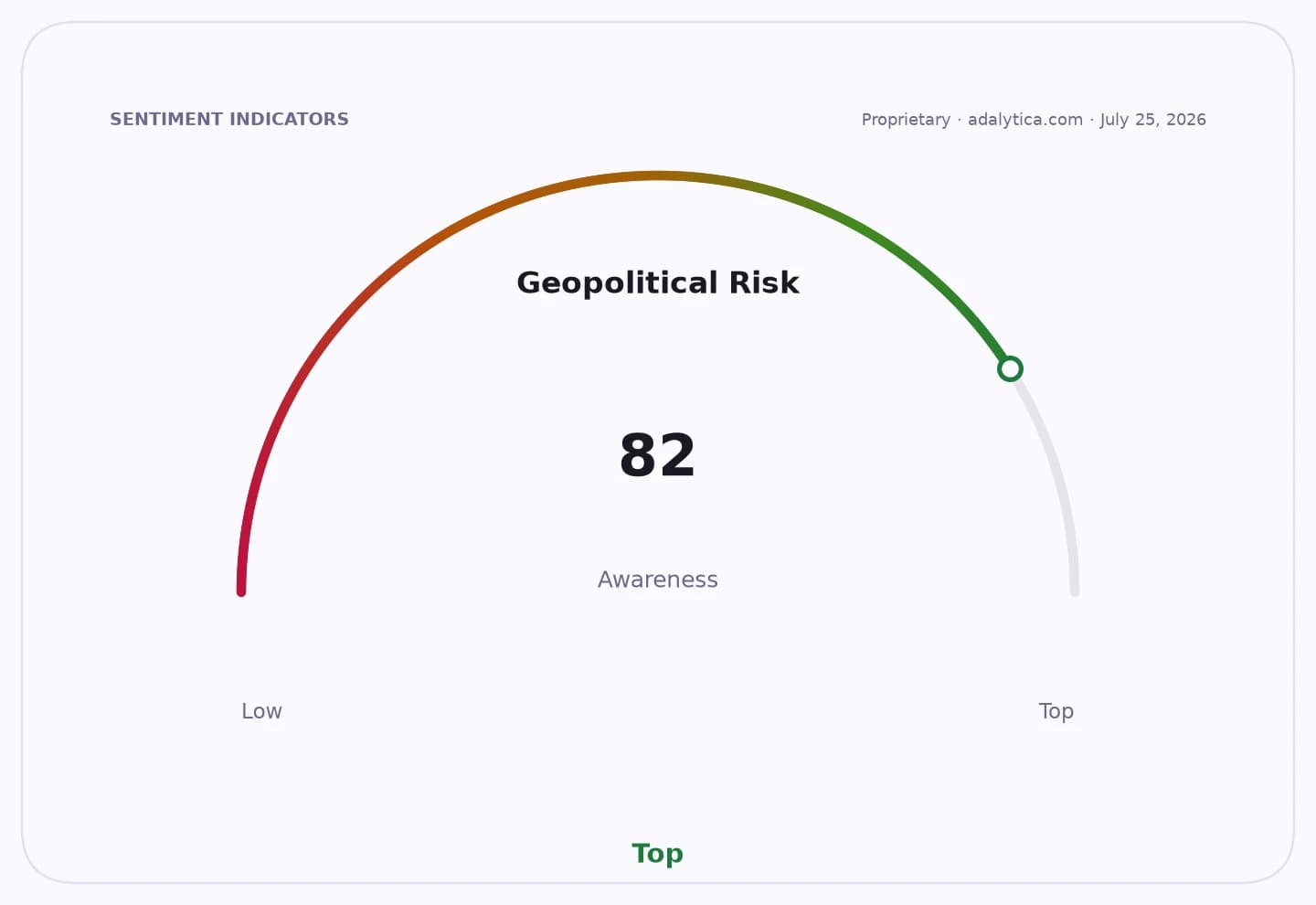
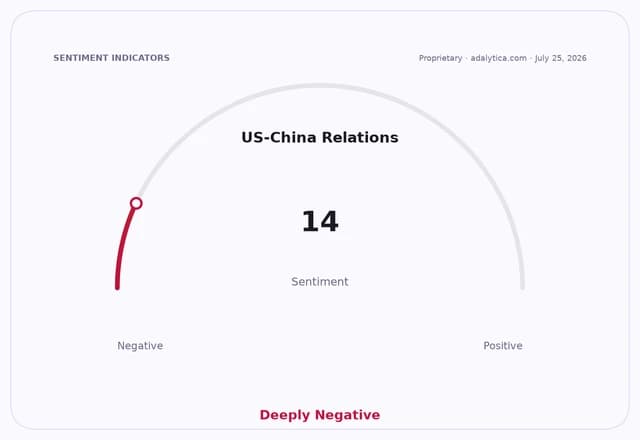
Adalytica’s global stability gauge shows fear rising even as awareness remains elevated, while its U.S.-China relations sentiment sits in “extreme fear” territory. That kind of backdrop tends to keep strategic assets underpriced until a catalyst forces the market to re-rate them. In this case, the catalyst is clear: continued South China Sea brinkmanship, pressure to finalize a code of conduct, and renewed scrutiny of Indonesia’s outer-ring energy potential.
My view is that the market underestimates how quickly Natuna can move from a political talking point to an investable theme. The best positioning is not in headline-risk alone, but in the real assets, infrastructure and shipping channels that become more valuable when maritime competition intensifies. Investors looking for asymmetry should focus on energy producers with direct Indonesian exposure and shipping names that benefit from longer, more expensive trade routes. If tensions keep rising, Natuna stops being a border problem and starts looking like a strategic asset.
| Entity | Gains | Losses |
|---|---|---|
| Indonesia energy developers | ▲Higher strategic value | ▼Delayed investment |
| Shipping operators | ▲Longer routes, higher freight | ▼Higher insurance, disruption |
| Oil producers with Brent linkage | ▲Geopolitical price support | ▼Capex uncertainty |
| Importers and manufacturers | ▲— | ▼Higher logistics costs |