The Philippines’ joint exercises with the United States and Japan in the South China Sea underscore a widening security contest that is raising the economic stakes of the maritime dispute, even as Manila and Beijing trade accusations after last week’s clashes at two contested features.
South China Sea drills lift Asia risk premium
The immediate significance is not the drills themselves but the message they send: the Philippines is deepening security coordination with its biggest military backer and a key regional partner at a moment when confrontation at sea is becoming more frequent and more dangerous. That matters because the South China Sea is not just a flashpoint for sovereignty claims; it is one of the world’s most important trade corridors, and any sustained escalation would threaten shipping confidence, regional supply chains and investment sentiment across Southeast Asia.
The latest incident follows a series of collisions and confrontations at disputed reefs and shoals, with each side blaming the other for provocation. Washington has repeatedly backed Manila, framing China’s actions as aggressive and destabilizing, while Beijing says foreign powers are inflaming tensions. The exercises with Japan — another country with a direct stake in maritime security and freedom of navigation — signal that the Philippines is no longer treating the dispute as a bilateral problem with China, but as part of a broader regional balancing act.
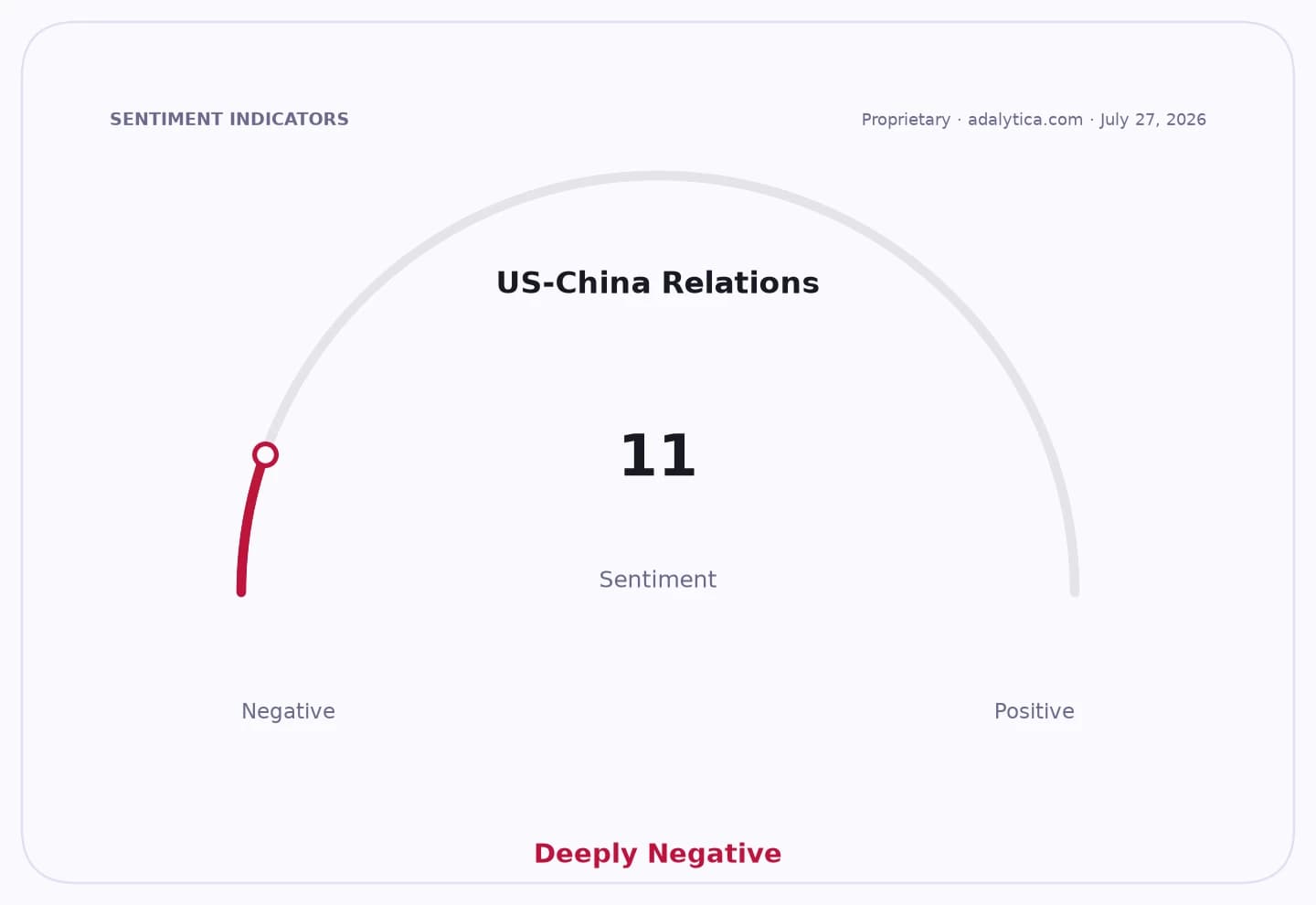
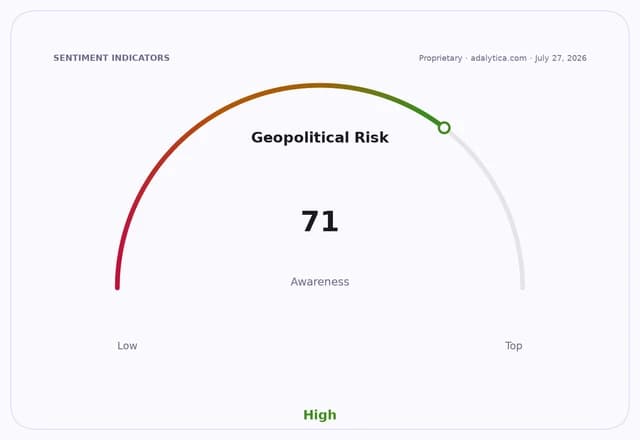
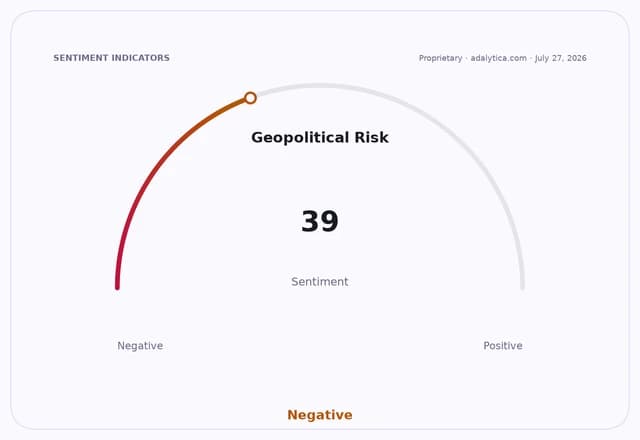
For investors, the story is about the risk premium attached to Asia assets rather than any immediate market shock. The Adalytica US–China Relations Sentiment gauge is in “Extreme Fear,” reflecting how quickly geopolitical frictions are being repriced, while broader global stability sentiment remains only neutral. That combination suggests markets are not yet in panic mode, but they are increasingly sensitive to developments that could disrupt trade flows, defense spending, tourism and foreign direct investment in the Philippines and its neighbors.
US-China Relations — 30-day sentimentadalytica.com
Explore this data interactively — full history, time series and cross-market comparisons.Open AlphaPulse
The market reaction is showing up indirectly. China-focused equities, as tracked by the FXI ETF, have fallen back to the mid-30s after earlier strength, with the fund sitting below its 200-day moving average. By contrast, YANG, a bearish China ETF, has stabilized near recent levels but remains well below longer-term trend indicators, suggesting investors are wary but not yet making a full risk-off bet on a broader regional breakdown. Neither move prices in a crisis; both indicate a market that sees headline risk, but is still waiting for escalation before revaluing more aggressively.
The economic logic is straightforward. The Philippines depends on uninterrupted sea lanes for energy and trade, and any perception that those routes are becoming less secure would lift insurance costs, slow shipping and complicate supply-chain planning. Japan’s participation is equally important because Tokyo has been pushing a more active security role in the Indo-Pacific, and closer defense ties with Manila reinforce a regional architecture aimed at deterring coercion without closing the door to diplomacy.
The bull case for investors is that the drills, while provocative to Beijing, may help stabilize the situation by raising the cost of unilateral action. More coordination among the US, Japan and the Philippines could improve deterrence and reduce the likelihood that any single clash escalates into a broader confrontation. The bear case is that every new exercise hardens positions, increases the risk of miscalculation at sea and pulls more powers into what was once a local dispute.
What happens next will depend on whether the recent encounters remain isolated or become a pattern. If China responds with more patrols, air activity or its own exercises, the geopolitical risk premium across the region is likely to widen. If both sides keep communications open and avoid further collisions, markets may treat the episode as another warning rather than a regime shift. For now, the exercises show that the South China Sea is becoming a test not only of naval resolve, but of investor appetite for geopolitical risk in Asia.
| Entity | Gains | Losses |
|---|---|---|
| Philippines | ▲Deterrence backing | ▼Higher security risk |
| US and Japan | ▲Regional influence | ▼Tighter China tensions |
| China | ▲No immediate gains | ▼Diplomatic isolation |
| Investors in Asia assets | ▲Clearer deterrence if tensions ease | ▼Higher risk premium if clashes escalate |