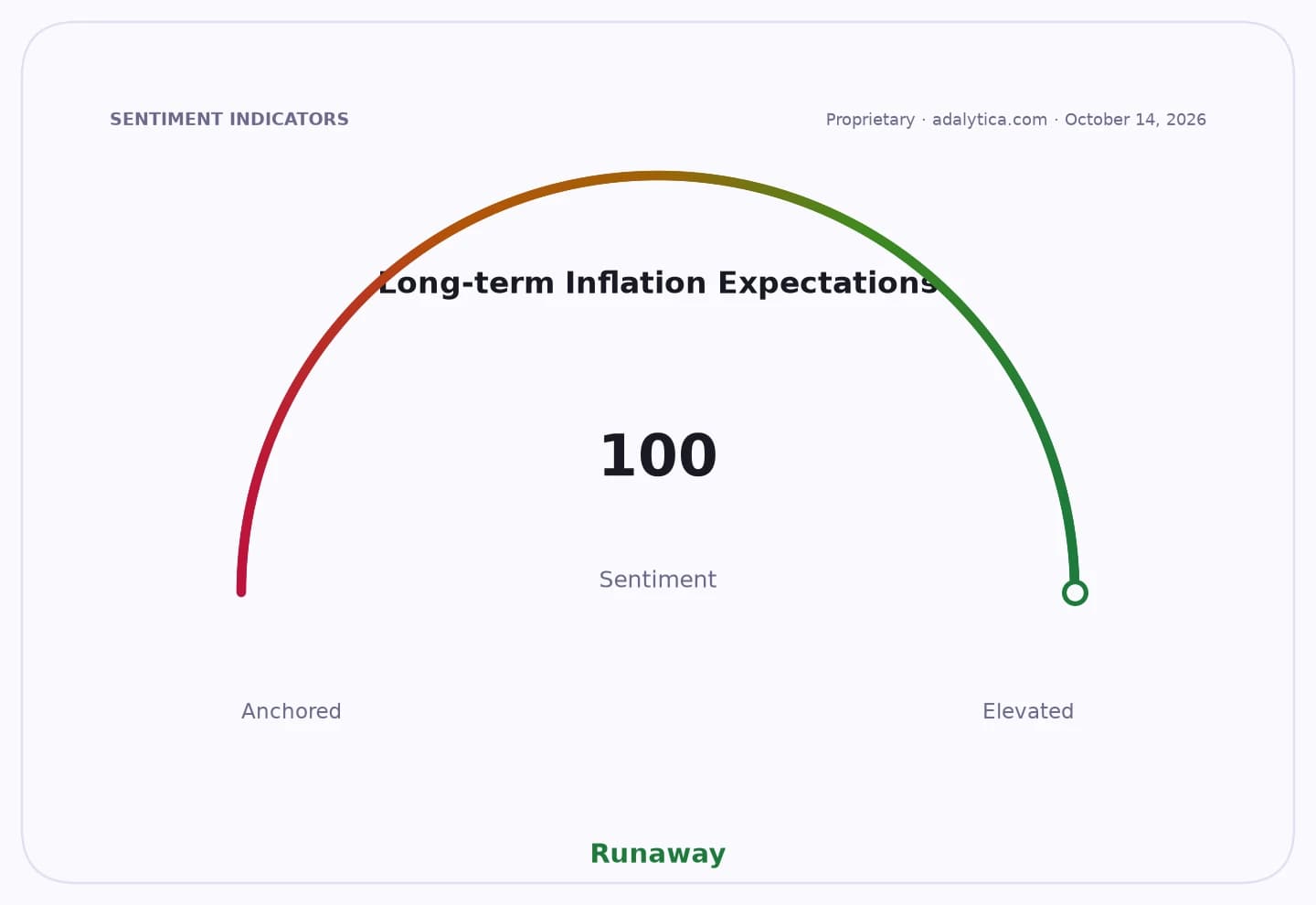
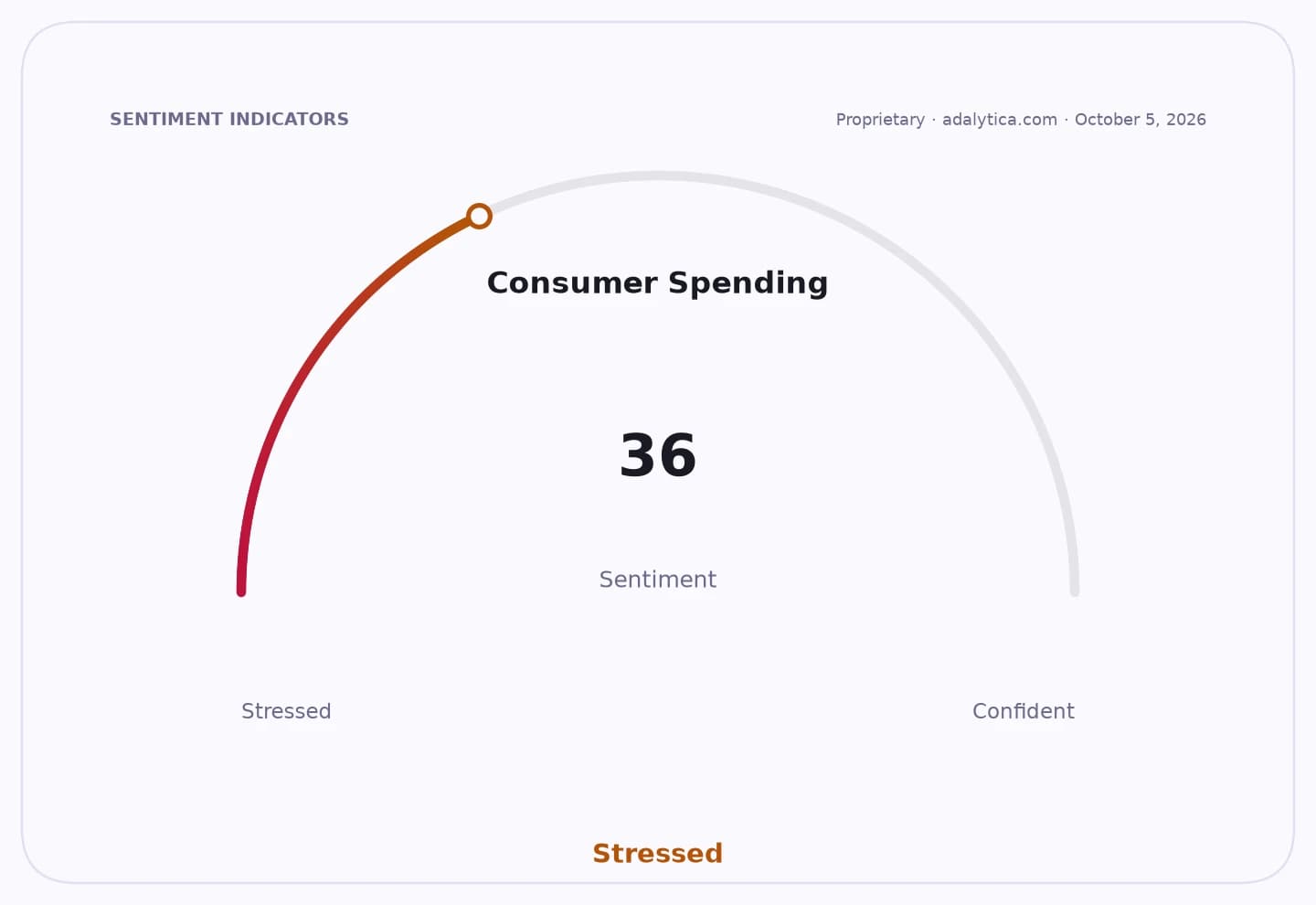
Transportation and housing inflation are doing the most damage to household budgets, and that is the story investors should focus on: the prices people cannot easily dodge are rising faster than the broader cost of living.
South Korea inflation hits housing and transport
In September, transport prices climbed 4.7% and rent revaluations doubled, while mortgage interest costs also moved higher as COFIX posted its biggest increase in nearly four years. That combination matters because it turns inflation from a temporary nuisance into a persistent drain on disposable income, especially for renters and homeowners already facing higher borrowing costs.
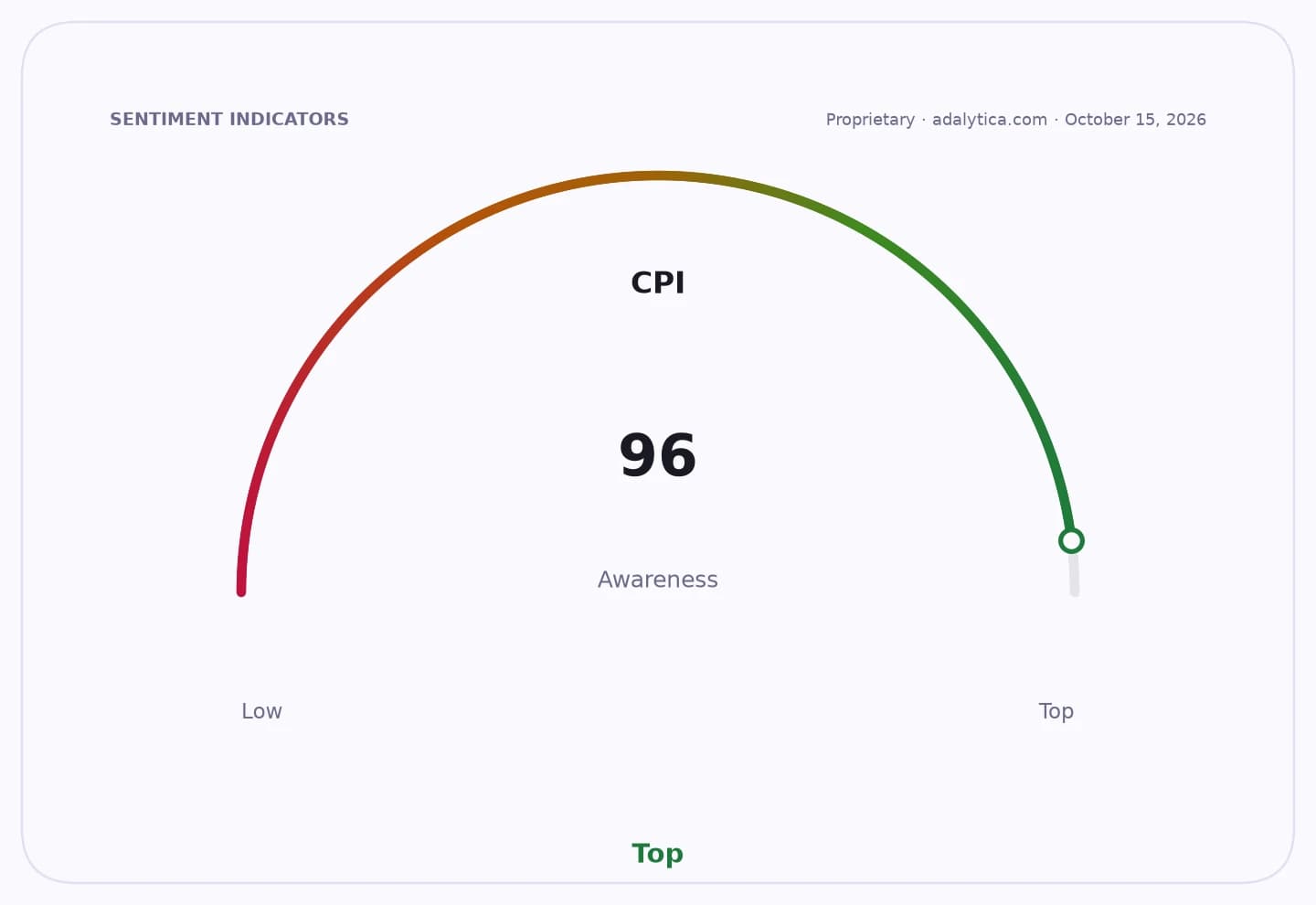
Sentiment IndicatorsⓘProprietary · adalytica.com · October 15, 2026
This is a snapshot — live sentiment, awareness and momentum for 130+ markets update continuously in the dashboard.Open AlphaPulse
The broader CPI picture reinforces that pressure. The headline consumer price index and core inflation both continued to rise into the fall, but the real economic weight is concentrated in housing-linked expenses and mobility costs. Those are the categories that hit every paycheck, and they tend to stick. When transport and housing lead the inflation mix, central banks have less room to declare victory, even if some goods prices are cooling.
For investors, that means the market may still be underestimating how long rate pressure can linger. Higher mortgage rates, firmer rent adjustments and sticky transportation costs are bad news for rate-sensitive assets, particularly housing, consumer discretionary names and leveraged property owners. They are also a tailwind for businesses exposed to pricing power and recurring demand, from landlords with indexed leases to infrastructure and mobility operators that can pass through higher costs.
The housing backdrop adds another layer of risk. Apartment prices in Seoul rose for a second straight week, especially in South Gyeonggi Province, showing that affordability stress has not yet broken demand. But the debate over weekly housing data transparency suggests the market is still struggling to get a clean read on where prices are really headed. That uncertainty itself can prolong volatility in real estate, credit and consumer spending.
My view is simple: this is not a broad-based inflation story, it is a housing-and-transport inflation story, and that makes it more dangerous. The market tends to look through one month of CPI noise; it should not look through a sustained squeeze on shelter and mobility, because those are the inputs that shape rate policy, consumer resilience and asset valuations over the next several quarters. Investors should stay positioned for sticky inflation, selective pricing power and continued pressure on rate-sensitive sectors.
| Entity | Gains | Losses |
|---|---|---|
| Landlords with indexed rents | ▲Higher rental income | ▼Tenants’ affordability |
| Transport operators with pricing power | ▲Pass-through revenues | ▼Commuters and shippers |
| Banks and lenders | ▲Wider lending spreads | ▼Borrowers facing higher debt service |
| Rate-sensitive real estate buyers | ▲None | ▼Higher mortgage costs |