South Korean media, gaming and travel stocks surged Thursday after Seoul and Beijing said they had largely concluded a trade deal that could finally reopen a huge consumer market to Korean entertainment and tourism companies.
South Korea Media Stocks Jump on China Trade Deal
For investors, the key point is not just that these shares moved sharply higher in a single session. It is that China may be taking the first documented step toward easing the restrictions that have weighed on South Korean cultural exports since the THAAD dispute nearly a decade ago. If the agreement is ultimately signed and implemented, it could restore a meaningful growth lane for companies that have spent years trying to expand overseas while shut out of the mainland Chinese market.
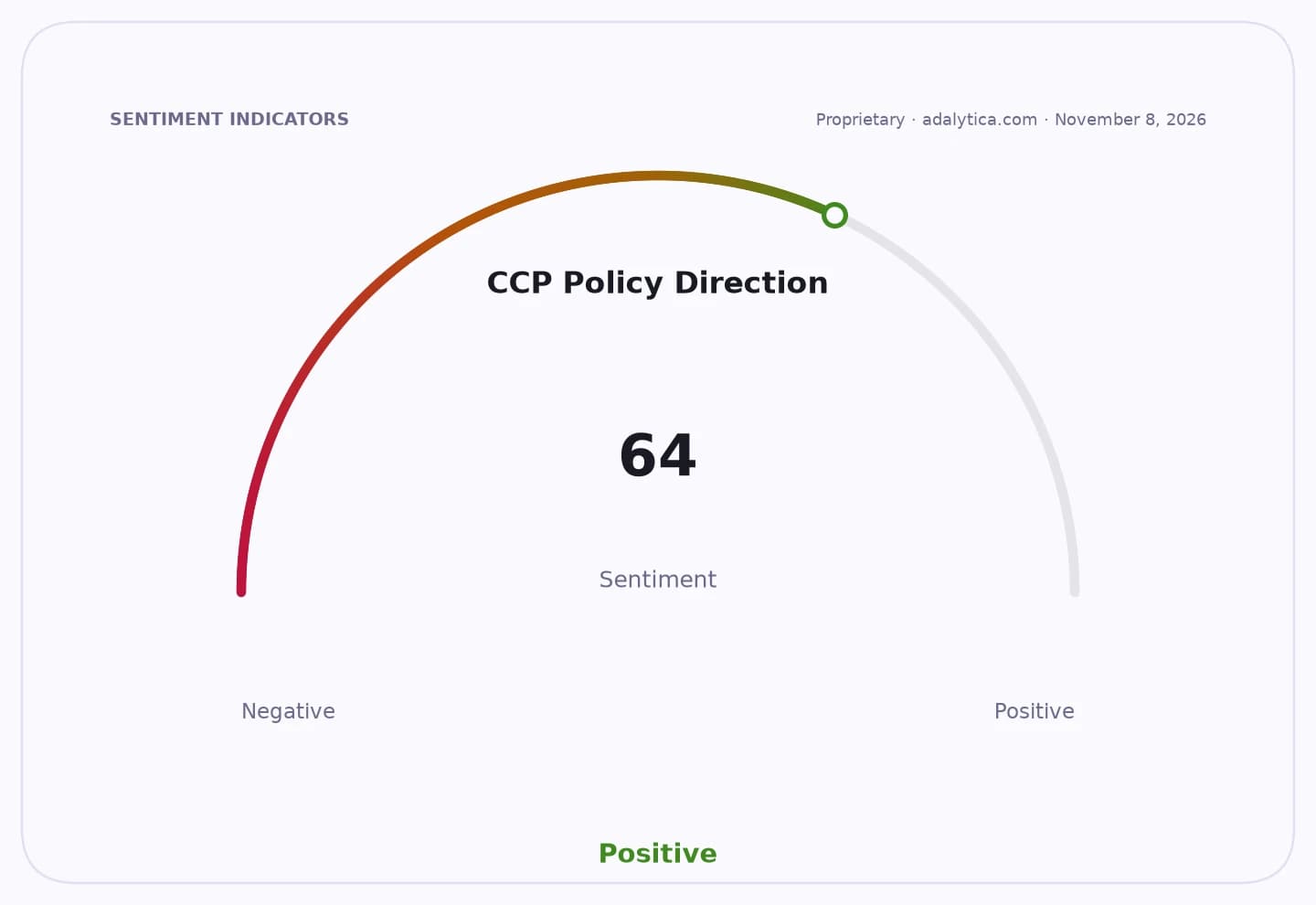
Sentiment Indicators
Studio Dragon, one of the clearest beneficiaries, soared 29.96%, while CJ ENM, the media giant that backed Oscar-winning film “Parasite,” jumped 26% early in the session. Hana Tour rose 18% and film distributor Showbox gained 9%, while gaming names Krafton and Shift Up added 2.69% and 6.57%, respectively. The rally was broad enough to show how deeply investors think a China opening could flow through Korea’s content, gaming and tourism ecosystems.
The deal, announced by South Korea’s trade ministry, expands the countries’ free trade agreement to cover services and investment after eight years and eight months of talks. Beijing has offered most-favored-nation treatment to South Korean industries including films and games, and agreed to non-discriminatory reviews of online games and films — language that matters because it gives Korean companies a better shot at approvals in a market that has long been tightly controlled. The two sides also agreed to broaden joint productions beyond films to television dramas, animation, variety shows and documentaries.
That matters economically because South Korea’s entertainment sector has become one of the country’s most globally recognizable export industries, but China remains a massive missing piece. Analysts at Hana Securities said Studio Dragon and Hana Tour look like the most direct beneficiaries, estimating Studio Dragon’s operating profit could rise as much as 50% if Chinese streaming platforms resume airing Korean dramas, with an extra 3 billion to 4 billion won in revenue per title. That is the kind of incremental earnings boost that can reshape valuation for a content company, especially one with a library of exportable intellectual property.
Travel may also be an underappreciated winner. Under the agreement, South Korean travel agencies in 23 regions across China would be allowed to directly recruit Chinese residents and foreigners for overseas trips, including trips to South Korea. That creates a clearer path for tourist flows to normalize and for agencies to reclaim a revenue stream that has been constrained for years.
There are still important caveats. The agreement has not been formally signed or taken effect, and both sides still need to finalize the technical wording. NH Investment & Securities noted that the deal stops short of explicitly reopening K-pop concerts or fully restoring the distribution of Korean dramas in mainland China. So this is not a clean turn in the cycle yet, but it is the clearest policy thaw in years.
Even so, investors should view Thursday’s move as more than a speculative pop. It is a reminder that trade diplomacy can have real earnings consequences, especially for companies tied to cross-border consumer demand. If the deal becomes binding, the biggest winners are likely to be the Korean studios, travel firms and game developers with content and distribution ready to scale. For long-term investors, that makes these names worth watching — not because every stock will soar, but because the opening of China could restore a powerful growth engine to a sector built on compounding intellectual property.
| Entity | Gains | Losses |
|---|---|---|
| Studio Dragon, CJ ENM | ▲Higher China revenue potential | ▼Years of limited market access |
| Hana Tour, travel agencies | ▲Easier access to Chinese customers | ▼THAAD-era travel curbs |
| Krafton, Shift Up, game makers | ▲Better approval odds in China | ▼Slower mainland expansion |
| Chinese consumers and platforms | ▲More Korean content and services | ▼Less protection from local competition |