South Korea’s equity market is set to be one of the biggest winners from FTSE Russell’s latest Global Equity Index Series reshuffle, with the potential inclusion of more Korean stocks expected to trigger fresh benchmark buying into the iShares MSCI South Korea ETF, EWY, and related funds.
South Korea Stocks Ahead of FTSE Russell Index Changes
The announcement matters because index changes of this scale can redirect large passive flows in and out of a market almost overnight. For Korea, that can mean not just a short-term price pop, but a broader repricing of liquidity, foreign ownership and the cost of capital for companies that gain or lose benchmark status.
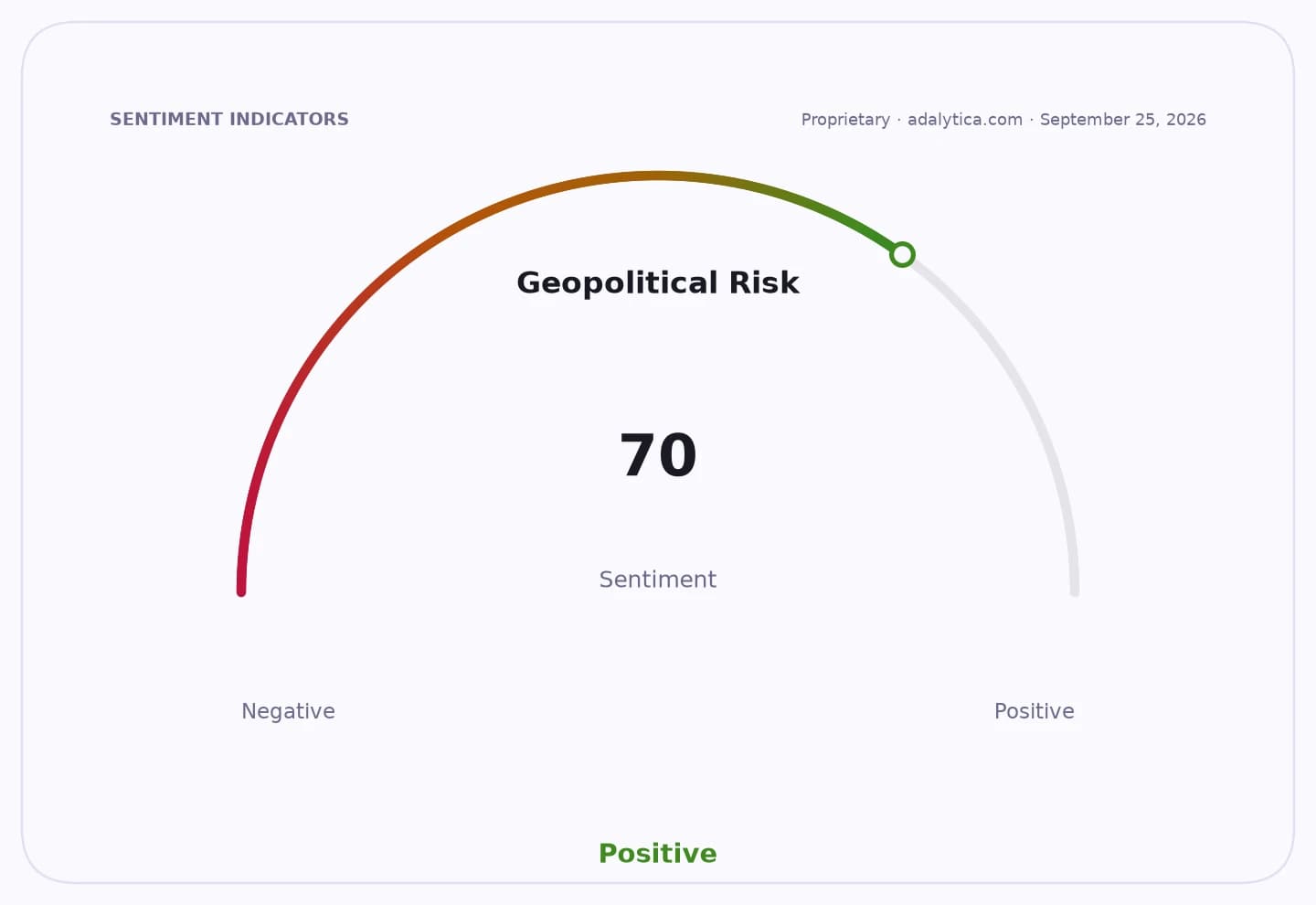
Sentiment IndicatorsⓘProprietary · adalytica.com · August 17, 2026
This is a snapshot — live sentiment, awareness and momentum for 130+ markets update continuously in the dashboard.Open AlphaPulse
EWY has already been trading like a market anticipating that outcome. The ETF closed at 179.74 on Aug. 14, up from 144.21 on July 29, a jump of about 25% in two weeks that left it above its 50-day moving average and near the upper end of its Bollinger Bands. The move was accompanied by a rebound in momentum gauges: RSI had recovered to 61.5, while MACD was still below its signal line but moving closer to a bullish crossover. That suggests investors have been positioning for a rules-based inflow event rather than a change in Korea’s fundamentals alone.
The case for a meaningful inclusion-driven bid is straightforward. FTSE Russell’s GEIS framework is one of the most closely watched global benchmark systems, and changes to its official stock list can force index-tracking funds to buy eligible names in size. When the underlying market is already relatively liquid, as Korea’s is, the effect can still be powerful because passive demand tends to arrive in a concentrated window. That usually benefits the largest, most index-relevant names first, while companies left out of the reweighting can lag.
The macro backdrop also helps explain why the market is reacting so forcefully. Adalytica’s S&P 500 trade signals show U.S. equity sentiment is neutral, while its U.S. dollar gauge has moved to extreme fear, a configuration that typically supports non-dollar assets and emerging market exposure. EEM, the broad emerging markets ETF, has also recovered to 66.61 from a July low of 61.07, with RSI back above 60 and MACD turning positive. That suggests investors are willing to rotate into emerging-market beta, and any FTSE-driven Korea inclusion would arrive into a more receptive environment.
Still, the bullish case is not one-way. Investors often overestimate the permanence of index-related gains. If the GEIS changes are already largely priced in, the actual announcement can become a “sell the news” event, especially for stocks that have run ahead of fundamentals. EWY’s sharp advance and elevated RSI argue the market is not cheap on a short-term technical basis, even if longer-term institutional inflows remain supportive.
For investors, the key question is whether the FTSE Russell changes will deliver a one-off flow impulse or a sustained re-rating of Korean equities. A larger benchmark weight would improve foreign participation and liquidity, but it would not by itself resolve concerns about earnings growth, export demand or corporate governance. The winners are likely to be the most liquid, index-heavy Korean names; the losers may be underweight active managers and stocks excluded from the reconstitution.
What happens next will depend on the final official stock list and the size of the weight changes. If FTSE Russell makes the expected additions, Korean equities could see another leg higher as passive funds rebalance. If the changes disappoint, the recent rally in EWY could cool quickly, leaving the market to refocus on earnings and the broader emerging-market backdrop.
| Entity | Gains | Losses |
|---|---|---|
| Korean index members | ▲Passive inflows | ▼Higher valuation pressure |
| EWY holders | ▲Benchmark-driven upside | ▼Crowded-entry risk |
| FTSE Russell additions | ▲Liquidity boost | ▼Reconstitution uncertainty |
| Excluded Korean stocks | ▲— | ▼Missed flow support |