Oil is firming again, and that matters far beyond the trading screen: for South Sudan, a safer export route could steady the cash flow that keeps its economy alive, while for global oil majors and investors, a rebound in crude back toward the mid-$80s keeps upstream earnings, dividends and buybacks underpinned.
South Sudan oil corridor focus as WTI nears $84.71
The most important development is the renewed focus on protecting oil infrastructure tied to the Sudan-South Sudan corridor. For South Sudan, oil remains the backbone of government revenue and foreign exchange, so any improvement in the security of pipelines, pumping stations and transit arrangements can have an outsized effect on public finances, the currency and basic import capacity. In a country where conflict and border disruptions can quickly choke off dollars, even modest operational stability can help prevent a deeper economic squeeze.
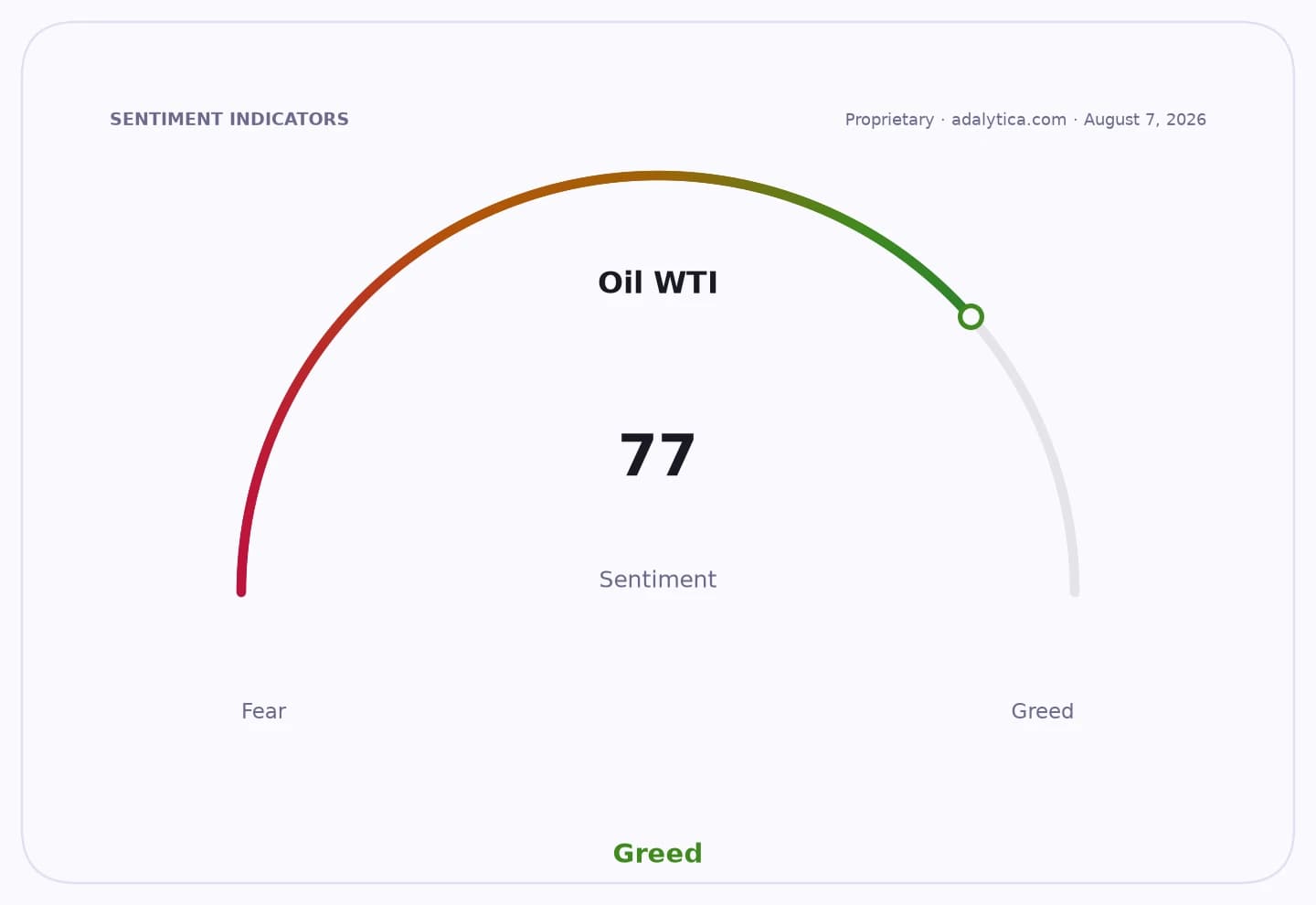
Sentiment IndicatorsⓘProprietary · adalytica.com · August 7, 2026
This is a snapshot — live sentiment, awareness and momentum for 130+ markets update continuously in the dashboard.Open AlphaPulse
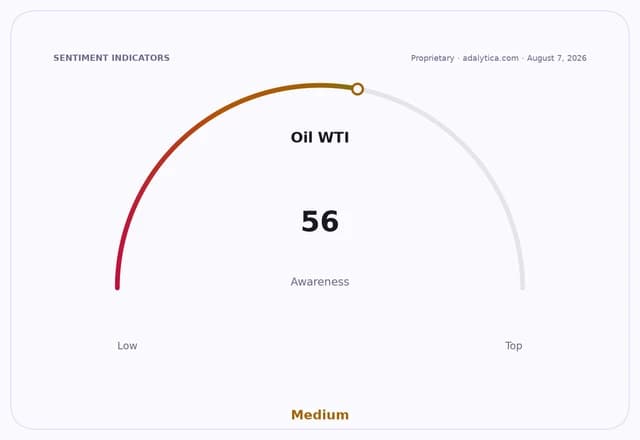
That local significance is reinforced by the broader oil backdrop. U.S. crude is forecast around $84.71 a barrel, after trading near $81.96 and then $86.16 in recent sessions, while the Adalytica Oil WTI Trade Signals snapshot shows “Greed” sentiment at 77 with 7-day momentum sharply higher. In plain English, the market is not pricing in collapse; it is still leaning toward a tighter, more constructive oil setup.
For investors, the bigger story is that higher or steadier crude prices continue to support the cash-generating power of the major integrated producers. Exxon Mobil, Chevron and Shell all remain above their 50-day and 200-day moving averages, a conventional technical sign that their longer-term trends are intact even after recent pullbacks. Exxon closed at $152.75 on Aug. 7, well above its 200-day average of $139.14. Chevron ended at $187.17, above its 200-day average of $174.38. Shell finished at $88.72 versus a 200-day average of $80.58.
That matters because these companies do not need oil to stay at extreme levels to make money; they need it to stay profitable enough to fund free cash flow, dividends and share repurchases through the cycle. The latest filings from Exxon and Chevron also underline the usual caveat: geopolitics, OPEC+ actions and economic conditions can move prices quickly, and the majors’ results still depend on disciplined capital spending and stable operations.
The South Sudan angle is easy to miss, but long-term investors should not. Fragile producer states can become a source of supply shocks or relief, and that swings crude prices, margins and sentiment across the energy complex. In this case, progress on security around oil infrastructure is constructive for South Sudan’s fiscal survival and supportive for the broader market’s view that supply disruptions are manageable rather than escalating.
The bigger takeaway is that energy remains a business of endurance, not prediction. If oil holds near current levels and pipeline security improves, that is a favorable combination for the integrated majors and for patient investors who want exposure to a sector that still throws off serious cash. It is worth watching closely, but not for a quick trade — for the compounding.
| Entity | Gains | Losses |
|---|---|---|
| South Sudan government | ▲steadier oil revenue | ▼less shutdown risk |
| Oil majors | ▲stronger cash flow | ▼less upside from panic spikes |
| Consumers/importers | ▲lower disruption risk | ▼higher fuel-cost pressure |
| Short sellers | ▲none | ▼tighter crude market |