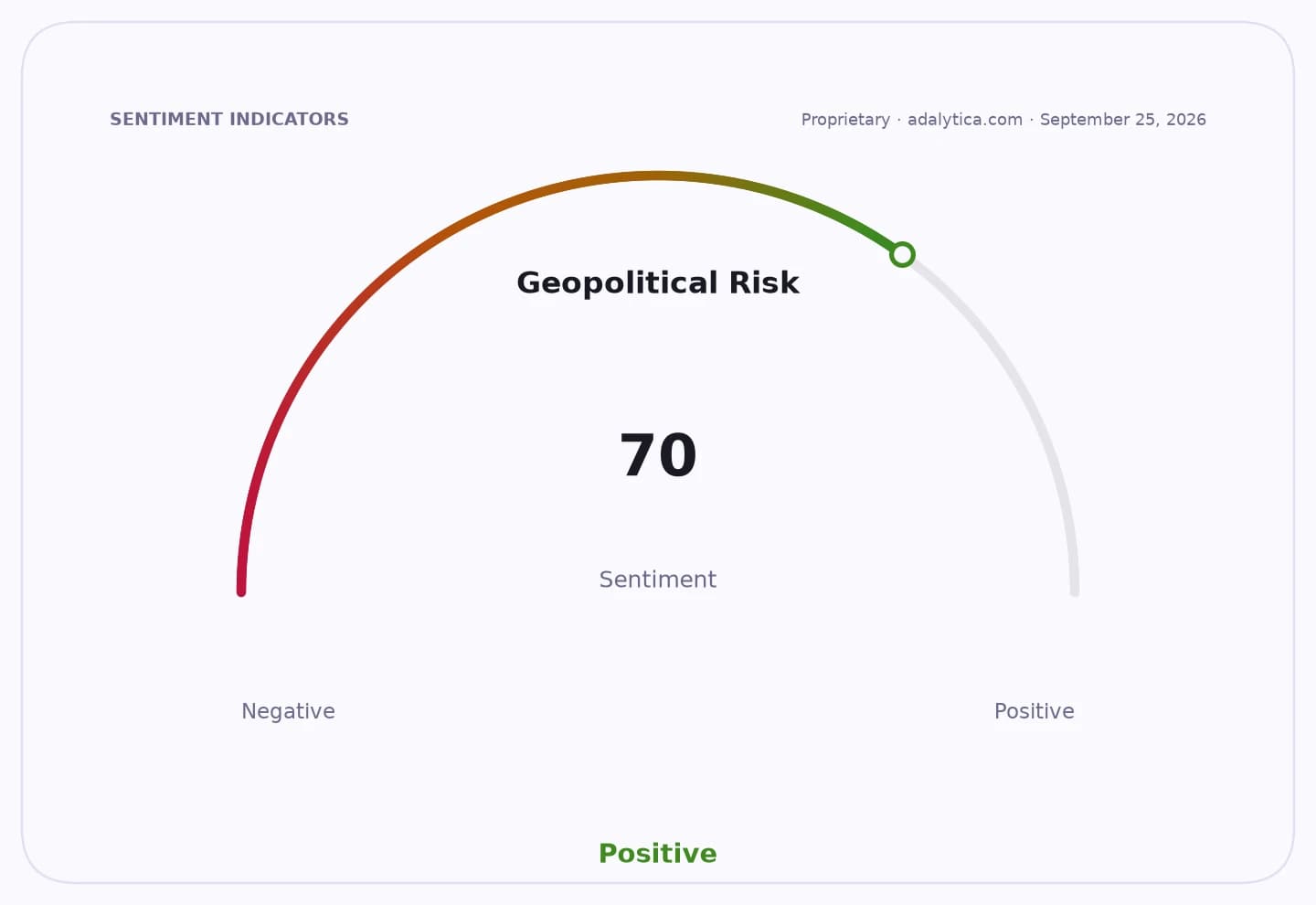
Nothing much appears able to derail the equity rally, and that resilience is encouraging a new round of bullish calls from strategists who argue investors should keep buying stocks even after a strong run.
S&P 500 Rally Holds as 10-Year Yield Nears 4.69%

The case is not that markets are cheap. It is that the economic backdrop is still too solid, policy too supportive and alternatives too constrained to justify fighting the trend. U.S. growth is still expanding, unemployment remains low and the 10-year Treasury yield has settled back from recent highs, all of which help explain why momentum investors remain willing to pay up for equities despite elevated valuations and bouts of volatility.
Sentiment IndicatorsⓘProprietary · adalytica.com · July 29, 2026
This is a snapshot — live sentiment, awareness and momentum for 130+ markets update continuously in the dashboard.Open AlphaPulse

The latest data show the economy on track to keep growing, with GDP running at $31.86 trillion in the first quarter and a forecast pointing to another 1.54% gain in the second. Unemployment is expected to ease to 4.18% in July from 4.2% in June, suggesting a labor market that is cooling only gradually rather than cracking. That combination is the sort that typically supports corporate earnings, maintains consumer spending and reduces the odds of a recession scare that would force a broad de-risking.
Markets have also absorbed a recent jump in yields without breaking. The 10-year Treasury yield is around 4.69%, well above the emergency-era levels that drove investors into duration during the pandemic, but still below the peak seen last week. For equities, that matters because it keeps discount rates elevated enough to punish speculative excess while not yet signaling a full-blown credit or inflation shock. In other words, rates are uncomfortable, but not disruptive enough to overturn the stock bull case.
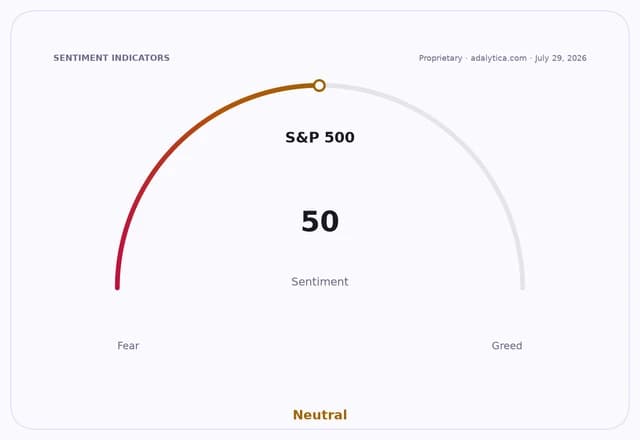
That is showing up in market behavior. The S&P 500 ETF, SPY, closed at 733.59 on July 29, just below its 50-day moving average of 743.90 but still far above its 200-day average of 696.51, while the Nasdaq 100 ETF, QQQ, ended at 666.12, also above its long-term average even after a sharp three-day pullback. The small-cap Russell 2000 ETF, IWM, has likewise held above its 200-day moving average. The recent weakness is more consistent with rotation and profit-taking than with a wholesale risk-off move.
Still, the rally is not being driven by clean, broad-based conviction. Conventional technical indicators show near-term momentum has cooled: SPY’s RSI fell to 33.1 on July 29, while QQQ’s dropped to 22.7, levels that often reflect stretched short-term selling rather than a lasting reversal. Adalytica’s S&P 500 trade signals show sentiment at neutral but awareness at 76, labeled greed, a sign that investors remain engaged even as day-to-day confidence flickers. By contrast, Adalytica’s dollar signal has fallen into extreme fear, underscoring how much of the recent market narrative has favored risk assets over haven exposure.
That divergence is central to the bullish strategists’ message. If the economy keeps expanding and recession odds stay contained, cash and bonds may continue to look less attractive relative to equities, especially with corporate earnings still supported by artificial-intelligence spending, resilient consumer demand and easing inflation pressure. Microsoft’s latest filing also showed sales and marketing spending rising as it pushes Copilot, evidence that the largest platforms are still investing aggressively enough to support revenue growth and, by extension, index earnings.
The bear case is straightforward: stocks are already pricing in a durable soft landing, while valuations leave little margin for error if growth slows, rates rise again or geopolitical shocks reappear. Buffett’s continued cash accumulation and a broader caution from some market watchers show that not every investor believes the current calm is sustainable. Small-cap resilience may also prove fragile if credit conditions tighten or if the labor market weakens more quickly than expected.
For now, though, the dominant message from the market is that fear is not in charge. Growth is positive, unemployment is still contained and the bond market has not yet forced a reset in equity allocations. That is why the most optimistic strategists think the right response is not to wait for a cheaper entry point, but to keep owning stocks while the macro backdrop still permits it.
| Entity | Gains | Losses |
|---|---|---|
| S&P 500 / large-cap stocks | ▲Supported by growth | ▼Valuation-sensitive bears |
| QQQ / megacap tech | ▲Earnings leverage | ▼Long-duration bond bulls |
| TLT / Treasuries | ▲Attracts safety flows | ▼Rate-sensitive stock buyers |
| USD / dollar | ▲Relative haven demand | ▼Risk-on foreign capital |