Spain’s decision to push back approval of the housing decree until September is leaving one of the country’s most contested economic policies in limbo, extending uncertainty for landlords, developers and investors at a time when rental demand remains tight and housing sentiment is running hot.
Spain Delays Housing Decree, Extending Policy Uncertainty

The delay matters because the decree is meant to extend rent regulation until 2028, but the government has not been able to secure enough consensus among coalition partners to pass a package broad enough to satisfy the left while avoiding a backlash from property owners and regional allies. That makes housing not just a social issue but a test of political cohesion and policy credibility.
Sentiment IndicatorsⓘProprietary · adalytica.com · July 27, 2026
This is a snapshot — live sentiment, awareness and momentum for 130+ markets update continuously in the dashboard.Open AlphaPulse
For the economy, the stakes are immediate. Spain’s rental market has become a pressure point for inflation, household spending and labor mobility, especially in major cities where affordability is already strained. A prolonged gap in policy clarity can keep supply constrained if landlords delay listings or new investment, while also preserving some support for tenants if caps or protections remain in place. The result is a system that can suppress volatility in the short term but risks worsening structural shortages over time.
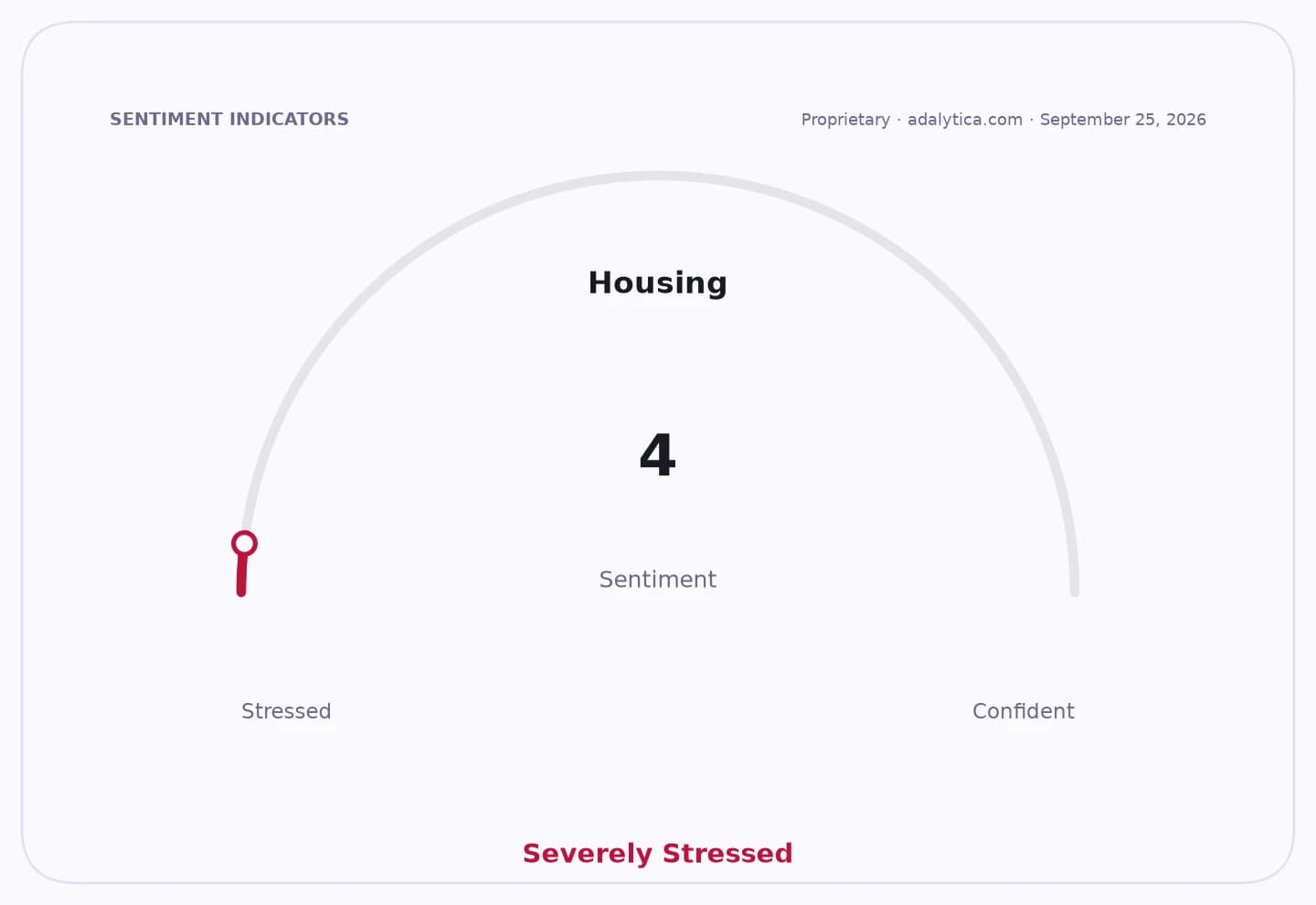
Markets are signaling that housing remains sensitive. Adalytica’s Housing Fear & Greed Index shows “Extreme Greed” at 86, while its Housing and Rent Inflation Sentiment gauge is neutral but with very low awareness, suggesting the issue is not broadly priced into the wider market even as it becomes more politically charged. In conventional technical terms, the U.S. housing proxy XHB has rebounded sharply from earlier weakness, underscoring how quickly investor appetite can return when policy uncertainty eases.
The listed housing names reflected in the data have been more resilient than the broader rent-policy debate would imply. AvalonBay, Equity Residential and similar apartment owners have all traded above their 50-day moving averages at times in recent months, with momentum improving before the latest pullback. That does not mean Spain’s decree will move their fundamentals directly, but it does show investors remain sensitive to any policy that could alter rent growth, supply pipelines or valuation assumptions across the rental complex.
The bearish case is straightforward: another delay signals the government may not have the votes to deliver a coherent framework, which could leave the market in a prolonged holding pattern and deepen the mismatch between demand and supply. The bullish case is that the extra time may produce a more durable compromise, reducing the risk of legal challenge or abrupt reversals and giving landlords and developers a clearer medium-term rulebook.
For investors, the key question is whether September brings a watered-down decree that calms the political debate or another round of fragmentation that keeps housing policy unsettled. Until then, Spain’s rental market is likely to remain a policy overhang — and a reminder that in housing, uncertainty can matter as much as the regulation itself.
| Entity | Gains | Losses |
|---|---|---|
| Tenants | ▲More rent protection | ▼Less policy certainty |
| Landlords | ▲Avoids abrupt rules | ▼Delayed planning visibility |
| Builders / developers | ▲Potentially clearer rules later | ▼Near-term project hesitation |
| Government / coalition | ▲More time to negotiate | ▼Credibility under pressure |