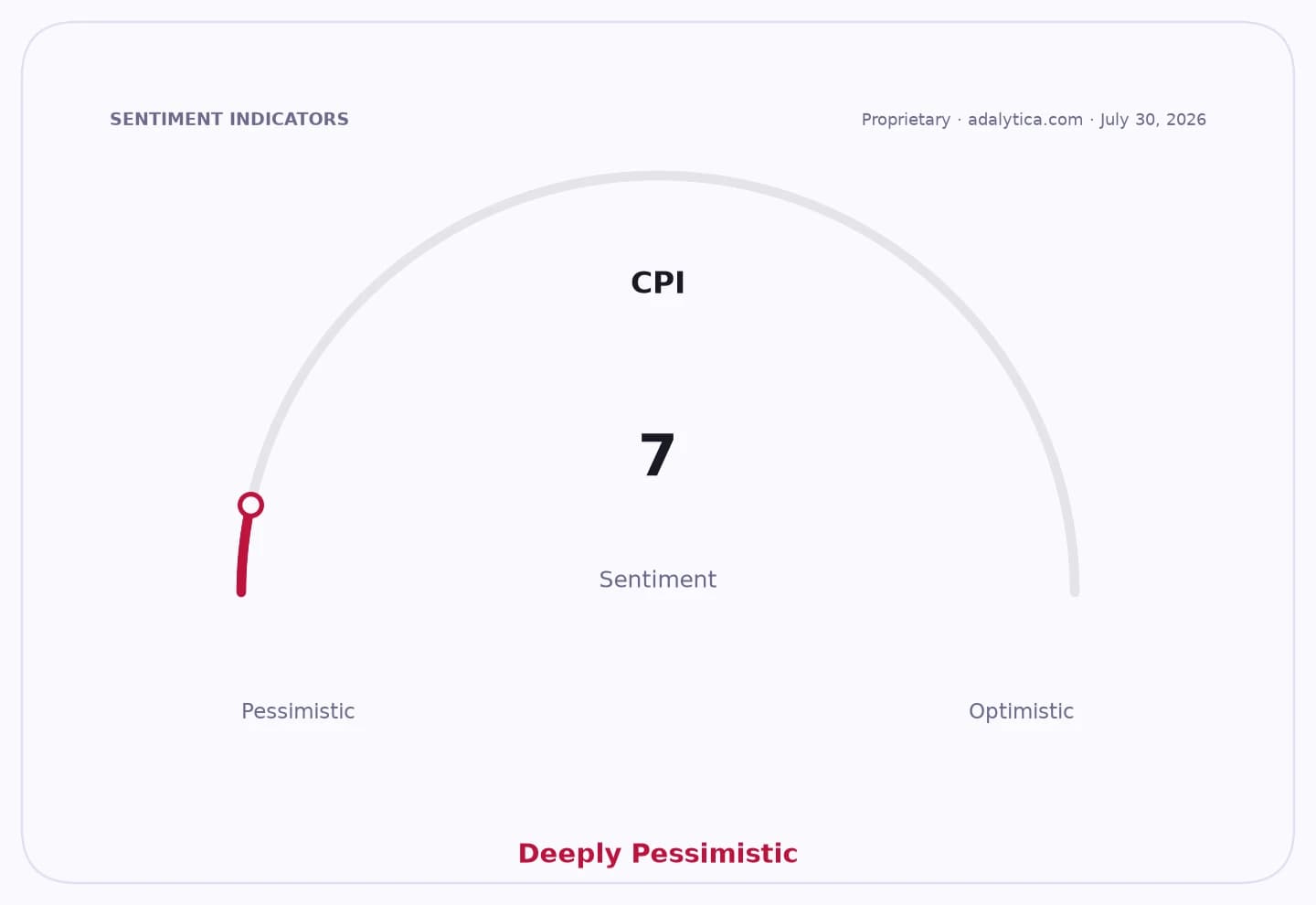
Spain’s July inflation rate rose to 3.5% year-on-year, underscoring how quickly price pressures can reassert themselves even in an economy that has been outperforming the euro zone average.
Spain inflation rises to 3.5% in July
That matters because Spain is not just seeing a temporary bump in consumer prices; it is dealing with a reminder that inflation is still alive enough to shape European Central Bank policy, household spending power and the valuation of interest-rate-sensitive assets. A stronger labor market, with unemployment below 10% for the first time since 2008 and record employment, gives consumers more income to absorb higher prices, but it can also keep services inflation sticky.
Sentiment IndicatorsⓘProprietary · adalytica.com · July 30, 2026
This is a snapshot — live sentiment, awareness and momentum for 130+ markets update continuously in the dashboard.Open AlphaPulse
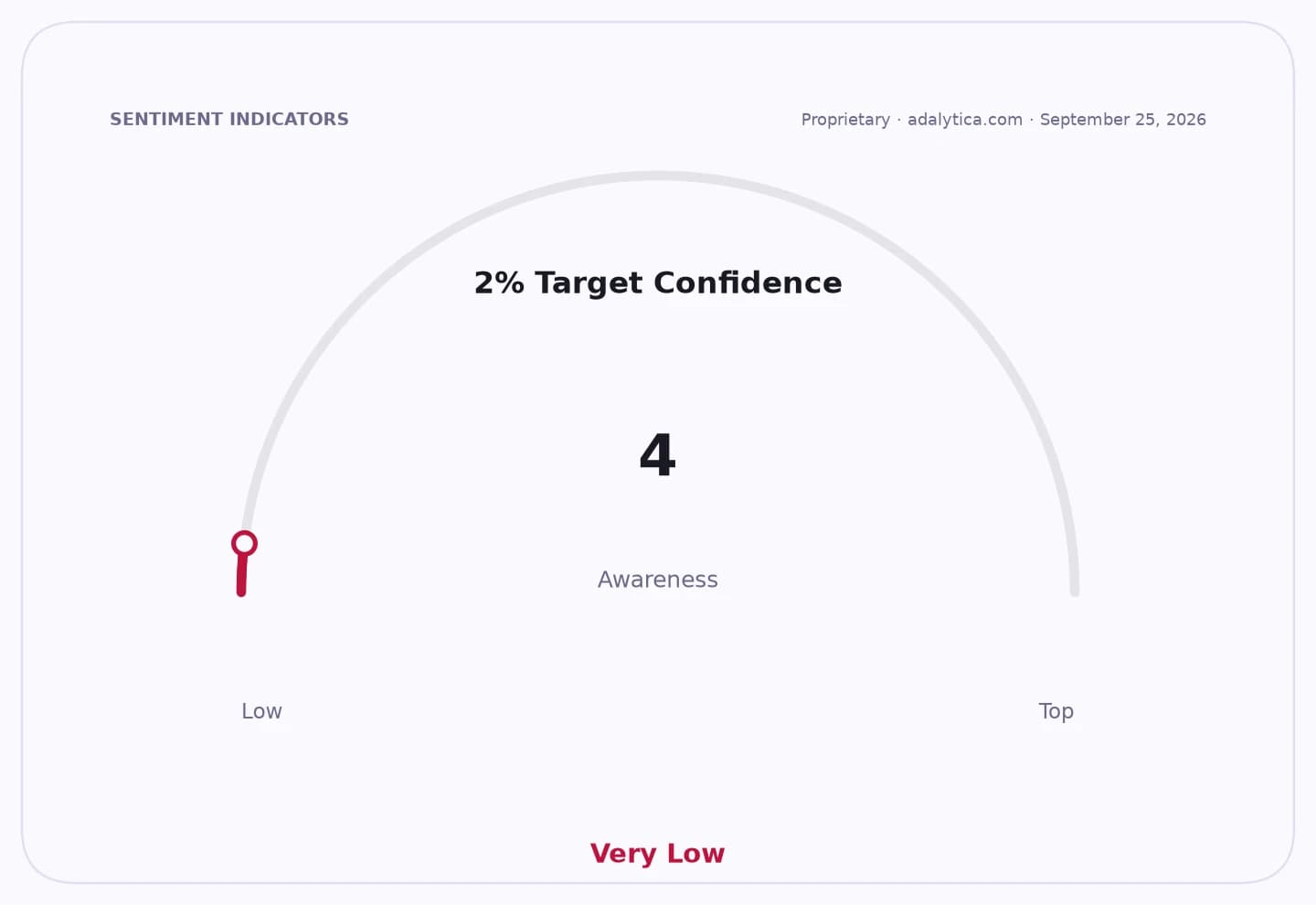
For investors, the headline reinforces the idea that the ECB is unlikely to get comfortable with a clean return to its 2% target anytime soon. Markets are already wary of another rate move later in the year, and the jump in Spain’s inflation will keep pressure on bond yields and short-dated euro area rate expectations. That’s especially relevant for long-duration assets, utilities, property stocks and other sectors that depend on lower discount rates.
The Spain story also matters beyond Madrid. A hotter reading in one of the euro zone’s larger economies feeds into the broader debate over whether Europe’s disinflation path has stalled. If inflation remains elevated while job creation stays strong, policymakers may be forced to keep financial conditions tighter for longer, even if growth is uneven across the bloc.
The bigger investing lesson is simple: inflation doesn’t have to explode to hurt returns. A move from 3.2% to 3.5% can still matter if it changes central bank behavior and keeps real purchasing power under pressure. For long-term investors, that means favoring businesses with pricing power, resilient cash flows and balance sheets that can handle a higher-rate world.
Spain’s latest CPI reading is worth watching, but the real question is whether this is a one-month flare-up or the start of a more stubborn inflation backdrop in Europe.
| Entity | Gains | Losses |
|---|---|---|
| Spanish exporters | ▲Stronger nominal demand | ▼Higher input costs |
| Consumers | ▲Higher wages support spending | ▼Lower purchasing power |
| ECB hawks | ▲Case for tighter policy | ▼None |
| Rate-sensitive stocks | ▲None | ▼Higher discount rates |