Spain’s July inflation reading is expected to come in slightly hotter, a move that could interrupt several months of easing price pressure and complicate the European Central Bank’s path just as investors were growing more confident that the worst of the inflation shock was behind them.
Spain July inflation seen hotter at 0.89%

The key number for markets is not whether inflation jumps sharply, but whether the recent decline stalls. The consensus forecast for Spain’s consumer-price index points to a 0.89% monthly rise in July after a 0.42% drop in June, which would lift the annual pace to a more uncomfortable level and suggest that the disinflation story in one of the euro zone’s biggest economies is not yet secure. Core prices are also expected to firm, with the underlying index projected to rise 0.33% on the month after being nearly flat in June.
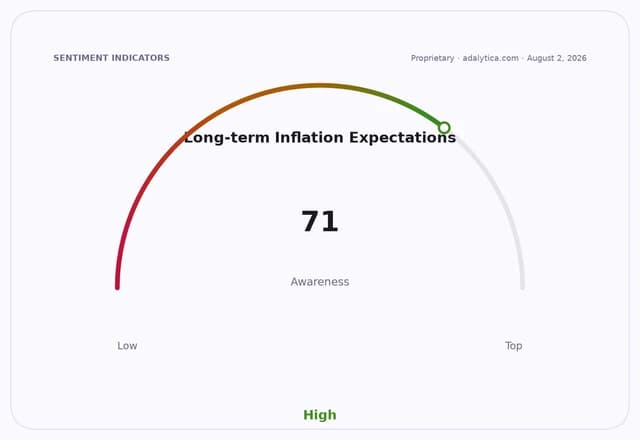
Sentiment IndicatorsⓘProprietary · adalytica.com · August 2, 2026
This is a snapshot — live sentiment, awareness and momentum for 130+ markets update continuously in the dashboard.Open AlphaPulse

That matters because Spain has often been read as an early signal for broader euro-area price dynamics. If inflation is reaccelerating there, it reinforces the idea that the last mile back to the ECB’s 2% target will be harder than the market hoped. Traders, rate-sensitive equities and sovereign bond investors are all exposed to that risk. A hotter print would support the argument for the ECB to stay restrictive for longer, even as growth remains uneven and households are still absorbing years of elevated borrowing costs.
The market already looks positioned for caution. Inflation expectations gauges tracked by Adalytica.com show long-term inflation sentiment in “fear” territory, while confidence in the Fed’s 2% target and 5-year breakeven sentiment have weakened materially in recent weeks. That backdrop reflects a broader investor anxiety: if inflation proves sticky again, central banks will have less room to ease, and duration assets could remain under pressure.
For equity investors, the message is less about Spain alone and more about the trade-off between disinflation and policy relief. Persistent price pressure is a headwind for consumers, a support for bank margins only as long as credit quality holds, and a drag on rate-sensitive sectors that were counting on faster monetary easing. In Europe, that keeps the focus on financials, energy and exporters, while putting pressure on domestic consumption plays and long-duration growth names.
The broader narrative is simple: the market spent much of the summer betting that inflation was fading into the background. July data from Spain may be the first reminder that it is still capable of coming back when growth and wages normalize unevenly. If that happens, investors should expect the ECB to remain guarded, inflation hedges to regain appeal and rate-cut expectations to be pushed further out.
| Entity | Gains | Losses |
|---|---|---|
| ECB hawks | ▲Policy cover to stay restrictive | ▼Rate-cut expectations |
| Banks | ▲Wider net interest margins | ▼Borrowers under strain |
| Consumers | ▲None | ▼Purchasing power |
| Rate-sensitive stocks | ▲None | ▼Lower valuation support |