Spain’s labor market accelerated in October, with payrolls posting the strongest increase for the month on record even as the jobless total climbed, underscoring a late-season rebound that still leaves the economy dependent on education and foreign labor to sustain growth.
Spain labor market gains in October

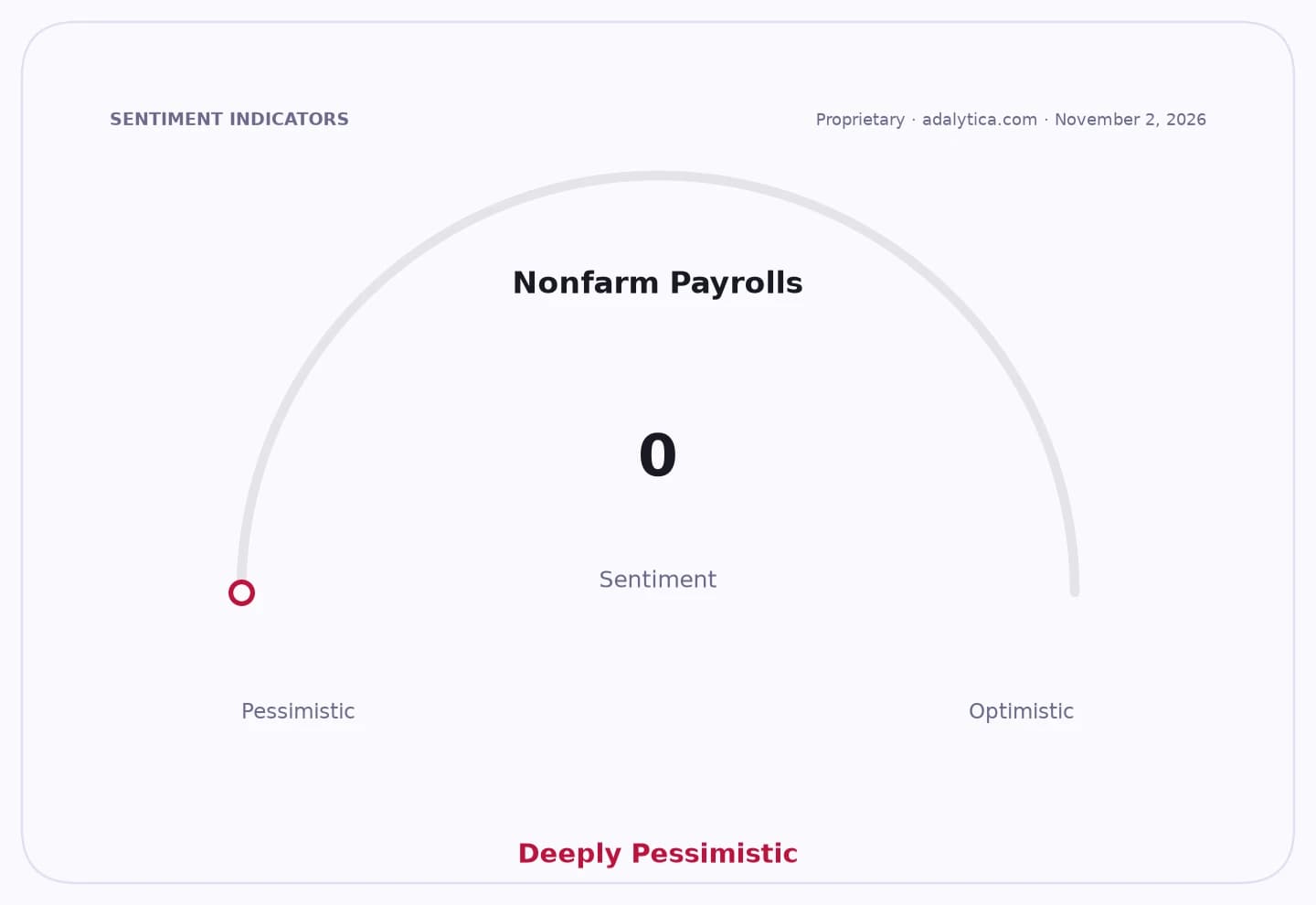
The Labor Ministry said social security affiliation rose by 186,612 in October to 22.62 million, the highest level ever for the month, while registered unemployment increased by 43,128 to 2.42 million. That combination matters because it shows employment momentum remains intact after the summer tourism peak, but also that Spain’s seasonal hiring pattern continues to produce a large swing in unemployment once the holiday period ends.
Sentiment Indicators
Job Market
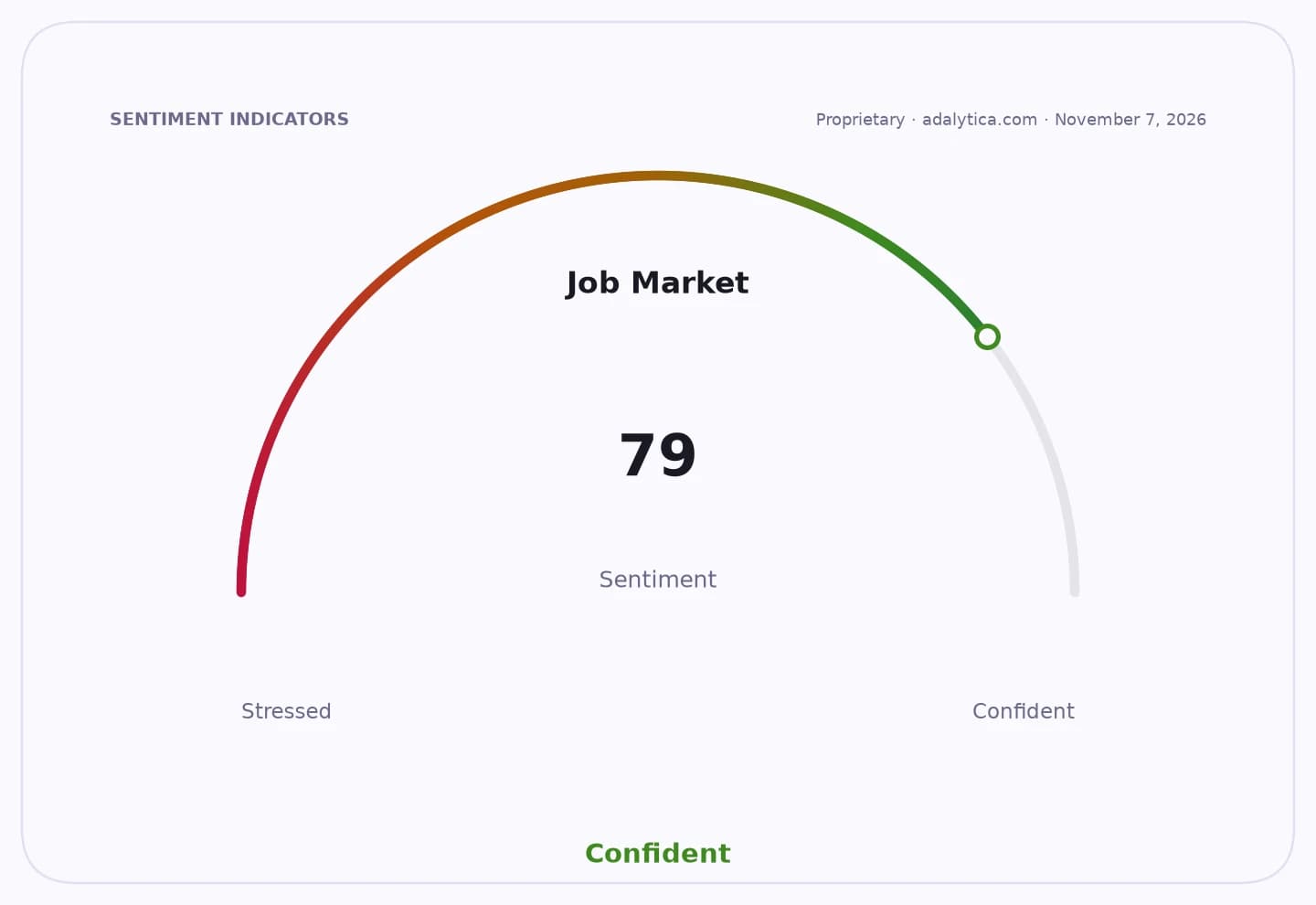
The October print was driven overwhelmingly by education, which added 165,994 workers as schools reopened and accounted for almost nine in 10 new jobs. By contrast, hospitality shed 44,947 posts and health and social services lost 40,963, highlighting how much of Spain’s labor market still rises and falls with tourism. The ministry said 61% of the new unemployed came from services, a reminder that the country’s biggest private-sector employer remains highly exposed to seasonal churn.
On a year-on-year basis, affiliation expanded 3.6%, the third straight month above 3%, with 784,573 more people in work than a year earlier. Foreign workers accounted for about three quarters of that gain, taking total immigrant affiliation close to a record 3.7 million, or 16.4% of all workers. That matters economically because immigration is doing more of the heavy lifting in Spain’s labor supply, helping firms fill vacancies and supporting domestic demand, but also making the labor market more dependent on a continued inflow of workers from abroad.
There were also signs the foreign hiring surge is moderating. Social security added 63,899 immigrant workers in October, a little more than a third of the monthly total, after foreign labor had driven almost nine in 10 new jobs in September. That suggests the post-regularization boost is easing, even as the broader employment base keeps expanding.
The self-employed segment provided another source of resilience. The number of autónomos rose by 17,952 in the month and 79,163 over the year to a record above 3.5 million, supported by gains in education, construction and professional services. Female employment also improved faster than male employment, while youth unemployment rose to 204,900, a sign that Spain’s labor market recovery is still uneven.
For investors, the report reinforces the view that Spain is entering the final stretch of the year with stronger job creation than many peers, which should support consumption and service-sector revenue. But the sharp October rise in unemployment also underlines the limits of headline payroll strength: a large share of the gains remain seasonal, while tourism-linked sectors continue to absorb the hit when summer demand fades. The next test will be whether employment can remain firm through the winter without relying on education and foreign hiring to offset weakness elsewhere.
| Entity | Gains | Losses |
|---|---|---|
| Spanish workers | ▲More jobs and higher payrolls | ▼Seasonal unemployment swings |
| Employers in education | ▲Seasonal hiring surge | ▼Temporary staffing costs |
| Hospitality sector | ▲— | ▼Job losses after summer |
| Foreign workers | ▲Record employment share | ▼Slower monthly hiring pace |