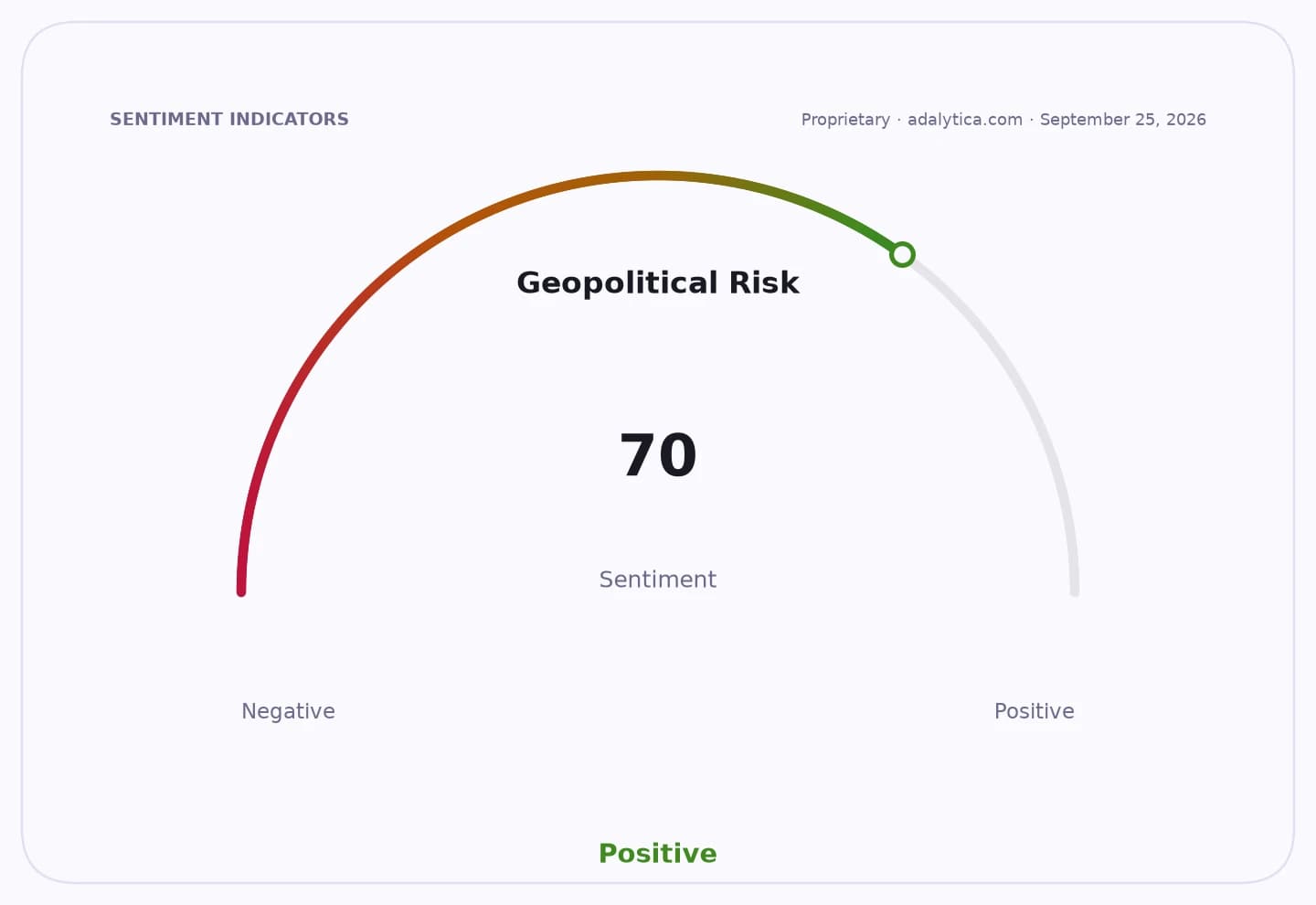
The most important development is not the day-to-day noise in stocks, bonds and the dollar — it is the growing sense that policy-driven volatility is becoming a feature of the market, not a bug.
SPY at 770.22, TLT at 82.24, USD ETF at 88.70

That matters because when the White House can move equities, Treasuries and currencies in a matter of hours, it changes how investors should think about risk, pricing and patience. Short-term traders may see chaos. Long-term investors may see opportunity, because political shocks often create mispricings that disciplined buyers can use to build positions in quality assets.
Sentiment IndicatorsⓘProprietary · adalytica.com · August 11, 2026
This is a snapshot — live sentiment, awareness and momentum for 130+ markets update continuously in the dashboard.Open AlphaPulse

The S&P 500 ETF, SPY, is still near its highs, but the recent tape shows how fragile confidence can be underneath the surface. SPY closed at 770.22 on Aug. 11 after touching 773.26 on Aug. 7, with the 50-day moving average at 747.33 and the 200-day moving average at 701.21. That is a strong longer-term trend, yet the market’s RSI reading of 65.1 suggests momentum is still elevated, even as the broader setup looks stretched after a powerful run. Adalytica’s S&P 500 Trade Signals also show “Extreme Greed,” a reminder that optimism is high and surprises can produce outsized swings.
The bond market is telling a similar story. Treasury bond ETF TLT closed at 82.24 on Aug. 11, still below its 50-day moving average of 84.23 and its 200-day moving average of 85.33. That says investors remain cautious about duration even as the bond complex tries to stabilize. For long-term savers, this matters because sharp swings in rates ripple through everything from mortgage costs to corporate borrowing and equity valuations. When the market is unsure whether policy will stay supportive or turn disruptive, asset prices can whip around without much warning.

The dollar has been especially volatile, with the USD ETF jumping to 88.70 on Aug. 11 after a dramatic climb earlier in the year. Adalytica’s dollar signals still show “Extreme Greed,” which suggests the currency’s move has attracted crowded positioning. That matters economically because a strong dollar can tighten financial conditions globally, pressure emerging markets and weigh on multinational earnings. For investors, it changes the math on international diversification and can create winners and losers across sectors.
This is why the allegation that Trump is “scaring the markets” is more than a political talking point. Markets do not just react to headlines; they reprice probabilities. If investors believe policy is being used to generate volatility, manage expectations or create room for a later reversal, then every tariff threat, Fed comment or fiscal signal can take on extra weight. That can inflate intraday moves, widen valuation gaps and reward those who keep cash ready while others panic.
For patient investors, the key is not to predict every twist. It is to stay focused on businesses and funds with durable earnings power, strong balance sheets and the ability to compound through noise. Volatility caused by politics is uncomfortable, but it often opens the door to better entry points in great assets. In a market this jumpy, broad diversification and a multi-year horizon still beat guessing the next headline. Worth watching, and worth using as a reminder to stay invested, not reactive.
| Entity | Gains | Losses |
|---|---|---|
| Long-term investors | ▲Better entry points | ▼Short-term certainty |
| Active traders | ▲Volatility opportunities | ▼Stable trends |
| U.S. exporters | ▲Stronger dollar boost | ▼Foreign buyers |
| Bond holders | ▲Repricing chances | ▼Duration sensitivity |