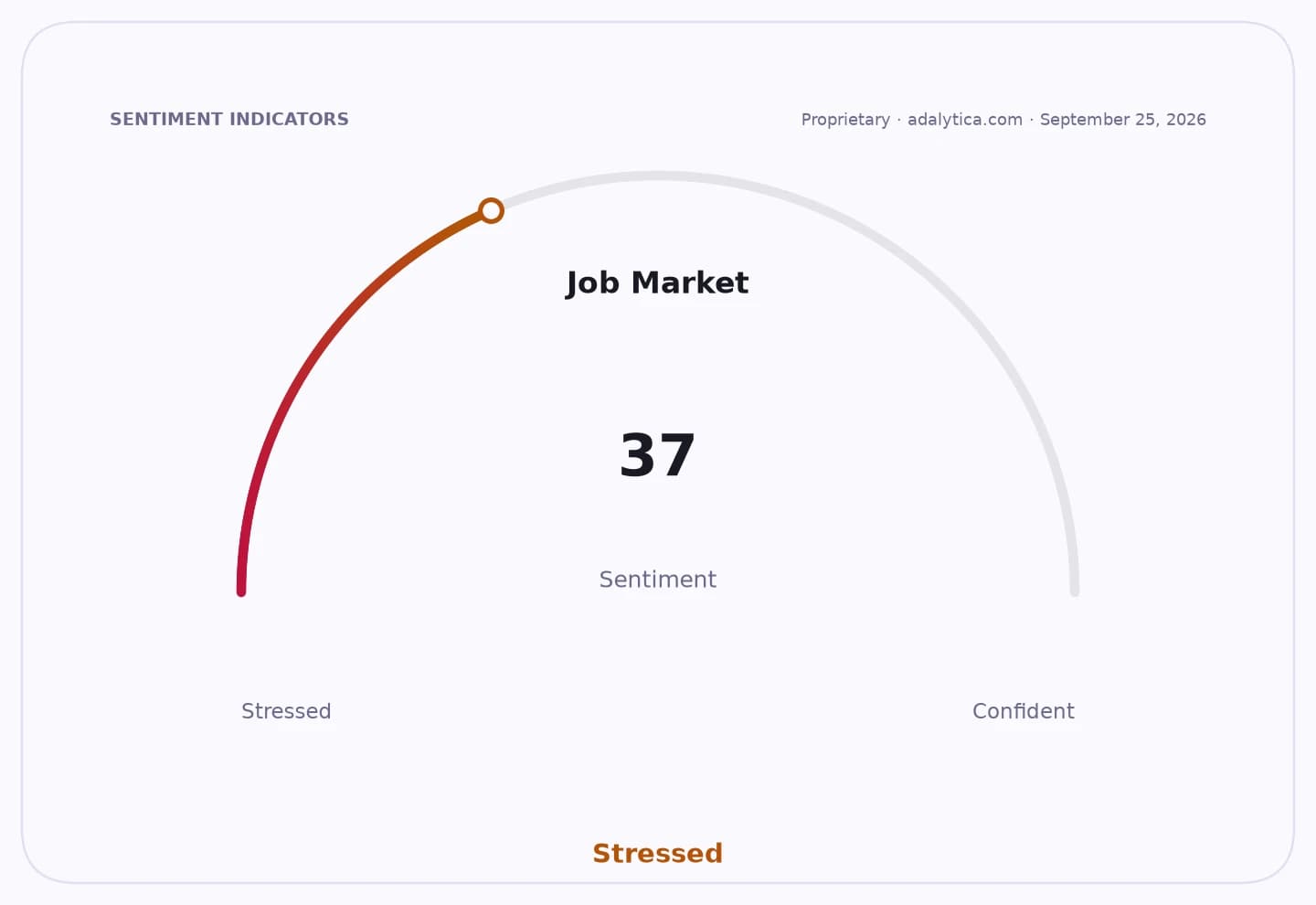
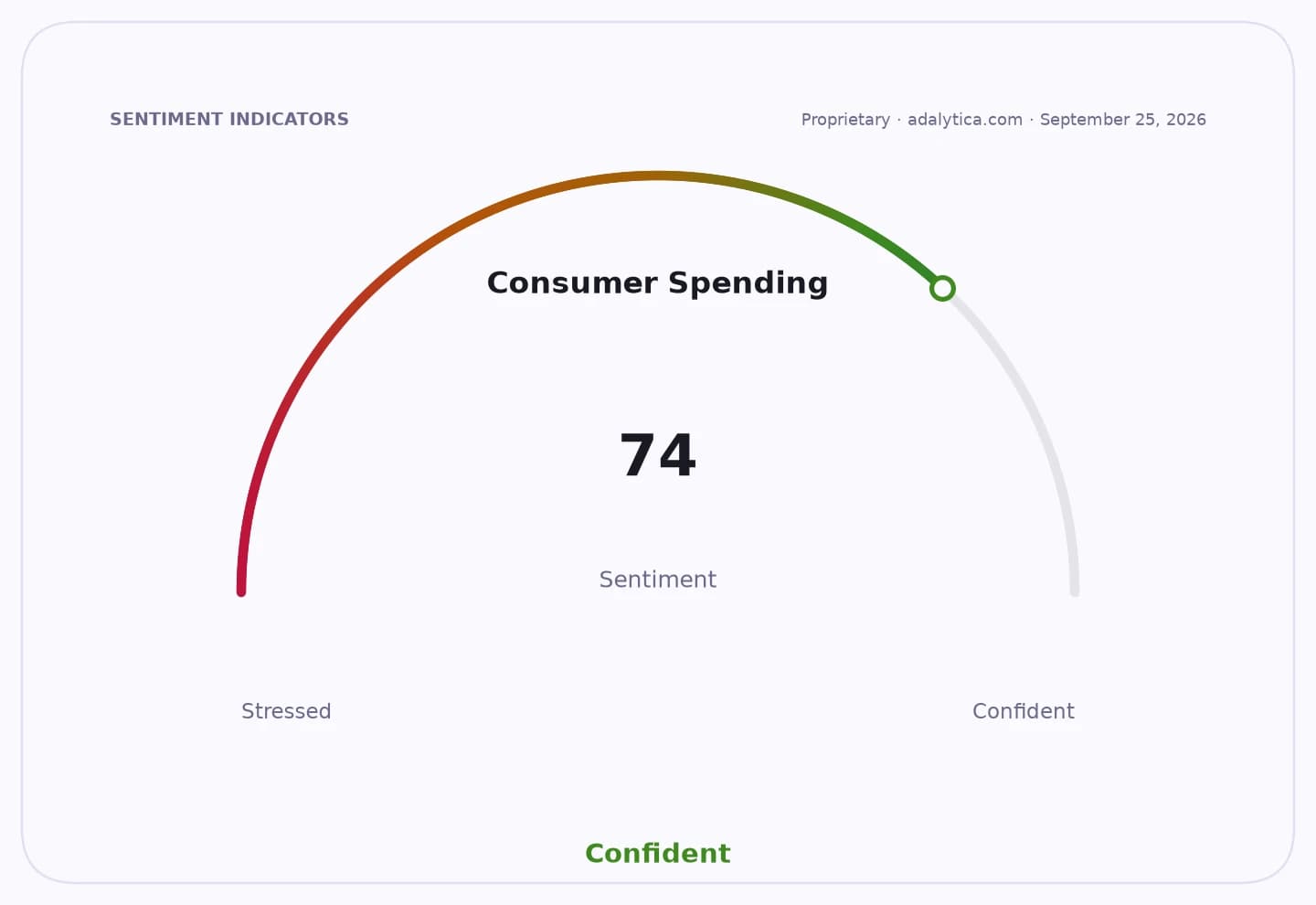
Many businesses and consumers expect price increases to continue, and that matters because it tells you inflation is no longer just a backward-looking statistic — it is becoming part of the way households and companies plan, spend and invest.
Sticky Inflation Expectations Keep Policy Cautious

Japan’s FY2026 Economic and Fiscal White Paper is essentially flashing a warning light that policymakers and investors can’t ignore: expectations are still sticky even as some recent price readings have cooled. That is important economically because inflation only becomes truly manageable when people believe it will stay contained. If they expect higher prices tomorrow, they pull forward purchases, demand wage gains and build inflation into contracts, which keeps the cycle alive.
Sentiment IndicatorsⓘProprietary · adalytica.com · July 24, 2026
This is a snapshot — live sentiment, awareness and momentum for 130+ markets update continuously in the dashboard.Open AlphaPulse

The latest U.S. data show why this debate is so important for global markets. Consumer prices in June were softer than feared, with headline CPI at 332.568 versus 333.979 in May, while core CPI barely moved, slipping to 336.065. Producer prices also eased in June to 286.827 from 290.489 the month before. Those numbers suggest the worst inflation shock may be behind us, but they do not erase the broader message from Japan: confidence in a clean return to 2% inflation is fragile.
That fragility shows up in the market, too. Inflation-protected Treasury ETF TIP has been treading water around $107.50, with its 50-day average near $108.28 and its 200-day average around $107.92, a sign investors are still hedging against stubborn price pressure rather than betting on a decisive disinflation trend. Gold ETF GLD, by contrast, remains elevated even after a pullback, trading near $371.90 and still above its 200-day average of $411.80 on the data supplied here, underscoring how much inflation anxiety and policy uncertainty remain embedded in portfolios. The dollar fund UUP has also held firm around 28.58, another reminder that investors are not pricing a world of easy money just yet.
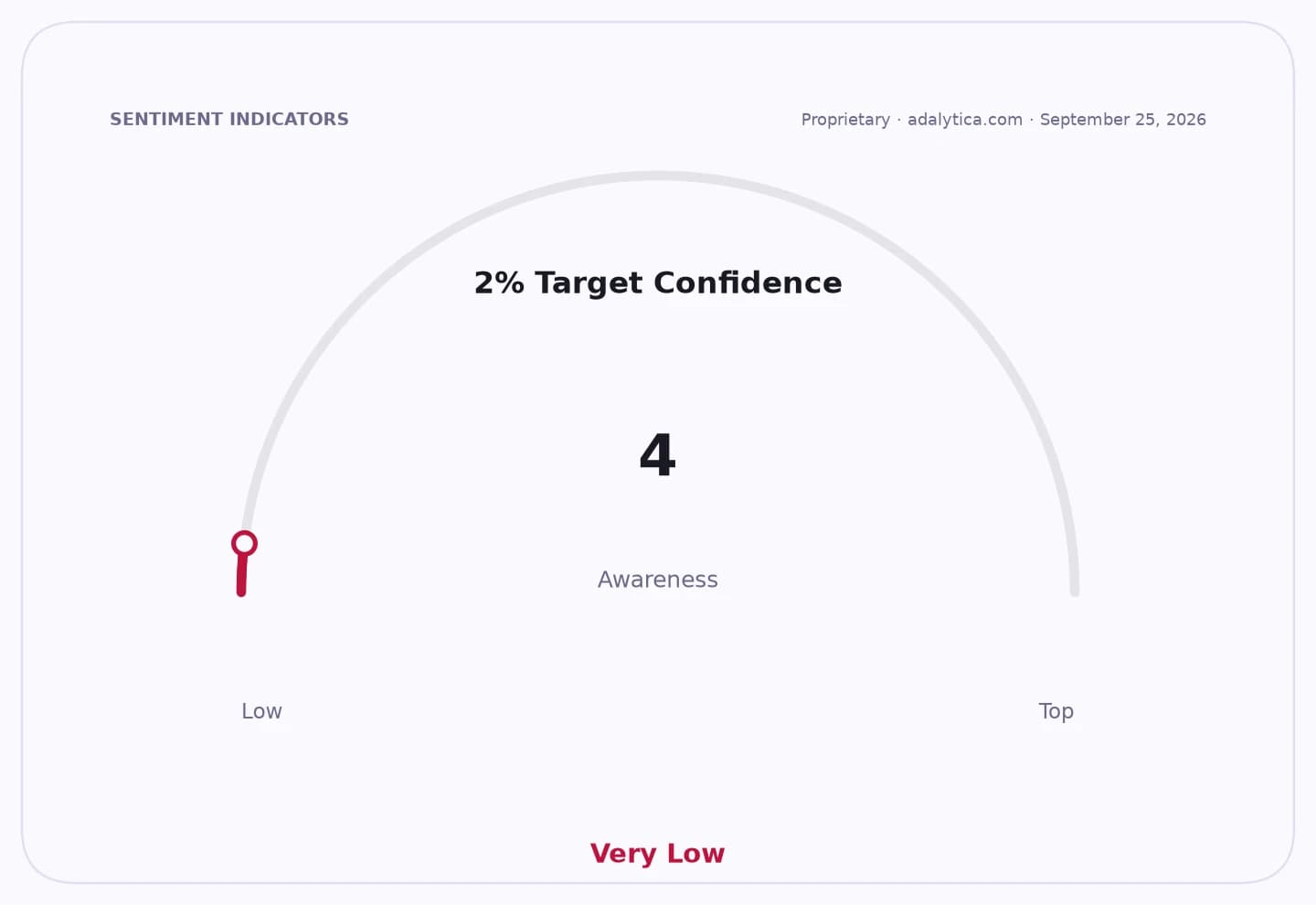
2% Target Confidence — 30-day sentimentadalytica.com
Explore this data interactively — full history, time series and cross-market comparisons.Open AlphaPulse

For long-term investors, this is the real lesson: inflation expectations matter because they shape interest rates, margins and valuation multiples. If companies think costs will keep rising, they will pass them on where they can, which can help businesses with pricing power but hurt retailers, households and interest-rate-sensitive sectors. If central banks believe inflation is sticky, they stay cautious longer, which tends to support cash, quality balance sheets and dividend growers more than speculative growth names.
The good news is that the longer-run trend still favors disciplined investors. U.S. long-term inflation expectations in the Adalytica data are neutral at 57, not alarming, and consumer confidence tied to recession fears has improved sharply to 71. That’s not the backdrop of a runaway inflation spiral. It’s the backdrop of an economy trying to normalize after a painful shock. In that kind of environment, the winning strategy is usually patience, diversification and ownership of businesses that can compound through different inflation regimes.
So yes, the white paper’s message is a real caution. But for investors willing to think in years, not weeks, inflation persistence is not a reason to panic — it is a reason to favor durable businesses, watch policy closely and stay invested through the noise.
| Entity | Gains | Losses |
|---|---|---|
| Pricing-power companies | ▲Pass through costs | ▼Get margin pressure relief? |
| Consumers | ▲— | ▼Higher household budgets |
| Central banks | ▲Greater caution | ▼Faster easing hopes |
| TIP/GLD holders | ▲Inflation hedge demand | ▼Lower conviction on disinflation |