Sugar prices are surging because the market is confronting a real supply squeeze in cane output, not a temporary shift of feedstock into ethanol, and that distinction matters for how long this rally can last.
Sugar futures rise on tighter cane supply

The benchmark sugar contract, SB=F, has climbed to 17.61 cents a pound, up from 14.44 cents in mid-July and 15.61 cents in October, a sharp move that puts it well above both its 50-day and 200-day moving averages. The latest readings show the contract trading near the top of its Bollinger Band range with RSI above 84, which underscores how far prices have run. But the bigger story is fundamental: when cane harvests come in lighter, the sugar balance tightens directly, and that is far harder to reverse than a short-lived diversion into fuel production.
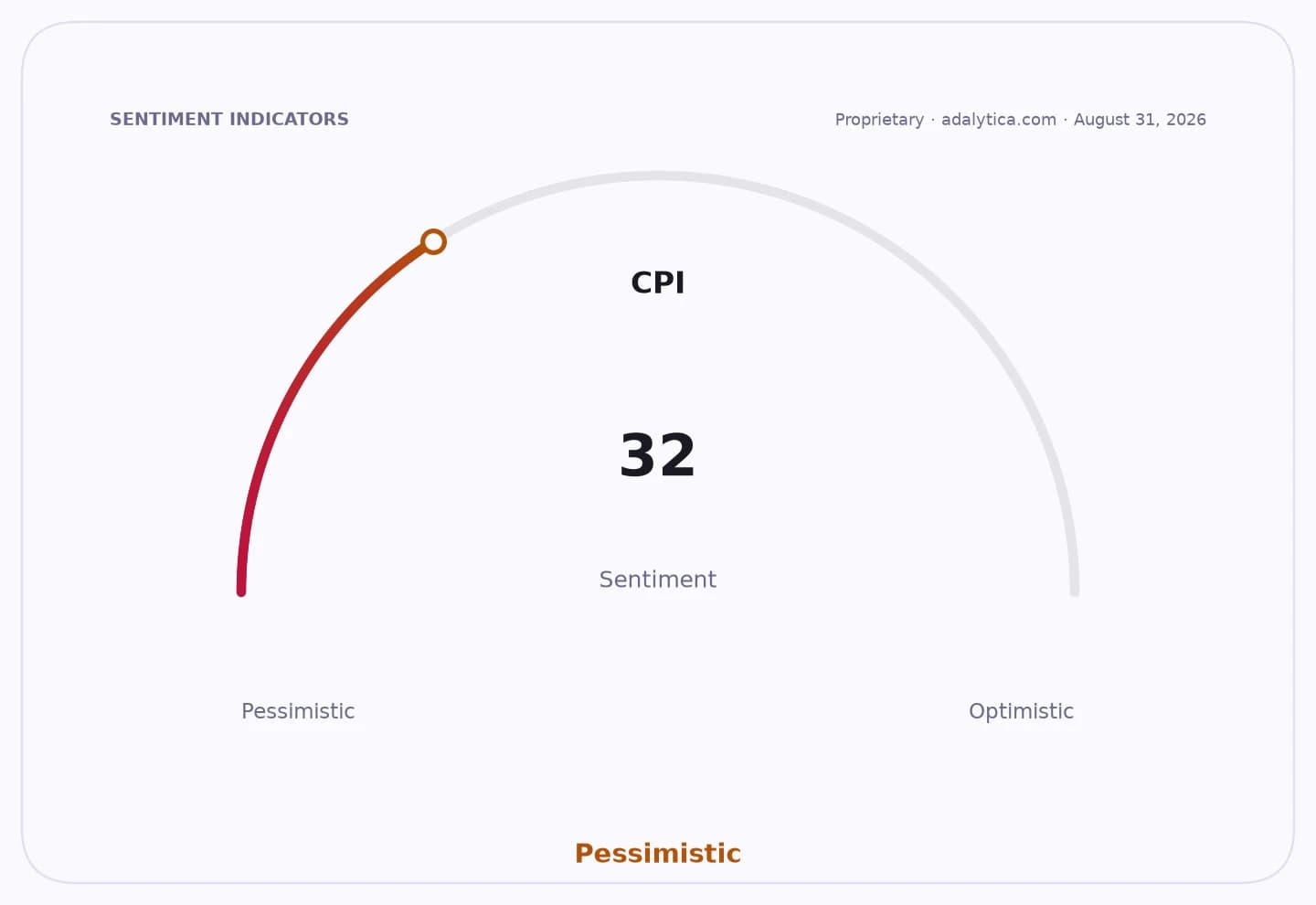
Sentiment IndicatorsⓘProprietary · adalytica.com · August 22, 2026
This is a snapshot — live sentiment, awareness and momentum for 130+ markets update continuously in the dashboard.Open AlphaPulse

That makes this a macro story as much as a commodity story. A squeeze in sugar availability feeds through to food inflation, consumer budgets and margin pressure for drinks, confectionery and packaged-food makers just as households are already showing stress. The Adalytica Consumer Spending Sentiment snapshot is sitting at 25, or “Fear,” even though awareness remains extreme, a sign that consumers are paying attention to price pressure without feeling confident enough to absorb it easily. In that environment, higher sugar costs can become a margin problem for brands that lack pricing power and a tailwind for suppliers with hard assets in the chain.
The move also argues against the easy consensus trade. If the rally were mainly about ethanol economics, it would be more vulnerable to shifts in fuel policy, energy prices or blending incentives. Instead, lower cane output points to a tighter agricultural cycle, where weather, yields and miller recovery rates matter more than a temporary arbitrage. That is why the market is taking the price higher even as general commodity sentiment remains uneven.

Investors should be thinking in second-order terms. Sugar processors, refiners and diversified ag traders can benefit if elevated prices persist, while consumer staples companies with heavy sugar exposure may face a longer stretch of input-cost pressure. ETFs and futures tied to softs could stay bid if supply concerns deepen into the next harvest window, and companies with exposure to tropical agriculture, logistics and storage may see improved pricing leverage.
The key catalyst now is whether the next crop data confirms that output, not fuel switching, is the real constraint. If it does, this looks less like a spike and more like the start of a longer pricing regime — one that rewards producers and punishes buyers who wait for a quick normalization that may not come.
| Entity | Gains | Losses |
|---|---|---|
| Sugar producers | ▲Higher realized prices | ▼None |
| Food and beverage makers | ▲None | ▼Higher input costs |
| Consumers | ▲None | ▼More expensive staples |
| Sugar futures bulls | ▲Momentum and tight supply | ▼Short sellers and late entrants |