The U.S. Supreme Court is set to hear arguments in a climate case that could determine how far companies and states can push liability claims over greenhouse-gas emissions, a ruling with direct implications for the oil patch and the broader cost of doing business in carbon-intensive industries.
Supreme Court Climate Case Weighs on Energy Stocks
The case matters because a precedent from the justices could either open the door to more climate-related lawsuits or narrow the legal avenues available to plaintiffs seeking damages and policy changes tied to emissions. For energy companies, that changes the long-term risk premium on drilling, refining and other operations already facing tighter regulation and higher litigation costs.
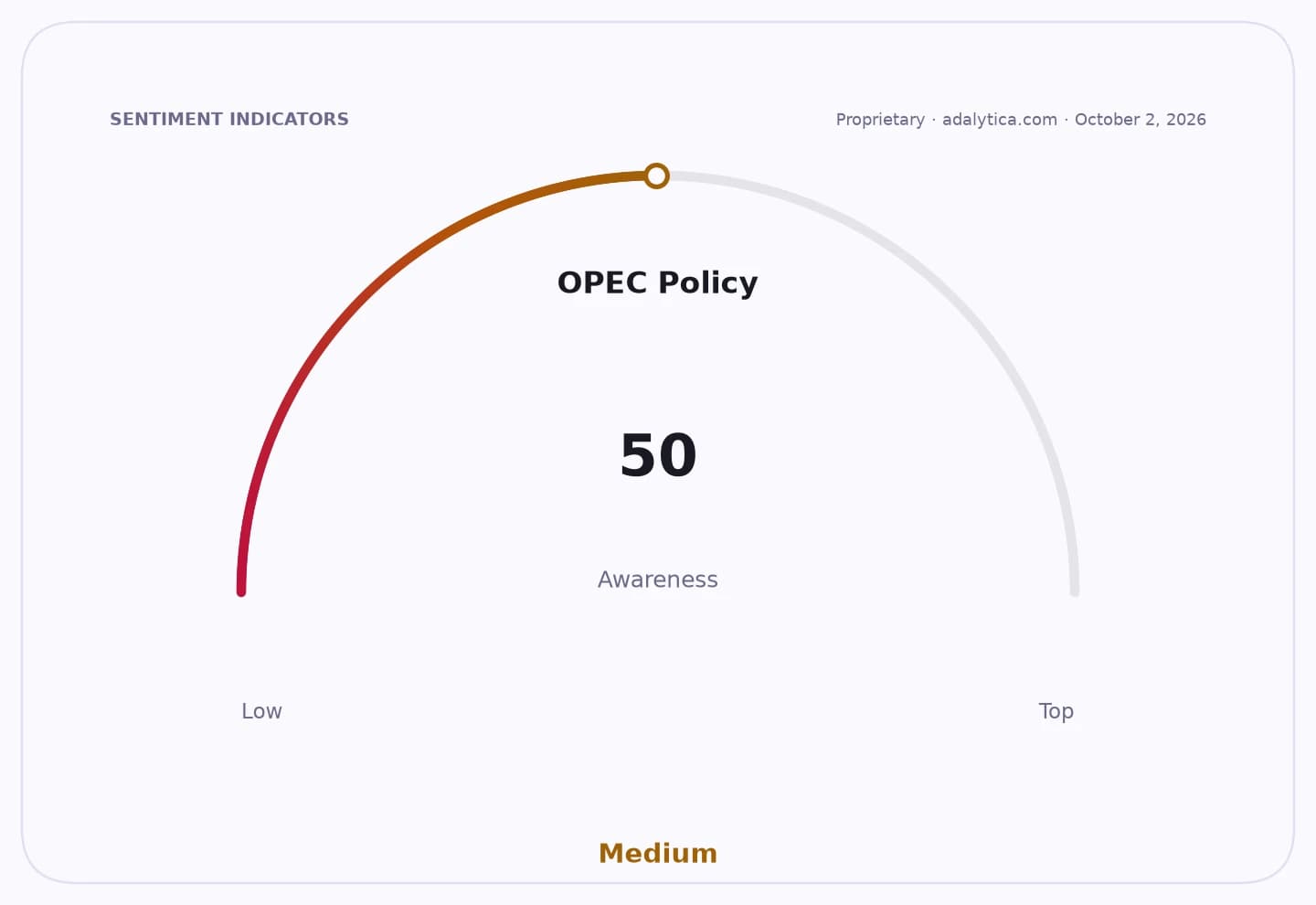
Sentiment IndicatorsⓘProprietary · adalytica.com · October 3, 2026
This is a snapshot — live sentiment, awareness and momentum for 130+ markets update continuously in the dashboard.Open AlphaPulse
Energy stocks are trading with that policy risk in view. The Energy Select Sector SPDR Fund, XLE, recently closed at $62.82, above its 50-day moving average of $61.82 and 200-day average of $55.88, while its relative strength index stood at 42.9, indicating the sector has cooled from overbought levels but remains well above its longer-term trend.
The oil and gas exploration and production ETF, XOP, was firmer at $184.93 and still comfortably above its 50-day average of $182.54 and 200-day average of $162.36, reflecting continued investor demand for producers even after sharp swings this year. The clean-energy ETF ICLN, meanwhile, ended at $17.19, below its 200-day average of $18.79, underscoring how policy uncertainty and weak sentiment continue to weigh on renewable names.
The case lands at a time when climate politics remain unsettled globally. The European Union has proposed delaying some new climate regulations, citing a potentially difficult winter, while governments in Europe and elsewhere continue to face pressure over enforcement, emissions targets and energy security.
For investors, the key issue is not just the outcome of one lawsuit but whether the court establishes a legal framework that could influence future cases across the U.S. energy sector. A broader ruling could raise legal and compliance costs for producers such as Exxon Mobil, Chevron and ConocoPhillips; a narrower one could ease one layer of uncertainty just as markets reassess the outlook for fossil fuels, renewables and utility spending.
The next catalyst is the oral argument itself, which will be watched closely by energy traders, insurers and companies exposed to climate litigation, as well as by investors looking for clues on how aggressively U.S. courts may shape climate accountability going forward.
| Entity | Gains | Losses |
|---|---|---|
| Climate plaintiffs | ▲Wider legal path | ▼Narrower standing |
| Oil and gas producers | ▲Legal clarity if limits are set | ▼Higher liability risk if claims expand |
| Renewable stocks | ▲Stronger climate enforcement | ▼More delay if litigation narrows policy pressure |
| Energy investors | ▲Predictable rules if precedent is tight | ▼Higher risk premium if court broadens exposure |