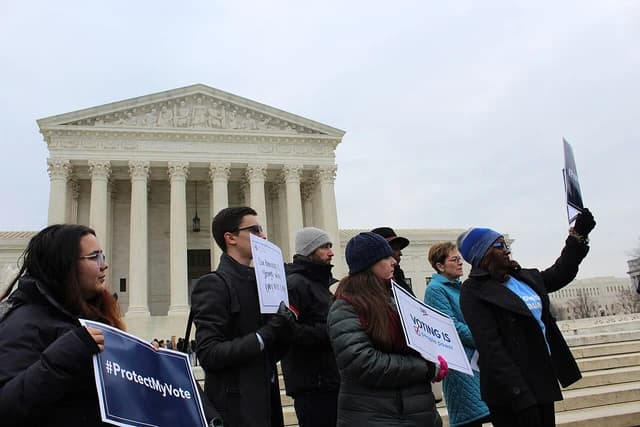
The U.S. Supreme Court is heading into a new term with election disputes squarely in view, a legal backdrop that matters because any challenge over voting rules, deadlines or results can quickly turn into a market event.
Supreme Court election disputes raise volatility risks
That is the real story for investors: election crises do not stay inside the courtroom. They can spill into volatility, pressure the dollar, lift Treasury demand and force traders to reprice risk across equities, credit and options. The VIX has already eased to 15.31 after trading above 29 earlier this year, but the broader message from pricing is that investors are still sensitive to political shocks. SPY closed at 769.64, while the Russell 2000 ETF, IWM, finished at 281.52, leaving small caps well below their 50-day moving average and more exposed to any rise in domestic policy uncertainty.
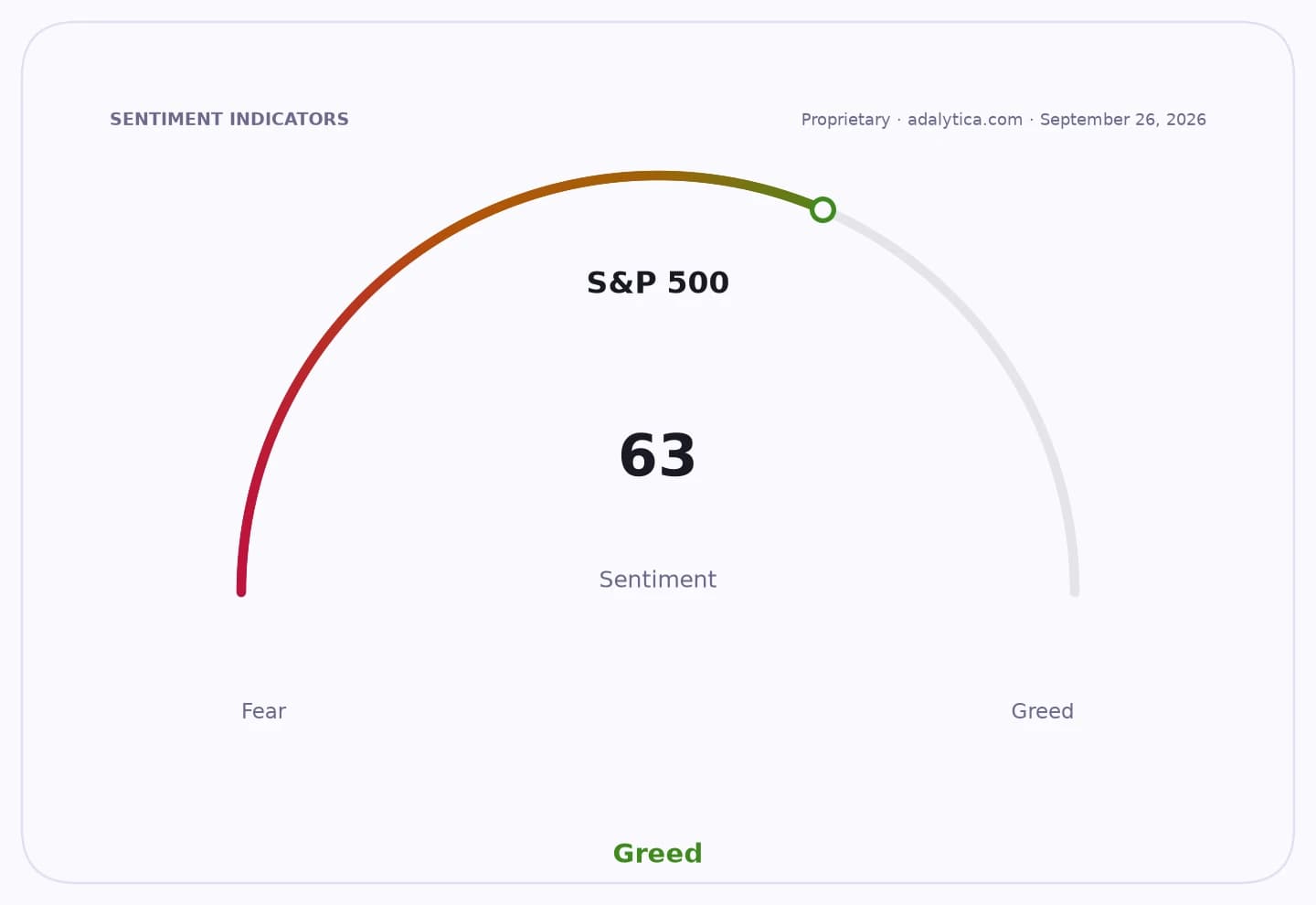
Sentiment IndicatorsⓘProprietary · adalytica.com · October 4, 2026
This is a snapshot — live sentiment, awareness and momentum for 130+ markets update continuously in the dashboard.Open AlphaPulse

The Supreme Court’s willingness to reserve time for fast-moving election cases is important because it raises the odds that legal fights over ballot access, state rules and contested outcomes could be resolved, or at least sharpened, at the highest level rather than lingering in lower courts. That reduces one kind of uncertainty and increases another: a clearer path for confrontation. In a market already wrestling with a weakening U.S. dollar, renewed political risk can become a catalyst for defensive positioning, especially if it coincides with higher yields and tighter financial conditions.
The macro setup amplifies the stakes. The 10-year Treasury yield is sitting around 5.24%, a level that keeps valuation pressure on equities and makes investors more selective about duration risk. At the same time, Adalytica’s U.S. Congressional Gridlock Sentiment is reading 75, in “Greed,” showing that investors are not fully priced for an institutional stress event even as awareness remains low. That gap between complacency and actual legal risk is where opportunity lies.
Congressional Gridlock — 30-day sentimentadalytica.com
Explore this data interactively — full history, time series and cross-market comparisons.Open AlphaPulse
For investors, the trade is not to bet on chaos but to own the infrastructure that benefits when uncertainty rises. Exchanges, listed options, volatility products, custody platforms, payment processors and large-cap defensive names tend to attract flows when election disputes escalate. Cboe Global Markets and Nasdaq stand out as direct beneficiaries if hedging activity picks up. Treasury-heavy portfolios, cash-rich megacaps and domestically insulated businesses also tend to outperform when political headlines drive risk aversion.
The market underestimates how often election law becomes an economic story. Courts can affect the timing of results, the credibility of institutions and the speed with which capital rotates in and out of risk assets. If the Supreme Court does take up election-crisis cases this term, the next catalyst will be procedural rulings, emergency appeals and any signal that contested outcomes will be settled swiftly—or not at all.
My view: use the coming term as a reason to position early for a volatility bid, not to chase it after the headlines hit. The asymmetric play is to favor the pick-and-shovels of uncertainty and keep dry powder for dislocations in broad market risk.
| Entity | Gains | Losses |
|---|---|---|
| Cboe Global Markets | ▲Higher options volume | ▼Lower volatility |
| Nasdaq | ▲Hedging demand | ▼Complacent trading |
| Treasury markets | ▲Safe-haven inflows | ▼Risk-on positioning |
| Small-cap stocks / IWM | ▲— | ▼Domestic political uncertainty |