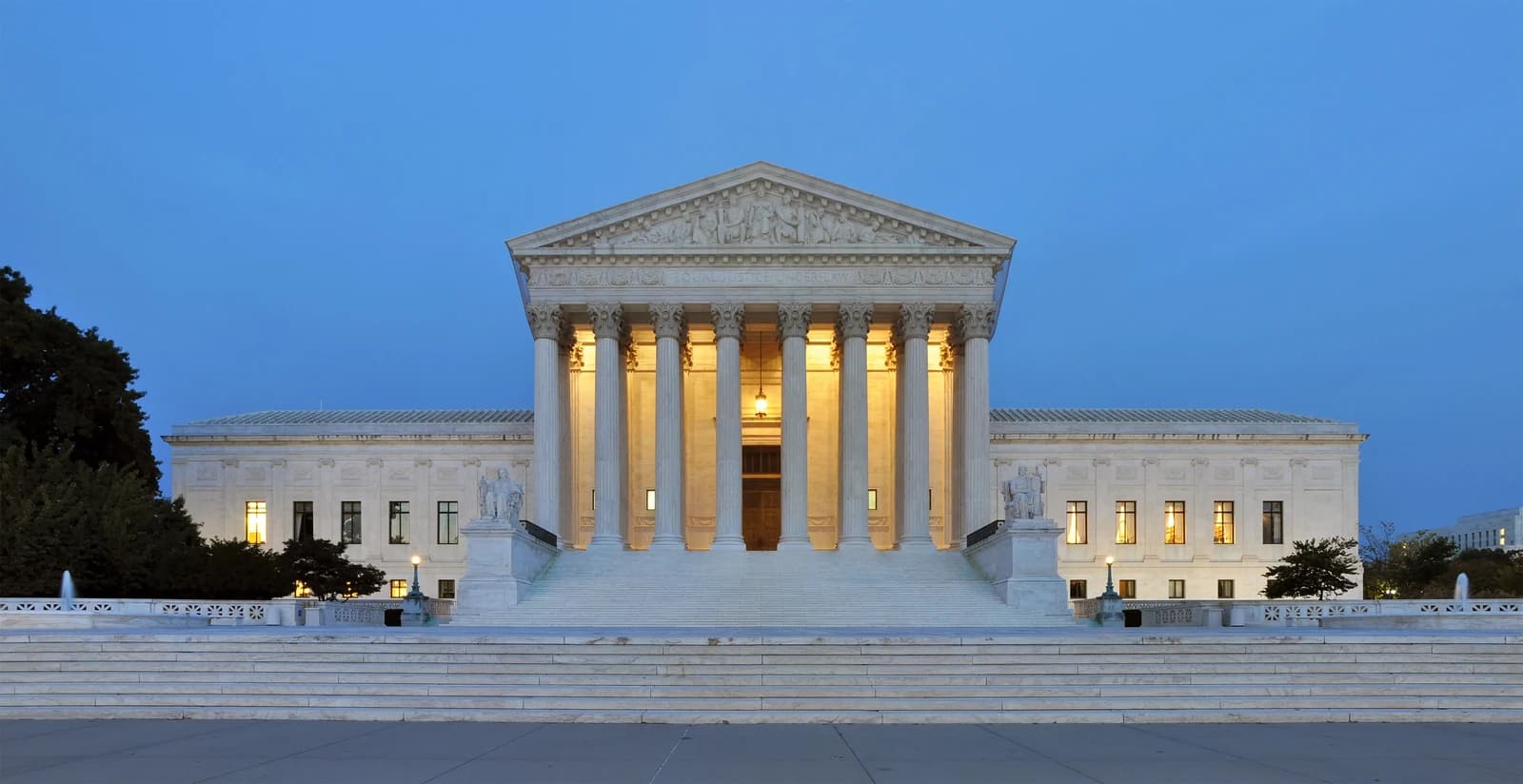
The U.S. Supreme Court is heading into a new term with the same high-stakes question that dominated the last one: how far it will let Donald Trump stretch presidential power, and where it will draw the line.
Supreme Court term tests Trump executive power
That matters far beyond the courtroom. The justices’ decisions will shape how aggressively the administration can pursue mass deportations, challenge independent agencies, restrict transgender rights and press broader claims of executive authority — all of which carry consequences for federal spending, regulatory stability, labor supply and political risk across markets.
Sentiment IndicatorsⓘProprietary · adalytica.com · October 2, 2026
This is a snapshot — live sentiment, awareness and momentum for 130+ markets update continuously in the dashboard.Open AlphaPulse
The court’s 6-3 conservative majority gave Trump several major victories last term, including a landmark ruling that expanded presidential control over independent regulators by overturning a 1935 precedent. It also handed him losses on sweeping tariffs, birthright citizenship and his attempt to fire a Federal Reserve governor, a reminder that even a sympathetic court has limits when economic stability or explicit statutory boundaries are at stake.
Now the docket is filling again. The court has already agreed to hear two cases tied to Trump’s immigration crackdown: mandatory detention without a bond hearing and the rapid expulsion of migrants to third countries. The administration has also asked the justices to review its ban on transgender service members, cuts to academic grants, efforts to install federal prosecutors and the suspension of asylum at the U.S.-Mexico border.
For investors, the biggest market implication is not a single ruling but the cumulative effect: a stronger presidency can mean faster policy execution, less predictable regulation and a wider range of outcomes for sectors exposed to immigration, defense, education, healthcare and civil-rights litigation. Employers that rely on migrant labor, for example, face a more uncertain operating environment if deportation rules harden further, while universities and research institutions remain exposed to funding and grant decisions that can move quickly through the executive branch.
The court’s last term showed that the justices are not acting as a rubber stamp. Legal experts say they have been willing to back Trump when he is exercising power over the executive branch, but more cautious when he pushes into Congress’s domain or beyond clear statutory authority. That distinction matters for everything from agency oversight to tariff policy, where the court has already shown it can reverse him when economic disruption becomes too pronounced.
Trump has taken those losses personally, attacking some of the conservative justices he appointed. But the broader judicial trend still favors an expansive view of presidential authority, especially after the court’s ruling on independent regulators. That creates a more powerful White House, but also a more volatile policy backdrop because major shifts can come through the executive branch rather than through legislation.
The next few months will test where that line falls. If the court continues to side with Trump on immigration and social-policy disputes, it would reinforce a pattern of deference that strengthens presidential leverage. If it pushes back again on tariffs, the Fed or other economically sensitive actions, it would signal that the majority is willing to protect institutional guardrails when markets or Congress’s prerogatives are directly on the line.
| Entity | Gains | Losses |
|---|---|---|
| Trump White House | ▲Faster policy execution | ▼Legal constraints on executive power |
| Conservative justices | ▲Stronger separation-of-powers role | ▼Pressure to appear politically aligned |
| Immigration hardliners | ▲Broader deportation authority | ▼Migrants and employers |
| Markets and regulated sectors | ▲Clearer legal boundaries in some areas | ▼Policy volatility and litigation risk |