Sweden’s two biggest political blocs are signaling they will avoid fresh borrowing in the next term, a pledge that points to tighter fiscal policy and leaves markets focused on how much room the country has to fund spending without lifting public debt.
Sweden Parties Pledge No New Borrowing

According to SVT Nyheter, both the Social Democrats and the Moderates say they do not want to borrow more money and add further to the national debt. For investors, that matters because it suggests Sweden may keep one of Europe’s more disciplined fiscal stances even as growth slows and political pressure rises to spend on welfare, defense and infrastructure.
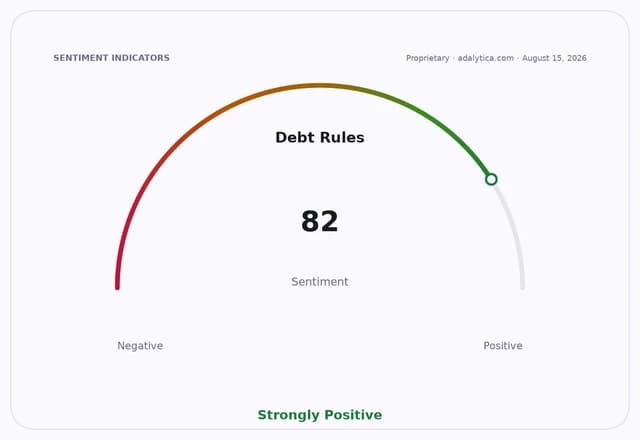
Sentiment IndicatorsⓘProprietary · adalytica.com · August 15, 2026
This is a snapshot — live sentiment, awareness and momentum for 130+ markets update continuously in the dashboard.Open AlphaPulse
The promise also arrives as bond investors are already watching debt and deficit politics across Europe more closely. Sweden’s 10-year government yield was at 4.63% on Aug. 13, with the latest forecast pointing to 4.652% on Aug. 14, while the 10-year/2-year curve has steepened to 51 basis points, a sign markets are pricing in a somewhat firmer growth and rate backdrop.
Credit markets are not flashing stress, but they are not relaxed either. The Markit CDX North America high-yield spread was 2.71 percentage points on Aug. 13, near recent lows, indicating risk appetite remains intact even as investors weigh fiscal restraint against weaker growth and higher funding costs globally.
A commitment by both major parties to avoid more borrowing could help cap upward pressure on Swedish government debt issuance and support confidence in the krona and local bond market. But it also narrows the policy options if the next government faces a slowdown, higher defense outlays or renewed pressure to support households and municipalities.
The broader narrative is that fiscal prudence remains politically saleable in Sweden, even with the debate moving into a more expensive era for public finance. Investors will be watching whether the pledge survives coalition talks, budget negotiations and any deterioration in the economic outlook.
| Entity | Gains | Losses |
|---|---|---|
| Swedish taxpayers | ▲Lower debt burden | ▼Less room for new spending |
| Bond investors | ▲Fiscal credibility | ▼Risk of tighter growth support |
| Social Democrats & Moderates | ▲Election positioning | ▼Policy flexibility |
| Swedish borrowers requiring public support | ▲Debt restraint | ▼Larger funding constraints |