A Swedish professor of responsible AI is under investigation for allegedly using artificial intelligence to cheat, turning a classroom ethics dispute into a credibility test for the fast-growing AI governance trade.
Swedish AI professor probe lifts governance scrutiny

The case matters because trust is becoming the central bottleneck in AI adoption. Universities, companies and regulators are leaning on “responsible AI” branding to justify deployment, but allegations that a specialist in the field used AI to gain an unfair advantage undercut the premium investors are assigning to governance, compliance and certification businesses.
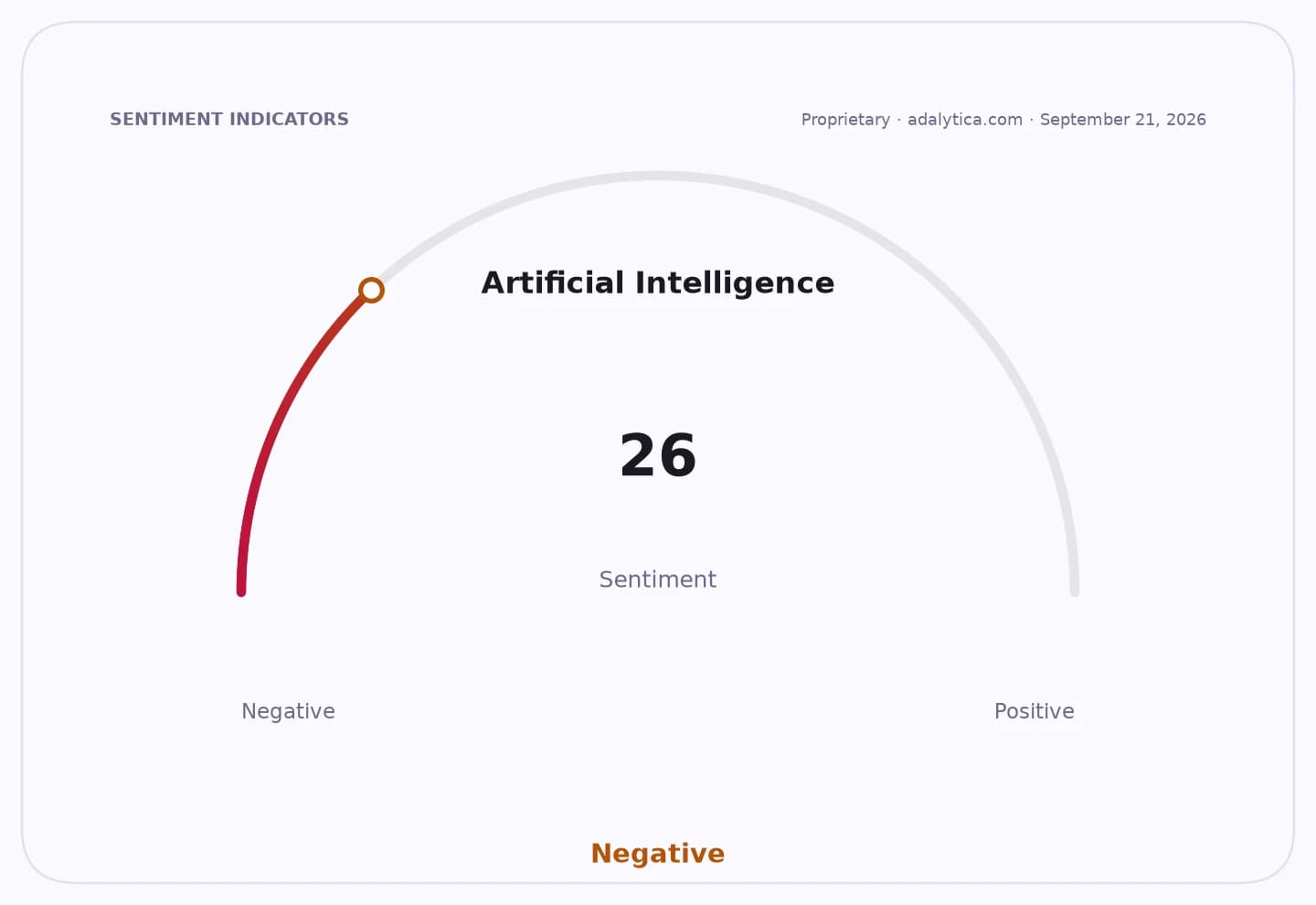
Sentiment IndicatorsⓘProprietary · adalytica.com · August 24, 2026
This is a snapshot — live sentiment, awareness and momentum for 130+ markets update continuously in the dashboard.Open AlphaPulse
The broader backdrop is a market still pricing AI as a long-duration growth theme. Adalytica’s AI sentiment gauge is at 100, or “Extreme Greed,” even as awareness sits at 4 and the gauge has jumped 89 points in a week, suggesting enthusiasm is outrunning scrutiny. That helps explain why responsible-AI initiatives, training platforms and certification programs have multiplied across education and enterprise.
Investor relevance is two-sided. Companies selling AI infrastructure and software benefit from continued adoption, but any scandal that raises fears about misuse, dishonesty or weak oversight can slow enterprise procurement, increase compliance costs and invite tighter regulation. That risk is already visible in filings from Microsoft and Alphabet, which both warn that AI can bring legal, reputational and regulatory harm.
The stock tape shows how closely AI leadership remains tied to confidence in the ecosystem. Nvidia shares have climbed to $212.89, well above the 50-day moving average of $207.74 and the 200-day average of $195.19, while Microsoft closed at $484.12, also above its 50-day average of $420.98 and 200-day of $429.30. Alphabet ended at $347.43, still below its 50-day average of $351.56, even as AI-related sentiment remains elevated.
For investors, the key question is whether the scandal stays local or feeds a larger push for stricter AI rules, mandatory disclosure and credentialing standards. If it does, the beneficiaries are audit, compliance and governance providers; if not, it is another reminder that AI enthusiasm can coexist with rising reputational risk.
| Entity | Gains | Losses |
|---|---|---|
| AI governance firms | ▲More demand for oversight | ▼Higher scrutiny of claims |
| Universities | ▲Stronger ethics standards | ▼Reputational damage |
| Big tech AI vendors | ▲Broader AI adoption | ▼Compliance and legal risk |
| Nvidia/Microsoft bulls | ▲Continued AI spending | ▼Any trust-related slowdown |