Sydney’s housing market is headed for another leg down before it becomes the strongest rebound trade in Australia, and that matters because the downturn is increasingly exposing a split between buyers with patience and sellers under pressure.
Sydney Housing Prices Seen Falling Before Rebound
Domain’s latest forecast says Sydney house prices will fall about 10% by June 2027, part of a broader 10% to 13% decline across major capitals driven by high borrowing costs, weak confidence and tighter lending. But the same report expects Sydney to recover more forcefully than any other capital city, with median prices rising from about A$1.6 million to A$1.7 million in the 12 months to December 2027.
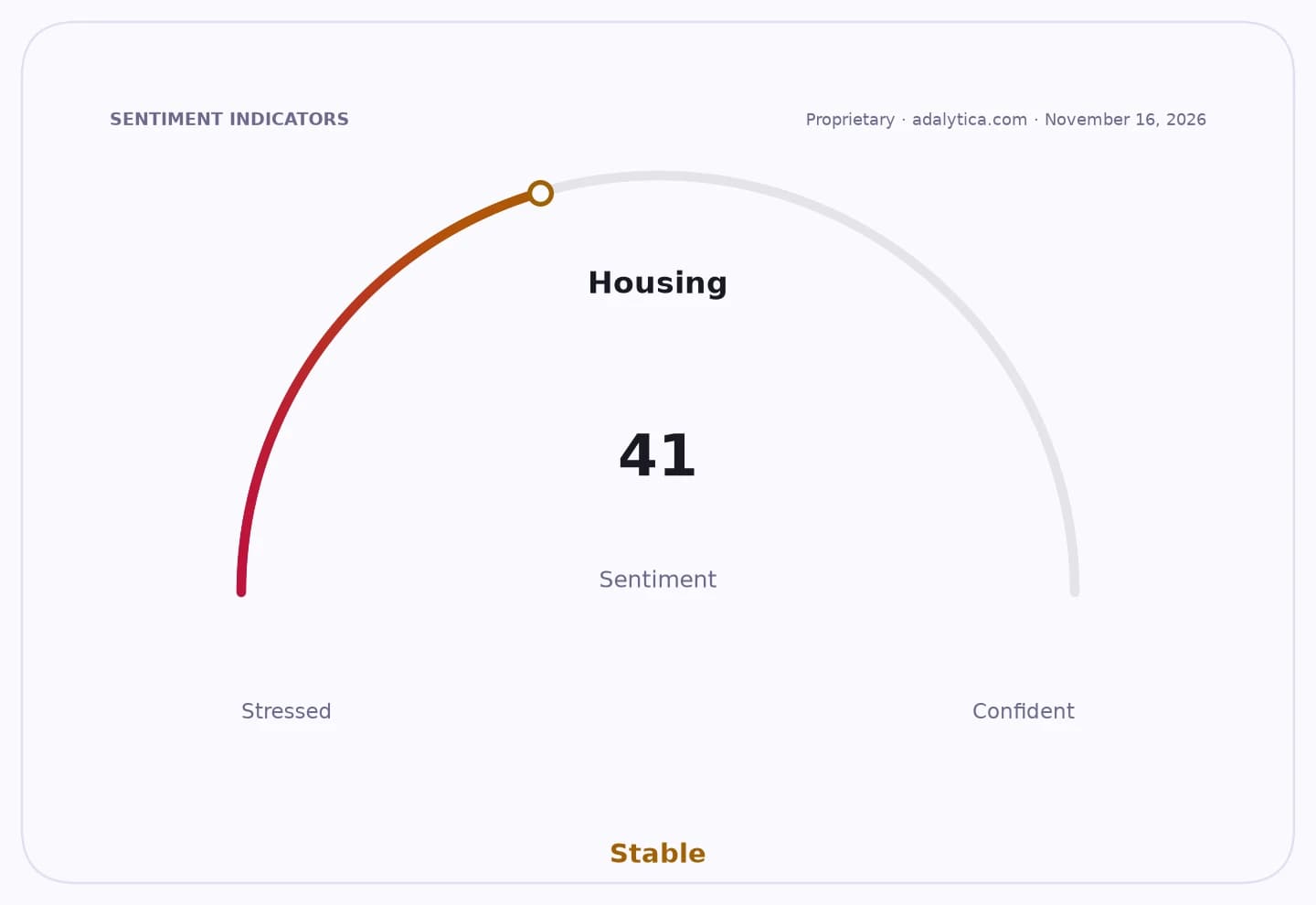
Sentiment Indicators
That makes Sydney a classic double-edged sword for the housing market. A softer market is already forcing vendors to cut asking prices and sit longer on listings, yet it is also creating the conditions for the next upswing. The key question for investors is not whether prices are weak now — they are — but whether the market is setting up for a sharp normalization once the pressure from rates and sentiment eases.
Domain senior residential economist David Cannington said buyer confidence has been hit by higher interest rates, elevated inflation and changes to housing investment tax policy. He called 2027 a “year of transition,” with price falls expected to be milder than this year and the market likely finding its footing in the second half of next year.
The strain is already visible in distress metrics. SQM Research said distressed sale listings topped 300,000 in October, the highest in five years, while NSW distressed listings rose to 1,190 from 870 since January. That surge matters because forced sales typically precede more weakness in prices, especially when stock is rising and homes are taking longer to move.
For buyers, that is the short-term opportunity: patience, not panic, is likely to be rewarded if Sydney does indeed lead the rebound. For sellers, especially highly leveraged owners and investors, the next several quarters could remain painful as banks stay conservative and price guides continue to reset lower.
Our view is that the market is underestimating the second-order effect of this downturn. When distress peaks, the eventual recovery can be faster than consensus expects because lower prices flush out marginal demand while keeping Sydney’s structural advantages intact — population growth, deep liquidity and persistent long-run demand for housing in the city’s core. If rates stabilize and confidence improves, capital will rotate back quickly.
That is why the most interesting trade here is not simply “buy property” but “buy the winners from the reset”: developers with land banks, listings platforms, mortgage intermediaries and housing-related ETFs that can benefit when transaction volumes recover. The near-term pain is real, but Sydney’s forecast rebound suggests the market is already planting the seeds of the next cycle.
| Entity | Gains | Losses |
|---|---|---|
| Sydney buyers | ▲Lower entry prices | ▼Near-term confidence risk |
| Sydney sellers | ▲Future rebound potential | ▼Price cuts, slower sales |
| Distressed owners | ▲Possible liquidation exit | ▼Forced-sale discounts |
| Housing-linked stocks/ETFs | ▲Recovery in volumes | ▼Longer downturn first |