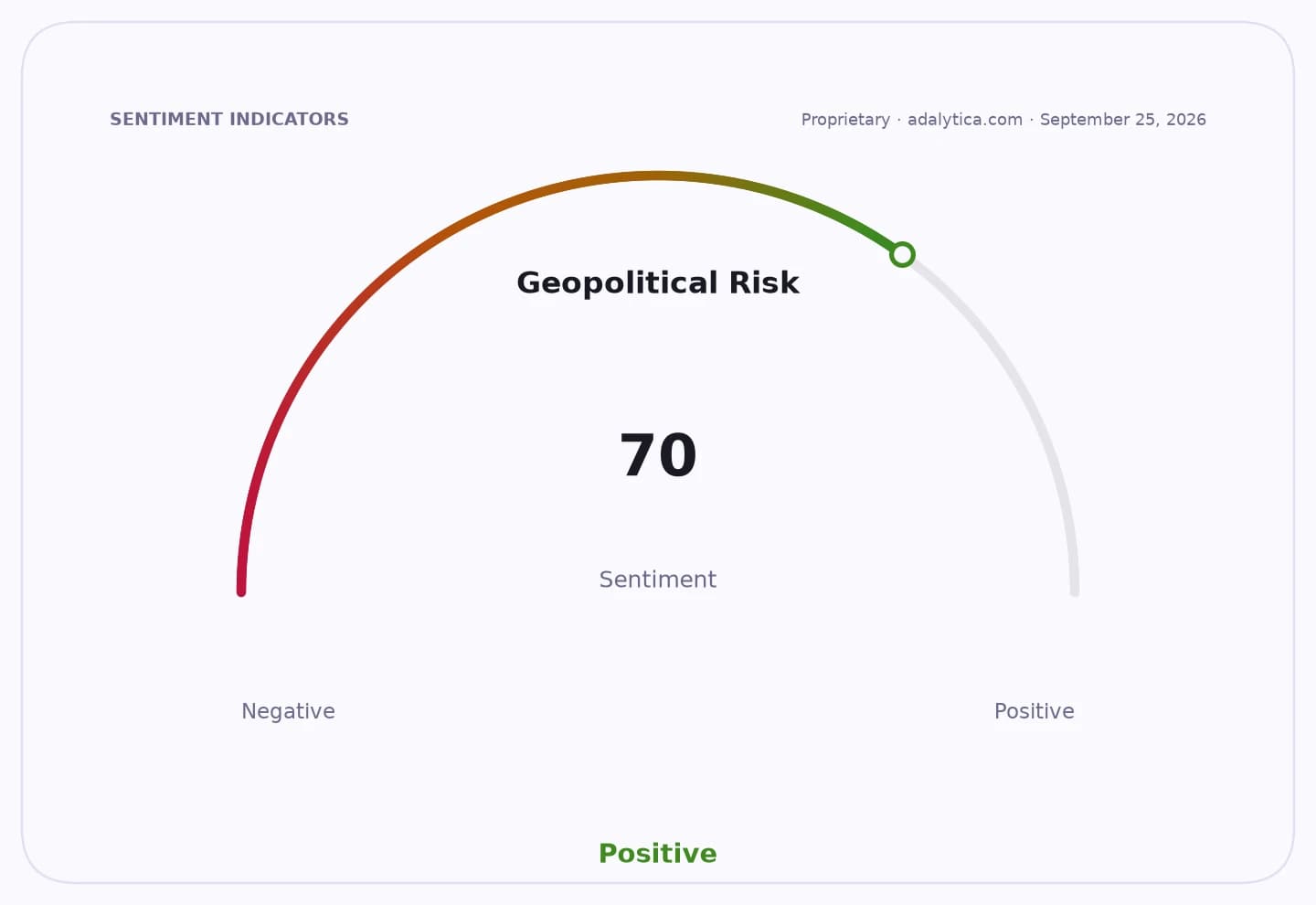
T-Mobile’s claim that it “chopped a cable” to expel Chinese hackers from its network underscores how cyber intrusions are now a direct operating risk for telecom carriers, not just a back-office security issue.
T-Mobile cybersecurity risk and stock levels

For investors, the significance is less about the drama of the quote than the economics behind it: a mobile network is a critical national infrastructure asset, and a breach can force costly remediation, invite regulatory scrutiny and weaken trust at the very moment carriers are trying to monetise scale, fixed wireless access and enterprise services. The episode also highlights how geopolitical cyber risk is increasingly embedded in the valuation of US telecoms.
Sentiment IndicatorsⓘProprietary · adalytica.com · August 19, 2026
This is a snapshot — live sentiment, awareness and momentum for 130+ markets update continuously in the dashboard.Open AlphaPulse
The narrative fits a broader pattern of hostile cyber activity targeting public and private infrastructure. Recent reporting on a breach of Berlin’s state network, which forced parts of the city administration offline, shows how quickly attackers can exploit weak points in connected systems. T-Mobile’s case is different in scope, but the implication is the same: network operators are under pressure to detect intrusions earlier, isolate them faster and spend more on resilience as attackers become more sophisticated.
That spending burden matters because telecom is already a capital-intensive sector. Carriers are balancing network upgrades, spectrum commitments and dividend discipline against the need to harden systems against state-linked and criminal actors. T-Mobile’s latest filing warned that it cannot always assess the effectiveness of all third-party systems and controls, a reminder that supply-chain exposure remains part of the risk equation. It also said threat actors are using increasingly advanced AI tools, which can shorten the time between vulnerability discovery and exploitation.
The market backdrop has been mixed for T-Mobile. The stock has recovered from a sharp selloff earlier in the year and was trading at $182.36 on Aug. 19, still below both its 200-day moving average of $194.95 and its 50-day average of $181.75. Its relative strength index at 63.4 suggests recent momentum has improved, but the shares remain vulnerable to headlines that raise questions about execution or security costs. For a company already facing scrutiny over service reliability, cyber incidents can compress multiples if investors begin to assume higher recurring risk.
The bull case is that T-Mobile’s scale, network quality and customer growth can absorb the cost of better security without much damage to earnings. The bear case is that cyber defence becomes another structural expense in a low-growth industry, while breaches or disclosures could trigger customer churn, insurance costs and reputational damage.
For investors, the key question is whether this was a contained incident or another sign that telecom networks have become a more frequent battlefield in the US-China technology rivalry. Either way, the message is clear: in telecom, cybersecurity is now part of the balance sheet.
| Entity | Gains | Losses |
|---|---|---|
| T-Mobile | ▲Faster containment narrative | ▼Security-cost pressure |
| Hackers | ▲None | ▼Access to network |
| Telecom investors | ▲Better risk pricing | ▼Higher uncertainty |
| Customers/regulators | ▲Stronger safeguards | ▼Near-term scrutiny |