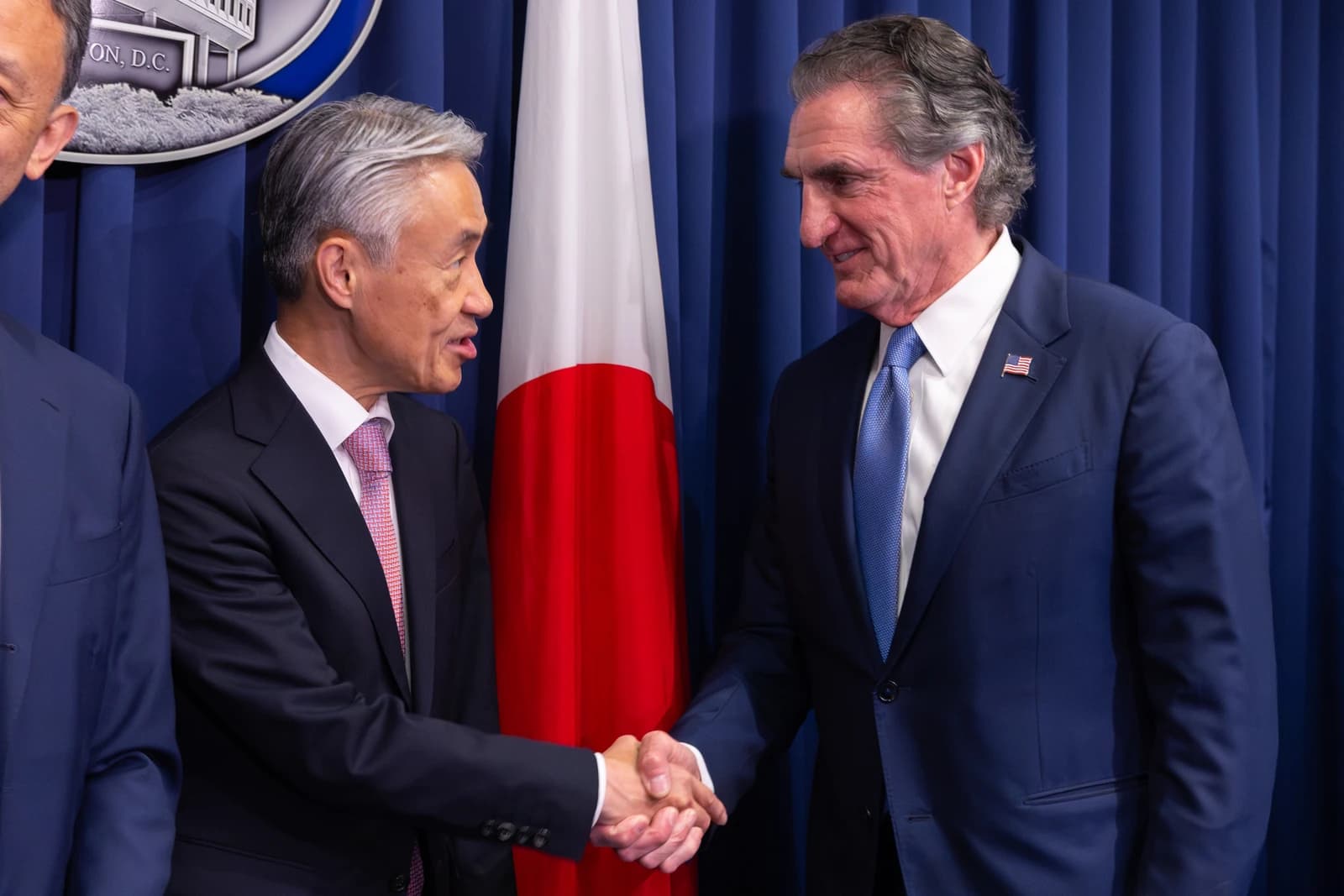
Taiwan’s commitment to invest $4.4 billion in Alaska’s LNG project is the most important part of a broader push by Washington to lock in long-term Asian buyers for one of America’s biggest energy exports.
Taiwan Pledges $4.4 Billion for Alaska LNG
That matters because the economics of Alaska LNG hinge on financing certainty and durable offtake, not just geology. A project marketed around 20-year supply contracts becomes far more credible once a major importing economy puts real capital on the table. Taiwan’s economy ministry said the island envisions $4.4 billion of investment and 6 million tons of annual purchases, while Trump said the broader package could eventually total $70 billion to $80 billion and cover about 30% of the project’s planned output over two decades. In plain terms, the deal is designed to turn Alaska LNG from a political talking point into a bankable energy corridor.
Sentiment IndicatorsⓘProprietary · adalytica.com · October 14, 2026
This is a snapshot — live sentiment, awareness and momentum for 130+ markets update continuously in the dashboard.Open AlphaPulse
For investors, the implications are wider than one project. If Alaska LNG gains traction, the beneficiaries are the entire U.S. LNG complex: developers, exporters, contractors, pipeline and midstream names, and natural gas producers tied to long-duration export growth. The market has already rewarded LNG-linked equities for years of rising export capacity, and the latest headlines reinforce the idea that Asia’s energy security demand is still the biggest secular tailwind in the sector. Cheniere Energy remains the clearest pure-play toll road on global LNG demand, while upstream names such as ConocoPhillips stand to benefit from any expansion in U.S. gas monetization, and utilities or infrastructure operators tied to Alaska buildout could see long-dated opportunity if the project advances.
The deal also underscores a geopolitical trade: Asian allies want diversified supply, and Washington wants strategic capital flows that deepen energy dependence on the U.S. rather than the Middle East or Russia. Taiwan’s participation is particularly meaningful because it links energy security to national security at a time of elevated regional tension. Adalytica’s Global Stability Sentiment remains in neutral territory overall, but awareness is still in fear mode, a reminder that investors are pricing geopolitical noise even as dealmaking continues.
South Korea remains the swing factor. Trump has said Seoul would invest $54 billion, but Korean officials have denied that figure, and the dispute has already spilled into wider U.S.-Korea political friction. That uncertainty is why the Alaska project still trades more like an option than a fully de-risked infrastructure asset. Yet that is exactly where the upside lives: if Washington can convert diplomatic pressure into signed offtake and capital commitments, the valuation rerating in LNG-linked assets could be material.
The next catalyst is whether Taiwan’s pledge is followed by binding commercial contracts and whether Korea comes back to the table. Until then, the trade is straightforward: own the companies that get paid as LNG capacity expands, and keep a close watch on Alaska as the market’s newest geopolitical energy test case.
| Entity | Gains | Losses |
|---|---|---|
| Taiwan | ▲Energy security | ▼Lower bargaining flexibility |
| Alaska LNG project | ▲Financing momentum | ▼Project risk, if deals slip |
| Cheniere Energy and LNG peers | ▲Stronger long-term export thesis | ▼None directly, if supply competition rises |
| South Korea government | ▲Potential leverage in talks | ▼Pressure from Trump and trade retaliation risks |