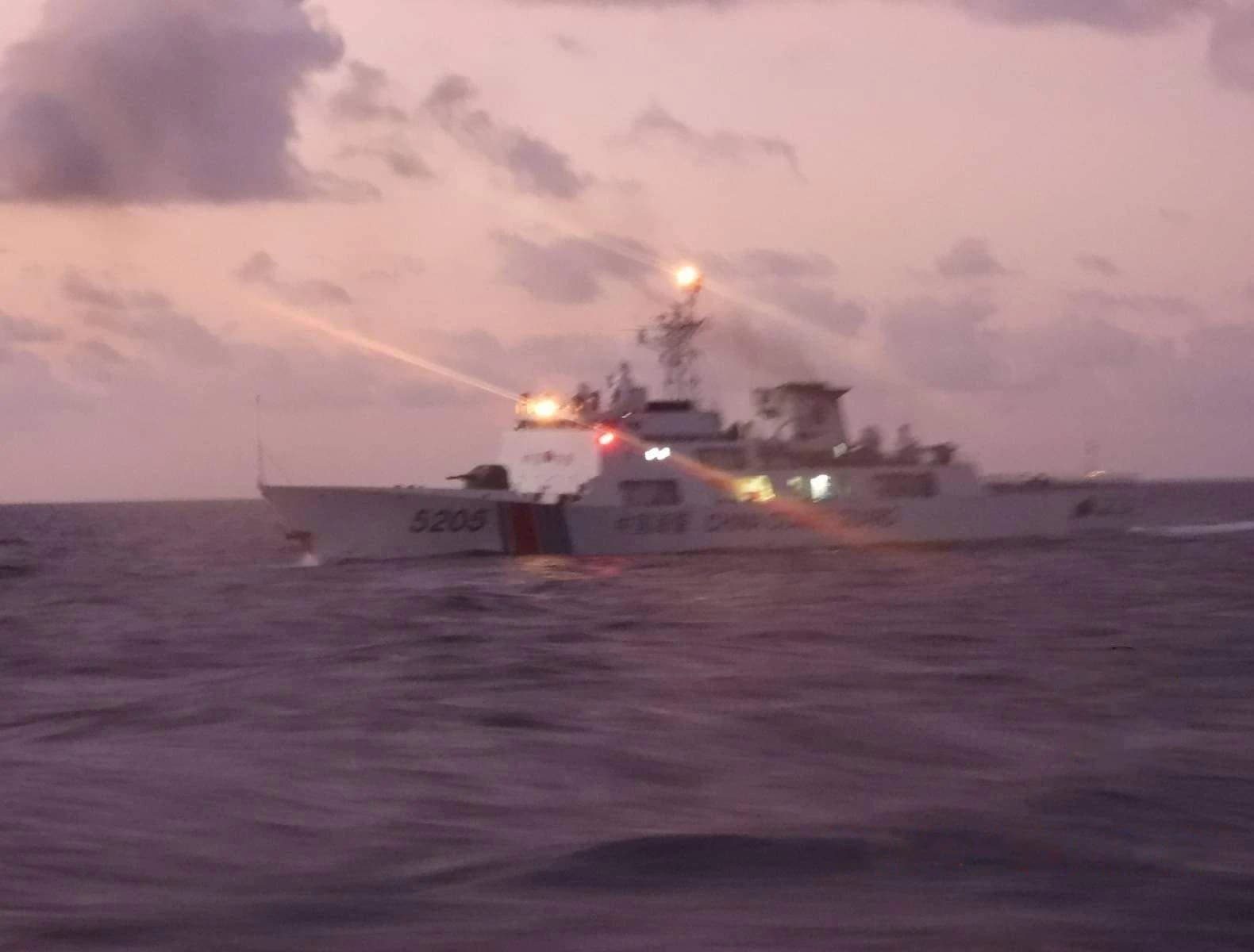
Taiwan said it detected 24 Chinese military aircraft around the island over the past 24 hours, a sharp increase from the previous day that underscores Beijing’s use of persistent military pressure to keep Taipei off balance and to signal resolve before domestic and diplomatic flashpoints.
Taiwan Reports 24 Chinese Military Aircraft Near Island
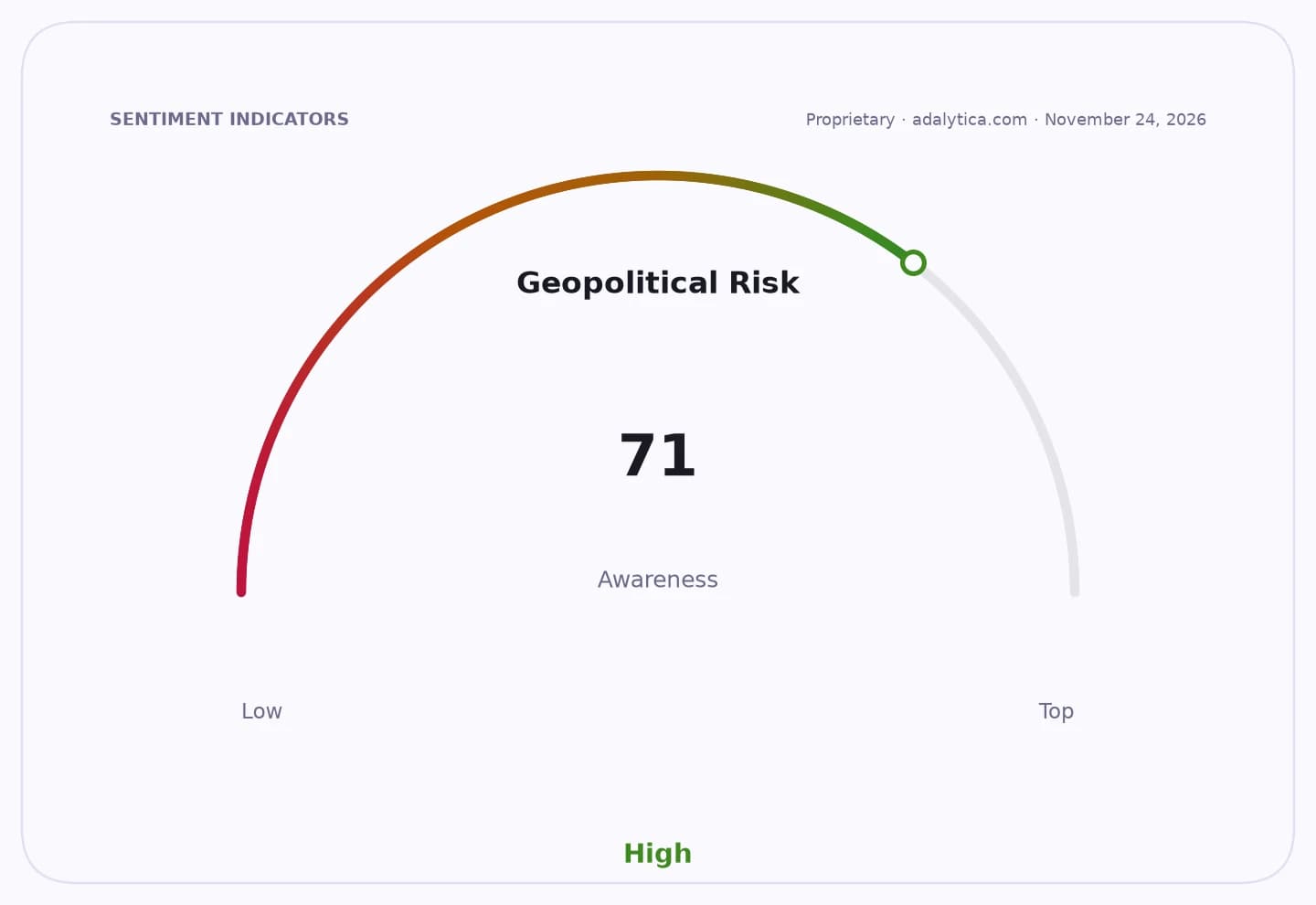
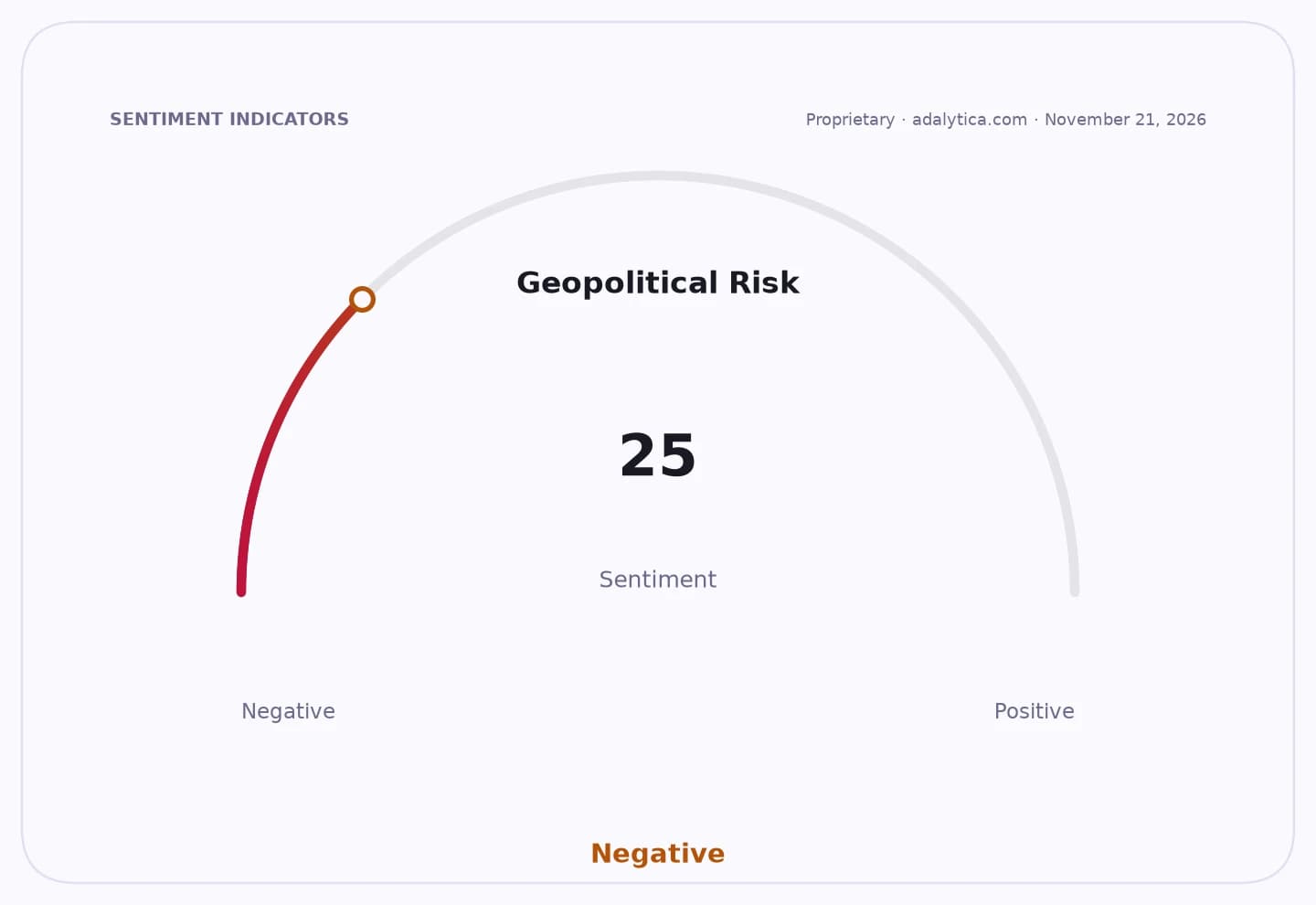
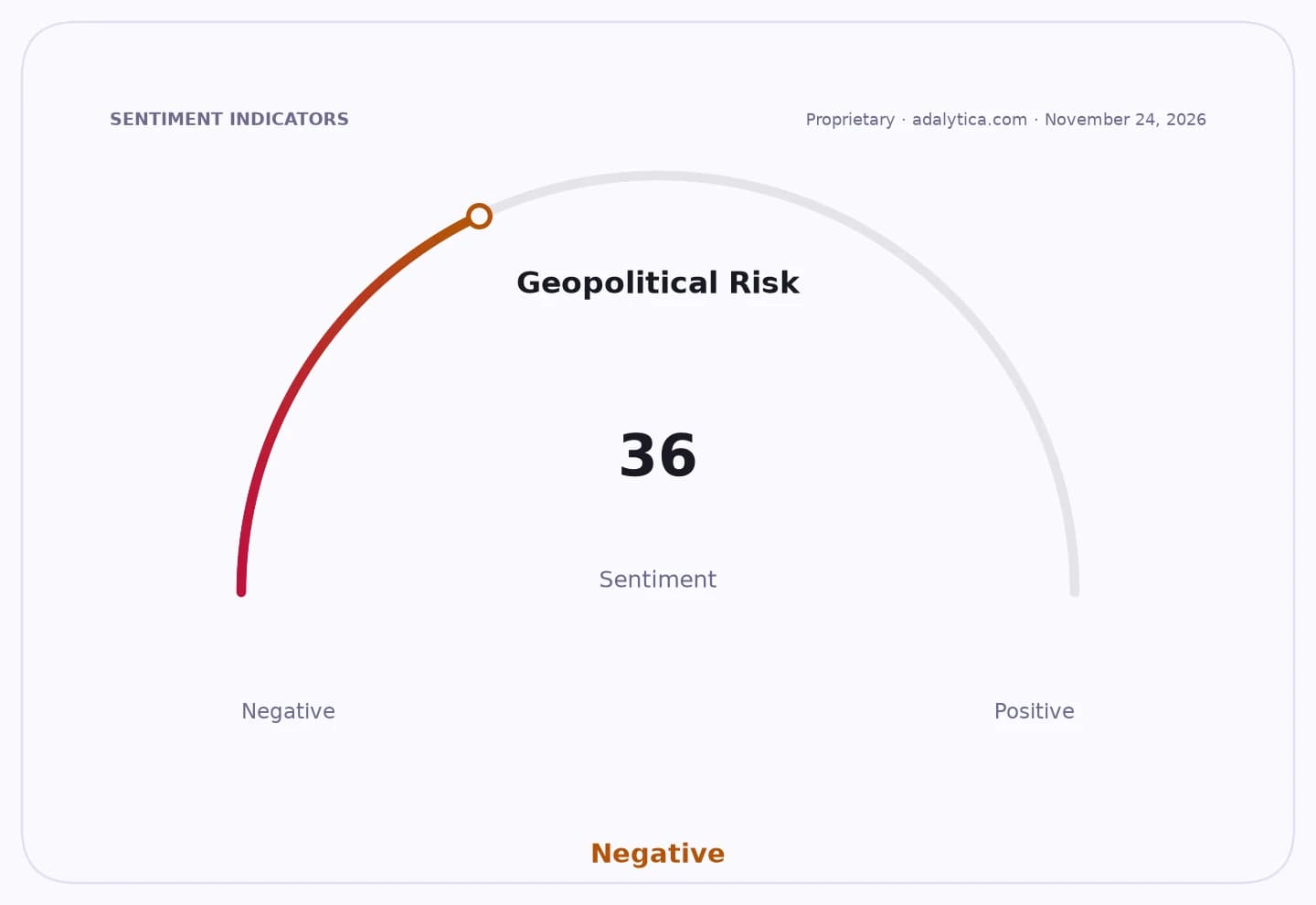
Geopolitical Risk
The defense ministry said 17 of the aircraft crossed the Taiwan Strait median line or entered parts of Taiwan’s self-declared air defense identification zone, forcing the island to scramble aircraft, dispatch ships and activate coastal missile systems to monitor the activity. Taiwan also tracked 11 Chinese navy vessels, one official ship and two balloons from the mainland.
Sentiment Indicators
Geopolitical Risk
The scale of the activity matters because the median line, while never formally recognized by Beijing, has long served as a practical buffer in the strait. Repeated crossings erode that informal restraint and raise the risk of miscalculation at a time when Taiwan’s security environment is already tense. Beijing has steadily expanded drills and patrols around the island, and Taiwan said a similar Chinese “combat readiness” patrol earlier this month included 29 aircraft sorties, 22 of which crossed the median line or its extension.
For investors, the immediate market impact is less about a single day’s sortie count than about the premium such developments add to regional risk. Taiwan sits at the center of global semiconductor supply chains, and any sustained escalation in the strait can affect risk appetite in Asian equities, defense shares and suppliers tied to Taiwan’s technology ecosystem. Taiwan Semiconductor Manufacturing Co., the island’s most important listed company, has already been trading under pressure, with its shares down sharply from recent highs even as broader semiconductor demand remains supported by artificial intelligence spending.
US-China Relations
The geopolitical backdrop is also increasingly consequential for US-China relations. Adalytica’s US-China Relations Sentiment gauge remains elevated at 82, indicating continued market attention to bilateral tensions, while the Global Stability gauge shows only a neutral reading, reflecting how fragile broader risk sentiment remains when Taiwan-related headlines intensify.
The latest deployment suggests Beijing is keeping up a calibrated campaign of pressure rather than moving toward immediate confrontation. That still leaves investors with an uncomfortable mix: the bull case is that the activity remains contained and largely rhetorical, while the bear case is that repeated incursions normalize a higher-risk status quo and make any future incident more damaging for supply chains, insurers and regional assets.
| Entity | Gains | Losses |
|---|---|---|
| China | ▲Leverage over Taiwan | ▼Diplomatic trust |
| Taiwan | ▲Domestic security posture | ▼Air defense resources |
| TSMC and Taiwan tech stocks | ▲None immediate | ▼Risk premium, volatility |
| Defense contractors | ▲Higher demand for deterrence | ▼If tensions ease |