Taiwan’s plan to dissolve the pro-China China Unification Promotion Party marks a sharper turn in its national-security response to Beijing and underscores how political tensions are increasingly feeding into the island’s economic and market risk premium.
Taiwan to dissolve CUPP as EWT falls to 93.99
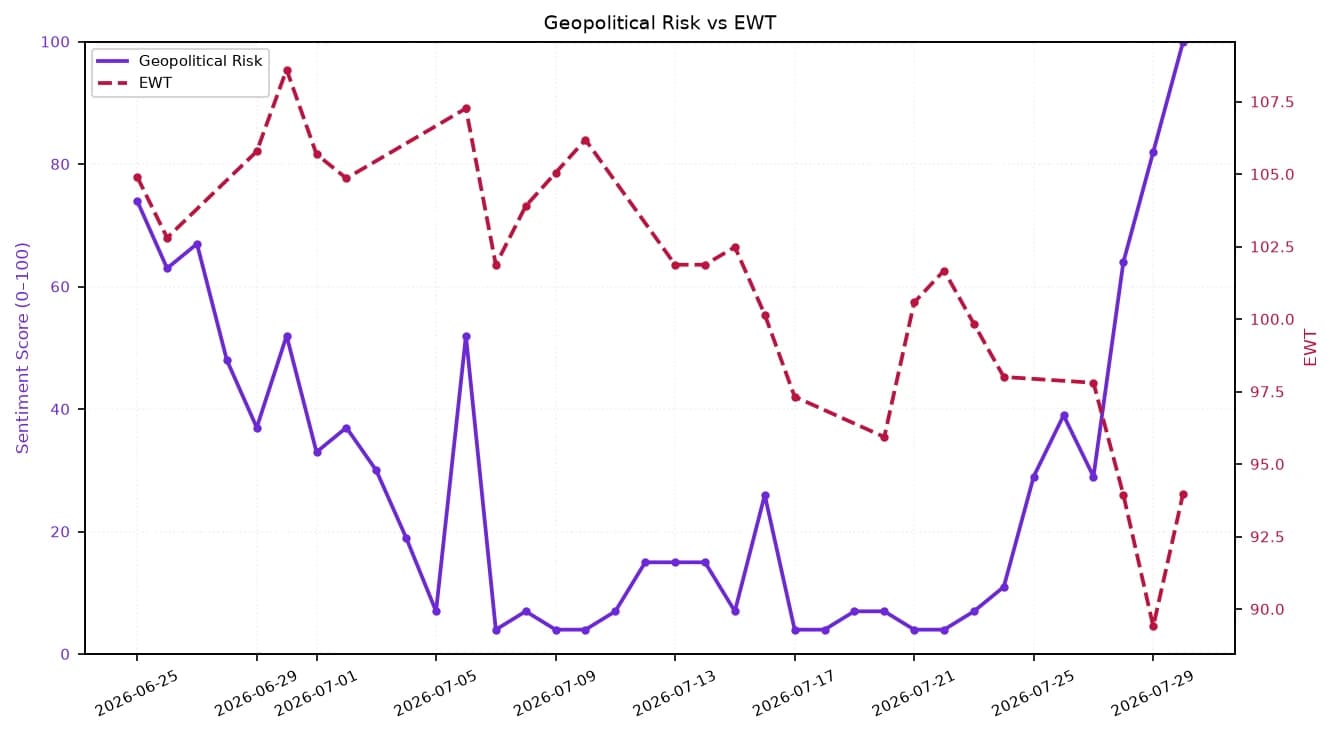
The move matters beyond one small party. It signals that Taipei is willing to use legal and administrative tools to curb groups it views as extensions of Chinese influence, reinforcing a broader shift toward internal security hardening at a time when cross-strait frictions are already shaping trade, defense spending and foreign investment decisions. For investors, the key issue is not the CUPP itself but the message: political risk in Taiwan is becoming more structural, and that can affect valuations across equities, the currency and strategic sectors tied to the island’s role in global supply chains.
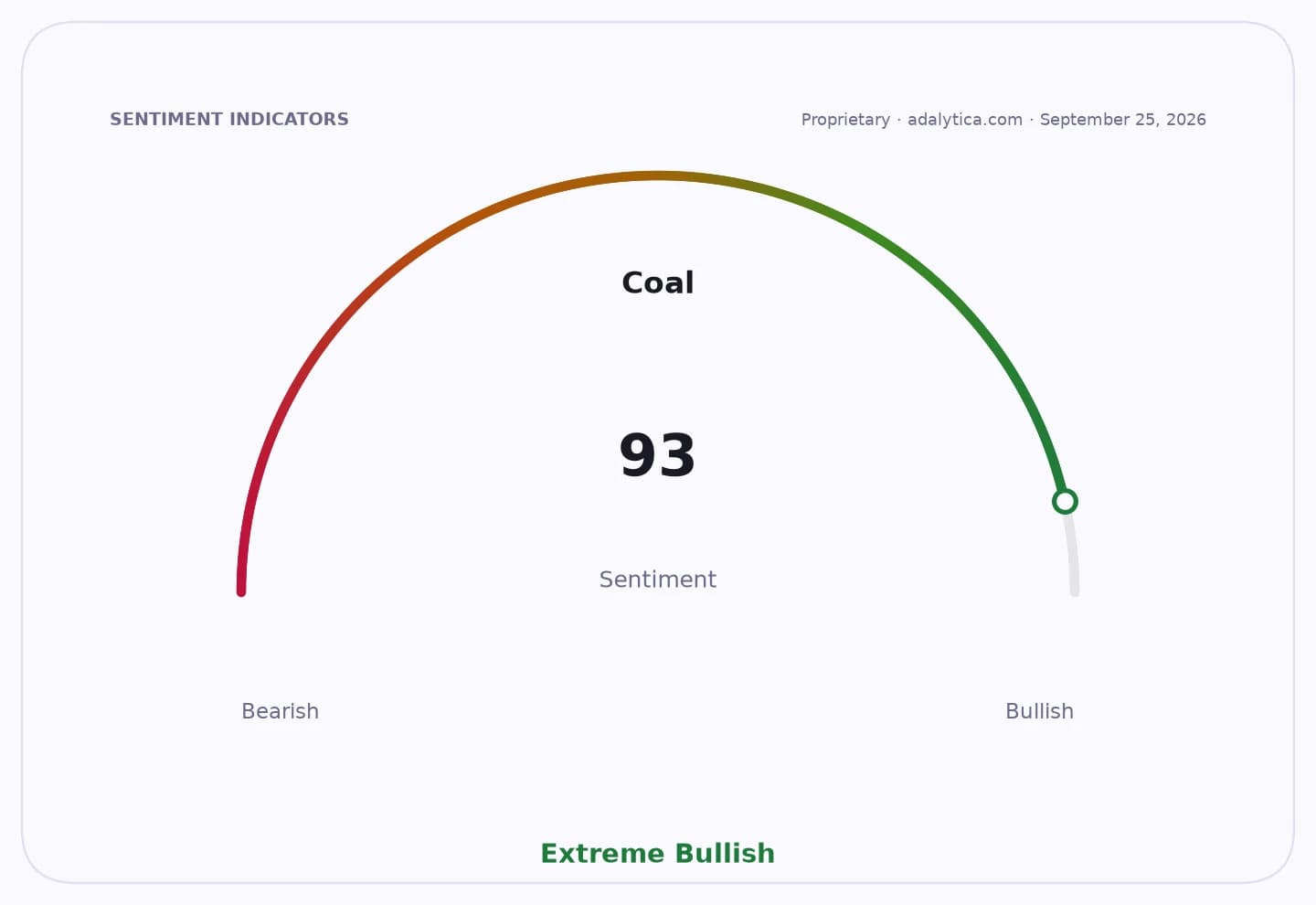
Sentiment IndicatorsⓘProprietary · adalytica.com · July 30, 2026
This is a snapshot — live sentiment, awareness and momentum for 130+ markets update continuously in the dashboard.Open AlphaPulse
That backdrop has direct relevance for Taiwan’s market proxies. The iShares MSCI Taiwan ETF, or EWT, has fallen to 93.99 from a recent high of 111.53 on June 22, while its 50-day moving average now sits above the price at 101.81, a sign that momentum has weakened after a strong run earlier in the year. The ETF’s relative strength index of 32.1 and negative MACD reading point to a market that is still under pressure, even though the rebound from the July 29 close of 89.41 suggests bargain hunters are stepping in.
Taiwan Semiconductor Manufacturing Co., the economy’s most important listed company and the largest holding in many Taiwan-focused portfolios, has also lost altitude. TSMC closed at 402.8 on July 30, down sharply from 477.57 on June 30, after sliding as low as 374.67 on July 29. The stock remains above its 200-day moving average of 355.48, but the drop has pulled it well below its 50-day average of 424.78 and left the RSI at 38.8, reflecting cooler near-term sentiment after a powerful advance. Because TSMC sits at the center of global AI chip demand, any rise in Taiwan’s political risk premium matters directly for institutional investors trying to separate fundamental earnings strength from geopolitical discounting.
The broader read-through is that Taiwan is trying to defend its political space while preparing for a more security-heavy economic model. That can support defense-related spending and domestic resilience measures, but it also keeps alive the possibility of episodic market volatility whenever Taipei tightens its stance or Beijing responds. China-focused assets have not been immune either: the FXI China ETF has rebounded to 36.46, but the latest move still leaves it below its 200-day moving average of 36.96, highlighting that cross-strait tensions are landing against a fragile mainland market backdrop.
For investors, the immediate question is whether this is a one-off legal move or part of a wider campaign that could deepen Beijing’s pushback. If Taiwan’s domestic security drive continues, it may bolster the case for defense names and high-quality exporters with pricing power, while adding risk to Taiwan’s equity risk premium. The opposing view is that such measures could deter political infiltration without materially disrupting business fundamentals. But in a region where politics and manufacturing are tightly intertwined, the line between security policy and market pricing is getting thinner.
| Entity | Gains | Losses |
|---|---|---|
| Taiwan government | ▲National-security credibility | ▼Short-term political friction |
| CUPP and pro-Beijing actors | ▲— | ▼Legal dissolution pressure |
| TSMC and Taiwan exporters | ▲Security spending support | ▼Higher risk premium |
| Taiwan-focused investors | ▲Clarity on policy stance | ▼Volatility and valuation discount |