A human rights advocate’s warning that China could use AI-generated deepfakes to pressure Taiwanese youth at exchange camps adds a new layer of risk to cross-strait engagement: the technology is making influence operations cheaper, more scalable and harder to prove.
Taiwan Deepfake Warning Adds Risk to TSMC Near $404
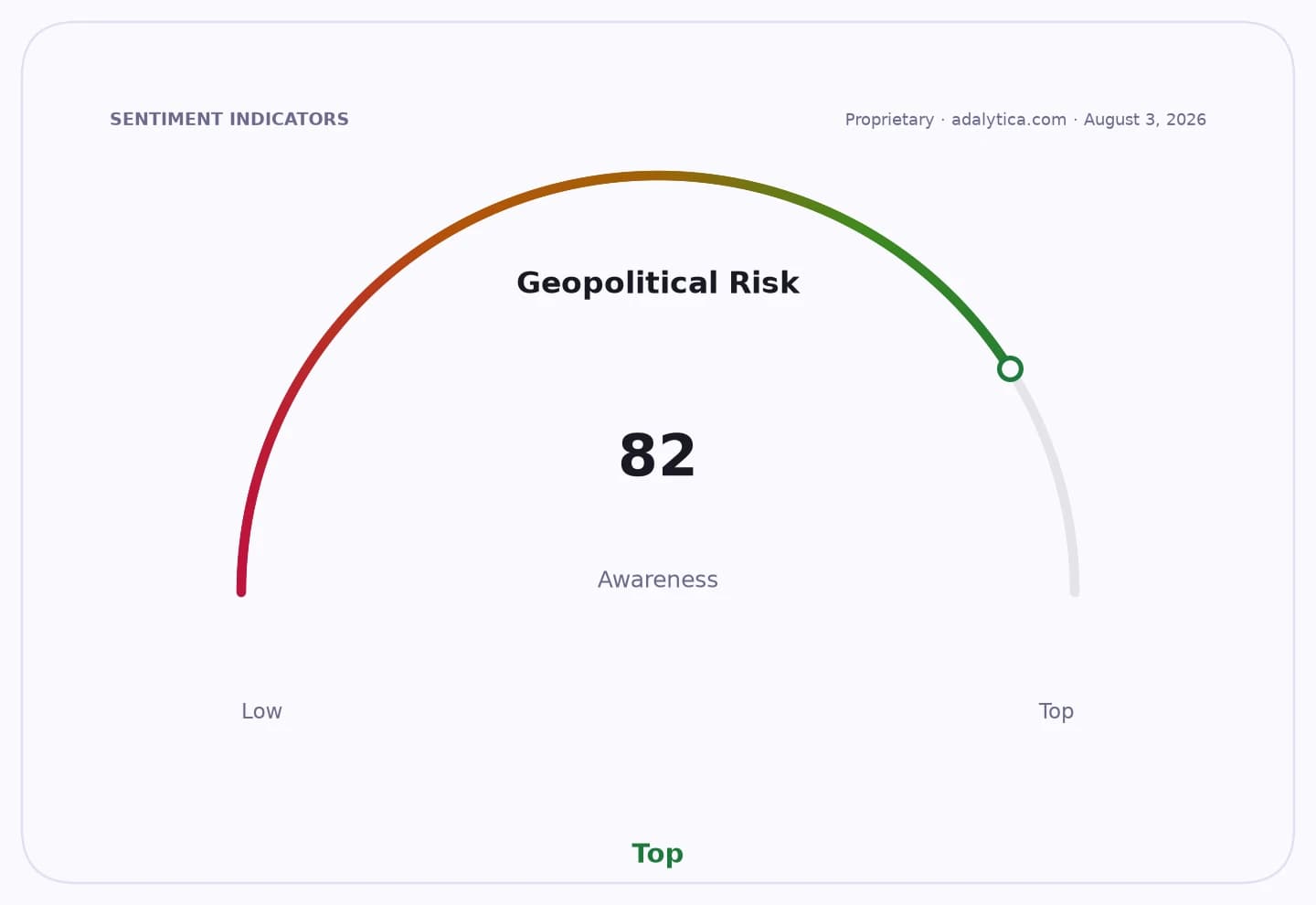
The concern matters economically and politically because Taiwan sits at the center of global semiconductor supply chains, and any escalation in psychological warfare around its young people heightens uncertainty over the island’s domestic resilience and long-term security outlook. For investors, that means another reminder that geopolitical risk around Taiwan is not limited to military flashpoints; it now includes information warfare that could affect policy stability, public sentiment and the operating environment for companies tied to the island.
Sentiment IndicatorsⓘProprietary · adalytica.com · August 3, 2026
This is a snapshot — live sentiment, awareness and momentum for 130+ markets update continuously in the dashboard.Open AlphaPulse
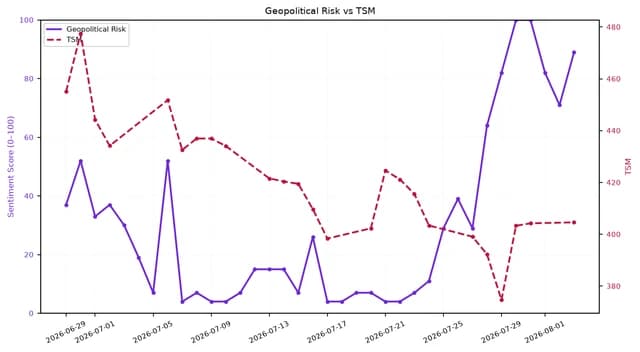
The warning comes as broader geopolitical stress remains elevated. Adalytica’s Global Stability Sentiment gauge is at 89, or “Extreme Greed,” after a sharp rise over the past week, suggesting markets may be underpricing the pace at which security and technology risks are evolving. In China-related policy direction, the Adalytica gauge is at 100, underscoring how aggressively Beijing’s strategic posture is being watched.
The issue is especially sensitive for Taiwan’s youth exchanges because they are designed to build cultural ties, but deepfakes can be used to fabricate compromising footage, impersonate peers or officials, and coerce participants into silence or compliance. That raises the cost of participation for families and schools, even when the events are nominally educational or civic in nature. The economic impact is indirect but real: anything that erodes trust in cross-strait contact can complicate tourism, education links and people-to-people programs that have long served as low-friction channels of engagement.
For investors, the immediate relevance is to Taiwan-linked assets and, more broadly, to the premium attached to supply-chain continuity. TSMC shares have rebounded to about $404, but the stock remains below its recent highs and its 50-day average, with momentum indicators showing the pullback is still being worked through. That does not imply a direct earnings hit from the deepfake issue, but it reinforces why geopolitical optionality stays embedded in valuations for TSMC and Taiwan-focused exchange-traded funds such as EWT and FXI.
The bull case is that stronger media literacy, platform safeguards and faster detection tools can blunt the threat before it becomes systemic. The bear case is that AI lowers the cost of plausible deniability, making coercion, blackmail and disinformation harder to police exactly when tensions across the Taiwan Strait are already high. For markets, the message is that technology risk is no longer only about chip demand and export controls; it also includes the weaponization of AI against social trust.
The next catalyst will be whether Taiwan authorities, schools and civil groups respond with tighter vetting, recording rules and disclosure requirements for youth exchanges. If they do not, the issue could spread from a human rights warning into a broader policy and reputational risk for cross-strait engagement.
| Entity | Gains | Losses |
|---|---|---|
| Taiwanese youth participants | ▲Better safeguards | ▼Higher coercion risk |
| Taiwan authorities | ▲Pressure to tighten controls | ▼Political fallout if unprepared |
| China’s influence operators | ▲Lower-cost tools | ▼Greater scrutiny |
| TSMC and Taiwan equities | ▲Resilience if risk contained | ▼Risk premium if tensions rise |