Taiwan is moving to plug one of its biggest security gaps: how to survive the first wave of a Chinese attack. That is why Taipei’s plan to add about $4.6 billion to defense spending matters far beyond the island’s borders. It is not just another budget item. It is an effort to build a layered air, coastal and drone-based shield that could shape deterrence in the Taiwan Strait for years.
Taiwan Adds $4.6 Billion to Defense Spending

The package is aimed at missiles, drones and sea denial — the tools Taiwan believes it needs most if Beijing turns military pressure into action. The government wants to buy a medium-range ballistic missile defense system known as Strong Bow, developed by Taiwan’s own industry, more than 600 coastal surveillance drones, over 40,000 attack drones and a first batch of more than 100 small attack drones for naval use. In plain terms, Taipei is trying to make a Chinese landing or air campaign much more costly.
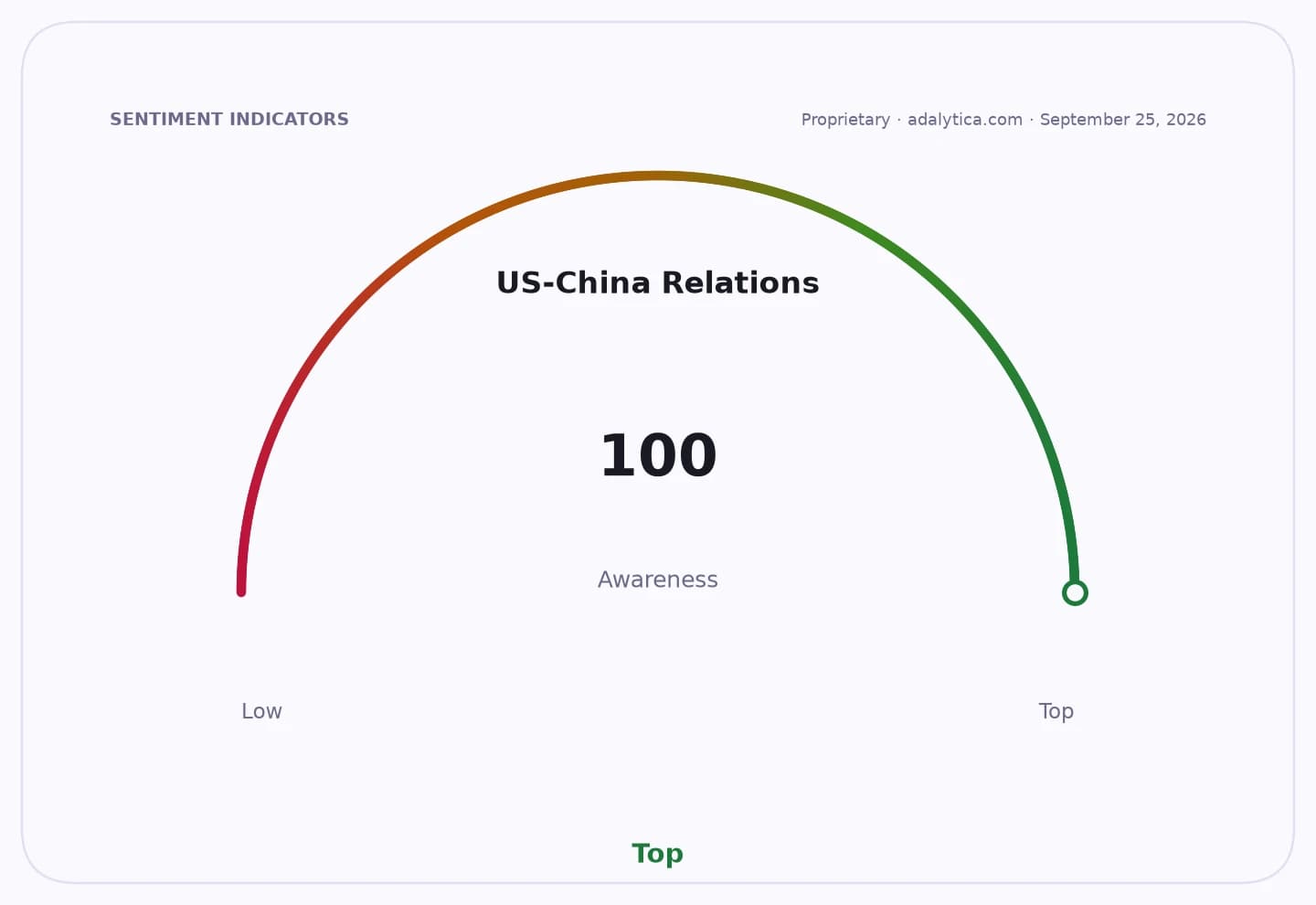
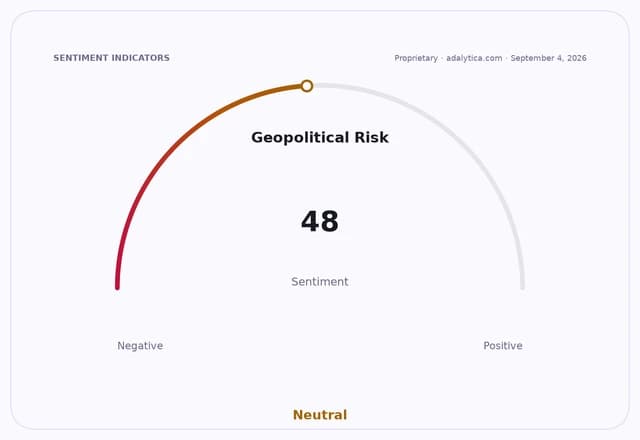
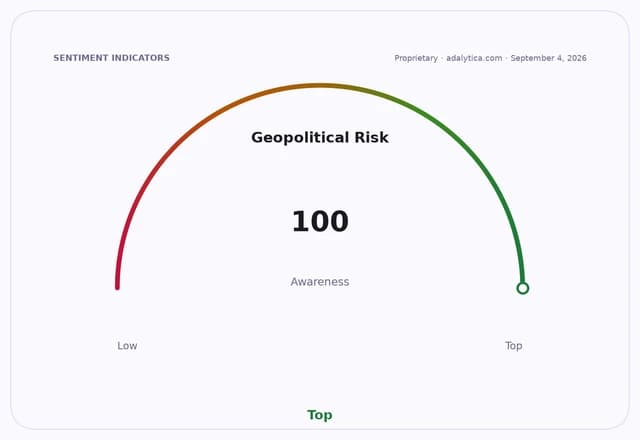
Sentiment IndicatorsⓘProprietary · adalytica.com · September 4, 2026
This is a snapshot — live sentiment, awareness and momentum for 130+ markets update continuously in the dashboard.Open AlphaPulse
That matters economically because Taiwan’s defense buildup is becoming a sustained industrial policy, not a one-off emergency response. Parliament already approved roughly $25 billion in extra arms spending in May, largely for U.S. weapons, and lawmakers have now backed a six-year, $240 billion drone plan. Taipei is also pushing 2027 military spending above the equivalent of $1.5 million for the first time, signaling that defense budgets are headed higher for longer. For Taiwan’s economy, that means more domestic production, more procurement, and more pressure on public finances. For the region, it means a greater commitment to resilience against disruption in one of the world’s most important trade and chip-making hubs.
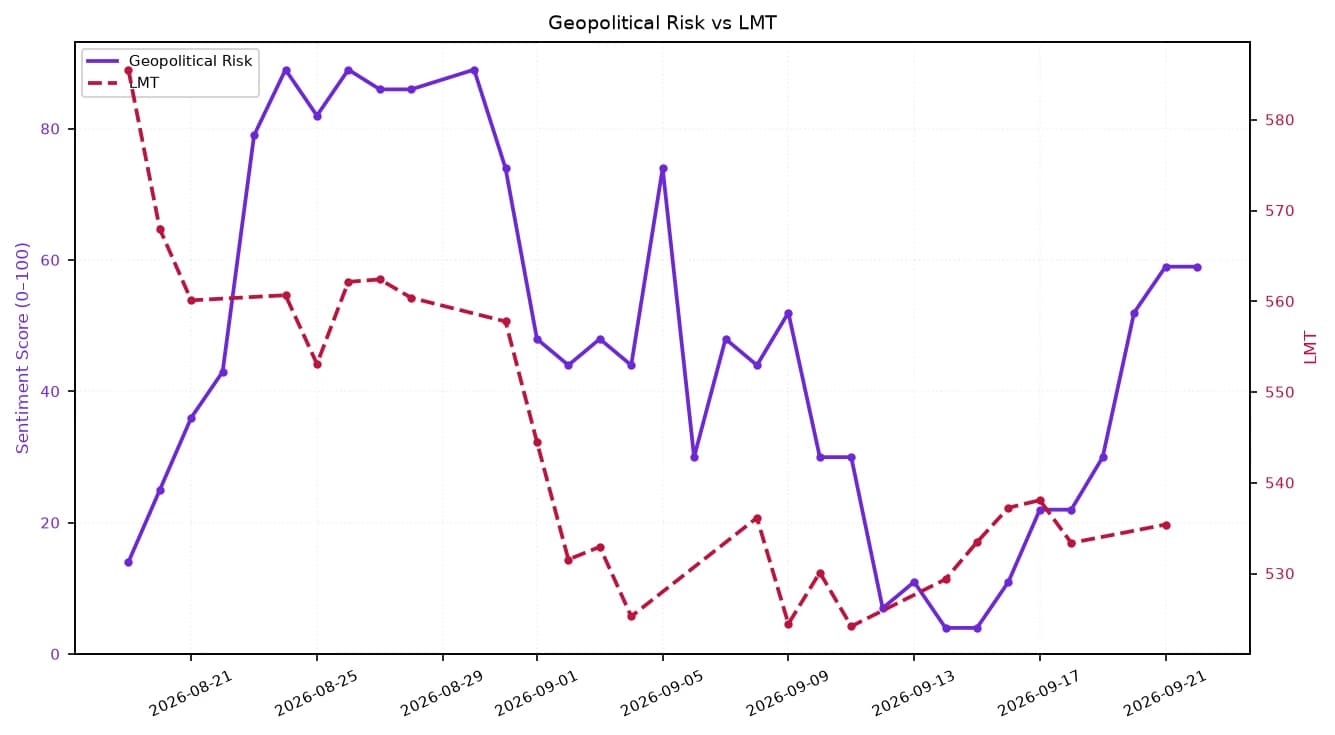
Investors should see two sides of this story. First, Taiwan is trying to reduce the odds of a catastrophic shock to global supply chains by making itself harder to attack. Second, the buildup reinforces a long-running demand trend for missile defense, surveillance systems and unmanned platforms. That is constructive for defense contractors and suppliers tied to air defense, sensors and drones. U.S. primes such as RTX, Northrop Grumman and Lockheed Martin are part of the broader ecosystem around Taiwan’s rearmament, while local Taiwanese manufacturers stand to benefit from the push to build more systems at home.
The military logic is clear. China has stepped up air and naval activity around the island, and Taiwan’s recent Han Kuang exercises showed how its forces are practicing dispersed, layered air defense with Patriot PAC-2 and PAC-3 systems alongside domestically built Sky Bow III interceptors. Taipei says local industry can make up to 96 Tien Kung III missiles a year, a crucial detail if a real conflict turns into a missile war of attrition. Taiwan’s goal is not to match China platform for platform. It is to absorb an initial удар, keep key systems alive and deny Beijing a quick victory.
That is the narrative investors should follow: Taiwan is turning defense into a multi-year modernization cycle, with drones, interceptors and coastal weapons at the center. The spending will not remove geopolitical risk, but it raises the cost of aggression and supports a long runway for aerospace and defense demand. For long-term investors, the key takeaway is simple — this is a defense theme worth watching, and the companies that can deliver missiles, sensors and unmanned systems may keep finding buyers.
| Entity | Gains | Losses |
|---|---|---|
| Taiwan domestic defense industry | ▲More production contracts | ▼Higher execution pressure |
| U.S. defense contractors | ▲Follow-on missile demand | ▼Risk of procurement delays |
| China | ▲None directly | ▼Higher invasion costs |
| Global supply chains | ▲Better deterrence odds | ▼Still exposed to escalation |