Taiwan’s biggest-ever military drills are underscoring how far cross-strait tensions have escalated, raising the odds of a prolonged defense buildout that matters for global chip supply, U.S. weapons makers and Asian market risk premiums.
Taiwan drills highlight TSMC, ASML and defense risks
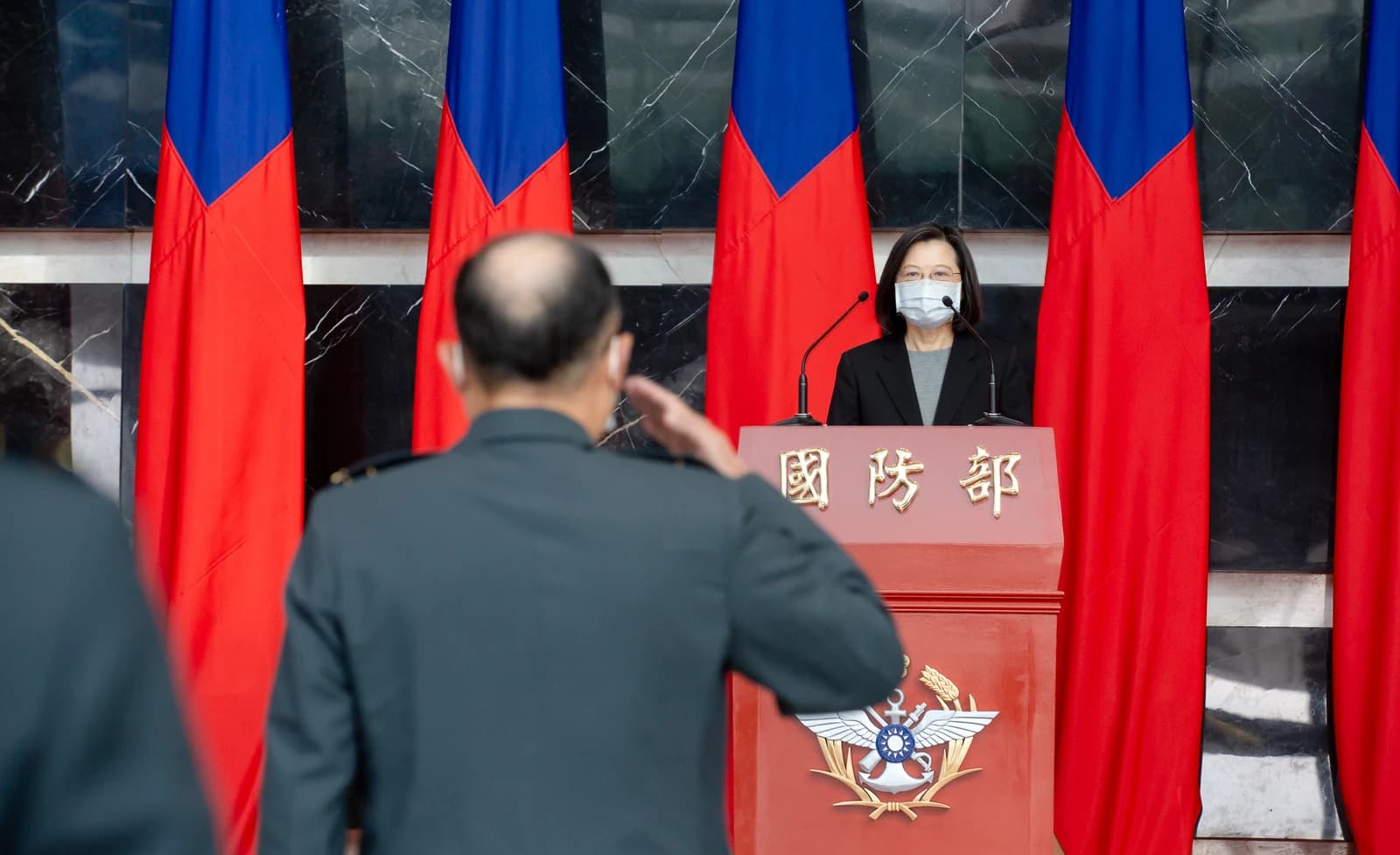
The Hanguang exercises, launched to rehearse responses to a possible Chinese invasion and gray-zone pressure, are not just a political signal. They are a reminder that Taiwan’s security environment is deteriorating at the same time the island sits at the center of the global semiconductor chain, home to Taiwan Semiconductor Manufacturing Co. and a critical node for ASML’s lithography systems and other advanced chip tools. For investors, that means the Taiwan risk premium is not abstract: it reaches directly into earnings durability, supply-chain continuity and the valuation of companies tied to AI-capex and defense spending.
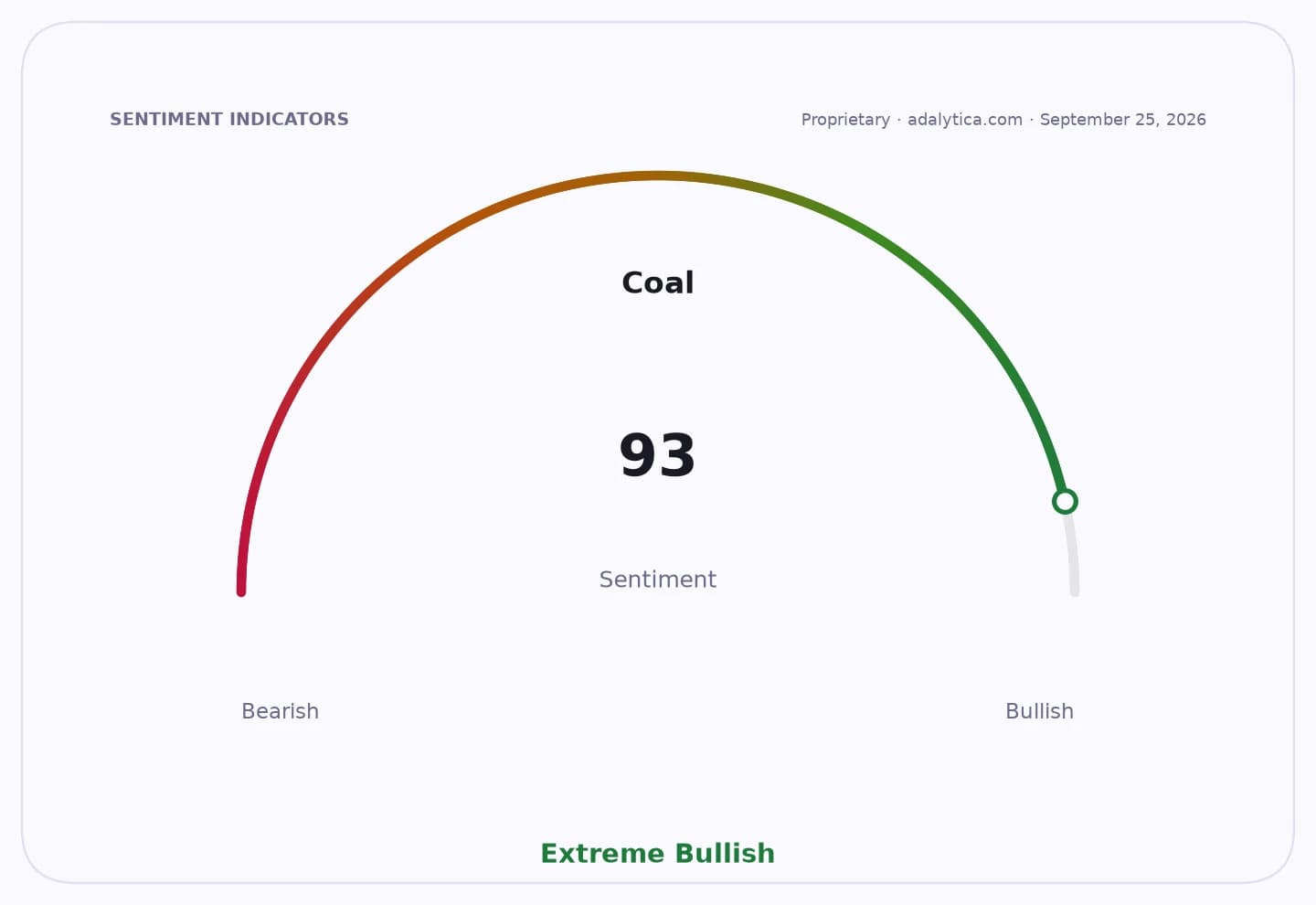
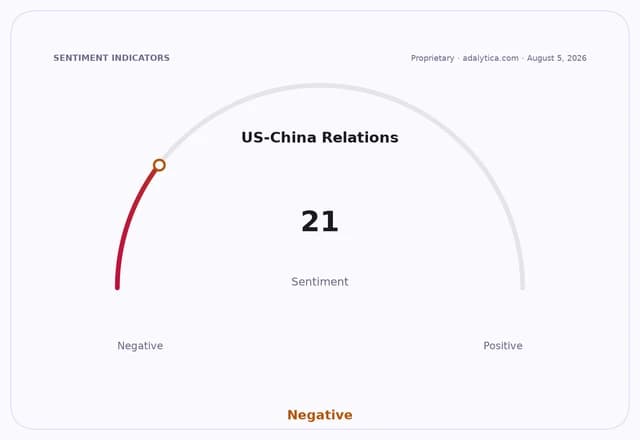
Sentiment IndicatorsⓘProprietary · adalytica.com · August 5, 2026
This is a snapshot — live sentiment, awareness and momentum for 130+ markets update continuously in the dashboard.Open AlphaPulse
The drills come as China has increased military activity around the island, normalized PLA presence nearby and sharpened blockade and precision-strike capabilities, according to regional security assessments. Taiwan’s response is to practice faster command decisions, cyber defense and countering operations that blur the line between routine maneuvers and coercion. That matters economically because even without a shooting conflict, persistent escalation can force companies to spend more on redundancy, inventory and insurance, while making customers more cautious about concentrated supply chains.
The market backdrop reflects that tension. Adalytica’s US–China Relations Sentiment gauge shows fear at 21, even as awareness is at 100, indicating the story is dominating attention but carrying a negative tone. Global Stability sentiment remains elevated at 82, which suggests investors are still willing to price in risk broadly even as they hedge around flashpoints. In other words, the market is not panicking, but it is paying up for resilience.
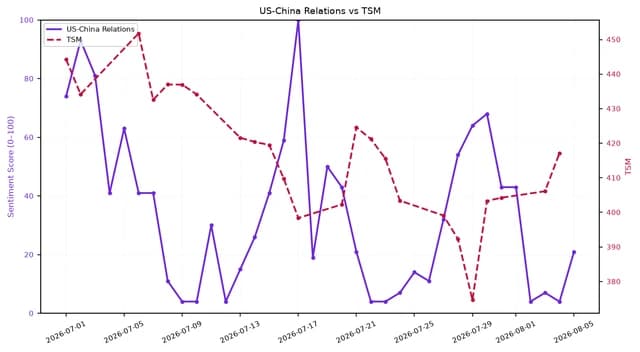
For Taiwan Semiconductor, the strategic importance is obvious. TSMC remains the single most important company in the semiconductor ecosystem, and Taiwan’s defense posture is inseparable from the durability of the chip supply chain. Its shares have been volatile, but the stock was still trading at 417.17 on the latest close, near but below its 50-day moving average of 425.37, with RSI readings around 49, implying neither an overbought nor oversold setup. That leaves the stock driven more by fundamentals and geopolitical headlines than by technical exhaustion. Any sustained rise in security risk would reinforce arguments for geographic diversification, even if AI demand keeps foundry utilization strong.
ASML faces a different kind of exposure. It does not depend on Taiwan’s domestic security, but it depends on the semiconductor capital-spending cycle, much of which is anchored by TSMC and other Asian foundries. ASML closed at 1,711.89, below its 50-day average of 1,753.35, after a sharp run earlier this year. The stock’s MACD remains negative, suggesting momentum has weakened. That does not change the long-term bull case for leading-edge lithography, but it reinforces the idea that any disruption in Taiwan would ripple through the entire advanced-node investment cycle, from tool deliveries to fab schedules.
Defense contractors are the clearest near-term beneficiaries. Lockheed Martin closed at 589.33, above both its 50-day and 200-day moving averages, with RSI at 81, a level that points to strong buying interest but also leaves the shares stretched. The move reflects the broader investor view that sustained tensions in the Pacific, as well as in Europe and the Middle East, support higher defense demand and longer procurement cycles. Lockheed’s recent filings also flagged geopolitical tensions and supply-chain strain as factors that can drive interest in its products, even as they create cost and delivery challenges. That is the bull case: rising budgets, more missile-defense emphasis and more urgency around deterrence.
The bear case is that markets can overestimate the immediacy of the benefit. Defense spending takes time to flow through to revenue, and elevated geopolitical stress can also disrupt suppliers, labor and scheduling. For semiconductor names, the risk is less about immediate damage and more about a higher discount rate applied to earnings that depend on uninterrupted regional logistics. For investors, that argues for distinguishing between companies that profit from tension and those whose supply chains are exposed to it.
| Entity | Gains | Losses |
|---|---|---|
| Lockheed Martin | ▲Higher defense demand | ▼Stretch risk in valuation |
| TSMC | ▲Security spending focus | ▼Taiwan concentration risk |
| ASML | ▲Long-term chip-capex needs | ▼Taiwan supply-chain exposure |
| China | ▲Coercive leverage | ▼Higher regional mistrust |