A new detention in Taiwan’s probe into Super Micro Computer’s export activities adds a fresh legal and geopolitical risk to one of the most important supply chains in artificial intelligence hardware.
Taiwan Probe Weighs on Super Micro AI Supply Chain
The development matters because Super Micro sits at the center of the AI server buildout, supplying high-density systems that depend heavily on Nvidia chips and Taiwan’s manufacturing ecosystem. Any widening investigation into export practices in Taiwan raises questions not only about compliance and shipment routing, but also about whether the vendor network supporting AI infrastructure is becoming more vulnerable to regulatory scrutiny at a time when trade controls between Washington and Beijing are tightening.
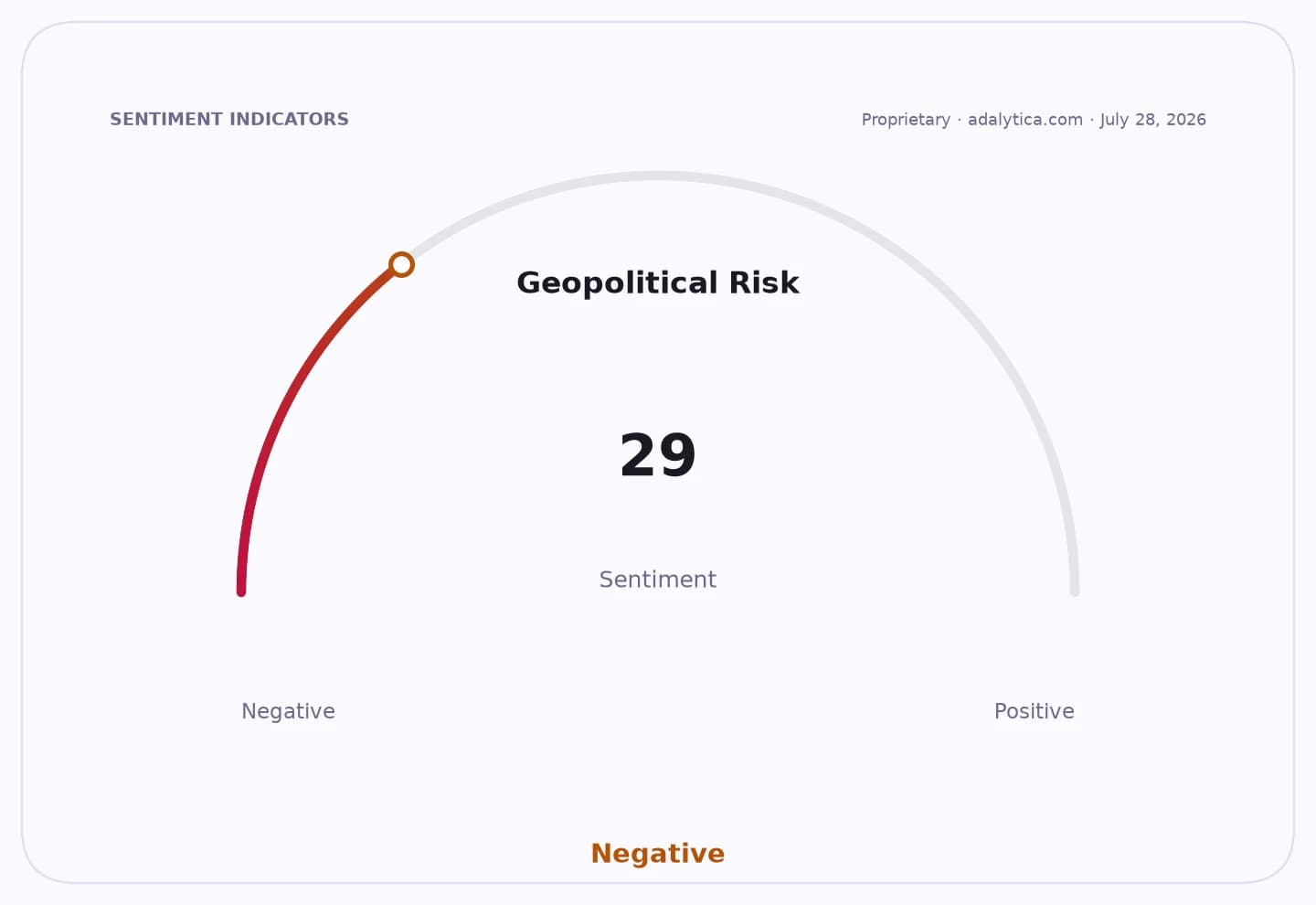
Sentiment IndicatorsⓘProprietary · adalytica.com · July 28, 2026
This is a snapshot — live sentiment, awareness and momentum for 130+ markets update continuously in the dashboard.Open AlphaPulse
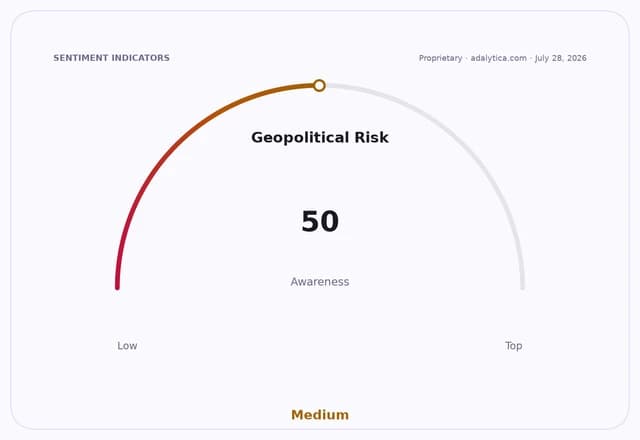
For investors, the immediate issue is less the detention itself than the possibility of disruption, fines or reputational damage for a company already under pressure from volatile sentiment and a sharp reset in its share price. Super Micro’s stock has fallen to about $29.81 from above $50 in late October, leaving it well below its 50-day moving average of roughly $32.69. The move suggests the market is still assigning a meaningful risk premium to governance and supply-chain headlines, even after the stock’s brief rebound earlier this year. Technical indicators also point to a stock that has been trying to stabilize but remains fragile, with RSI readings in the low 60s and MACD still below the signal line.
The case is especially significant because it comes against the backdrop of a broader tightening in export enforcement and rising geopolitical sensitivity around advanced computing hardware. Taiwan is indispensable to the semiconductor and server ecosystem, with Taiwan Semiconductor Manufacturing Co. the dominant chip foundry and a key supplier to Nvidia, whose own shares have recently softened after a strong run. TSMC’s stock has slipped to about $399, while Nvidia has eased to around $196.51, underscoring how quickly enthusiasm around AI infrastructure can be punctured by policy or supply-chain concerns.
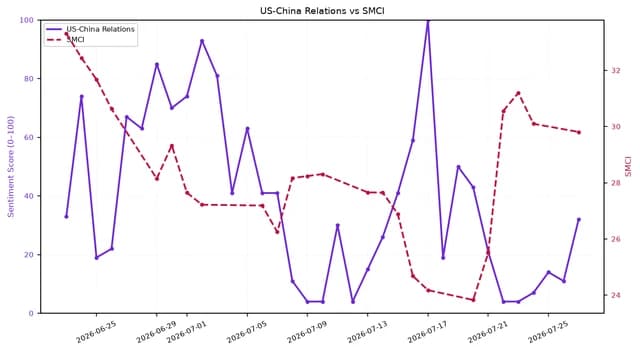
The economic stakes extend beyond one company. Super Micro’s servers are a crucial layer in the AI investment cycle, linking chipmakers, component suppliers, cloud providers and data-center operators. If Taiwanese authorities intensify oversight of export-linked transactions, the effect could be to slow shipments, increase compliance costs and deepen uncertainty around where AI-related hardware ends up. That would matter for an industry that is still scaling capacity aggressively and depends on cross-border production networks operating with little friction.
The broader narrative is that the AI supply chain is moving from a pure demand story to a compliance story. For bulls, the probe may prove limited and ultimately manageable, with little impact on end demand for Super Micro’s systems. For bears, it reinforces concerns that the company’s rapid growth has outpaced internal controls, leaving it exposed to regulators just as customers are demanding more reliable delivery and auditability.
What investors will watch next is whether Taiwanese authorities widen the investigation, whether U.S. counterparties or customers react, and whether Super Micro can reassure the market that the matter is contained. Until then, the case is a reminder that in AI hardware, legal and geopolitical risk can move as fast as earnings momentum.
| Entity | Gains | Losses |
|---|---|---|
| Taiwan regulators | ▲Enforcement credibility | ▼Higher political scrutiny |
| Compliance-heavy suppliers | ▲Cleaner trade channels | ▼Slower shipment flow |
| Super Micro short sellers | ▲Volatility and downside risk | ▼If probe remains limited |
| AI hardware buyers | ▲Better oversight and traceability | ▼Potential delays and higher costs |