China’s reported gains from Russia’s war in Ukraine are sharpening the Taiwan risk premium at a time when investors are already confronting higher US yields and more volatile geopolitics, with TSMC, Apple and Boeing all exposed in different ways to any escalation in the Indo-Pacific.
Taiwan Risk Premium Rises on China-Russia Ties
The market significance is not the aircraft sale itself, but the broader message: Beijing appears to be absorbing battlefield lessons and military technology from Moscow while keeping pressure on Taiwan and its diplomatic partners. That raises the odds that the cross-strait issue remains a structural rather than episodic market risk, one that can affect everything from semiconductors and defense spending to trade flows and funding conditions.
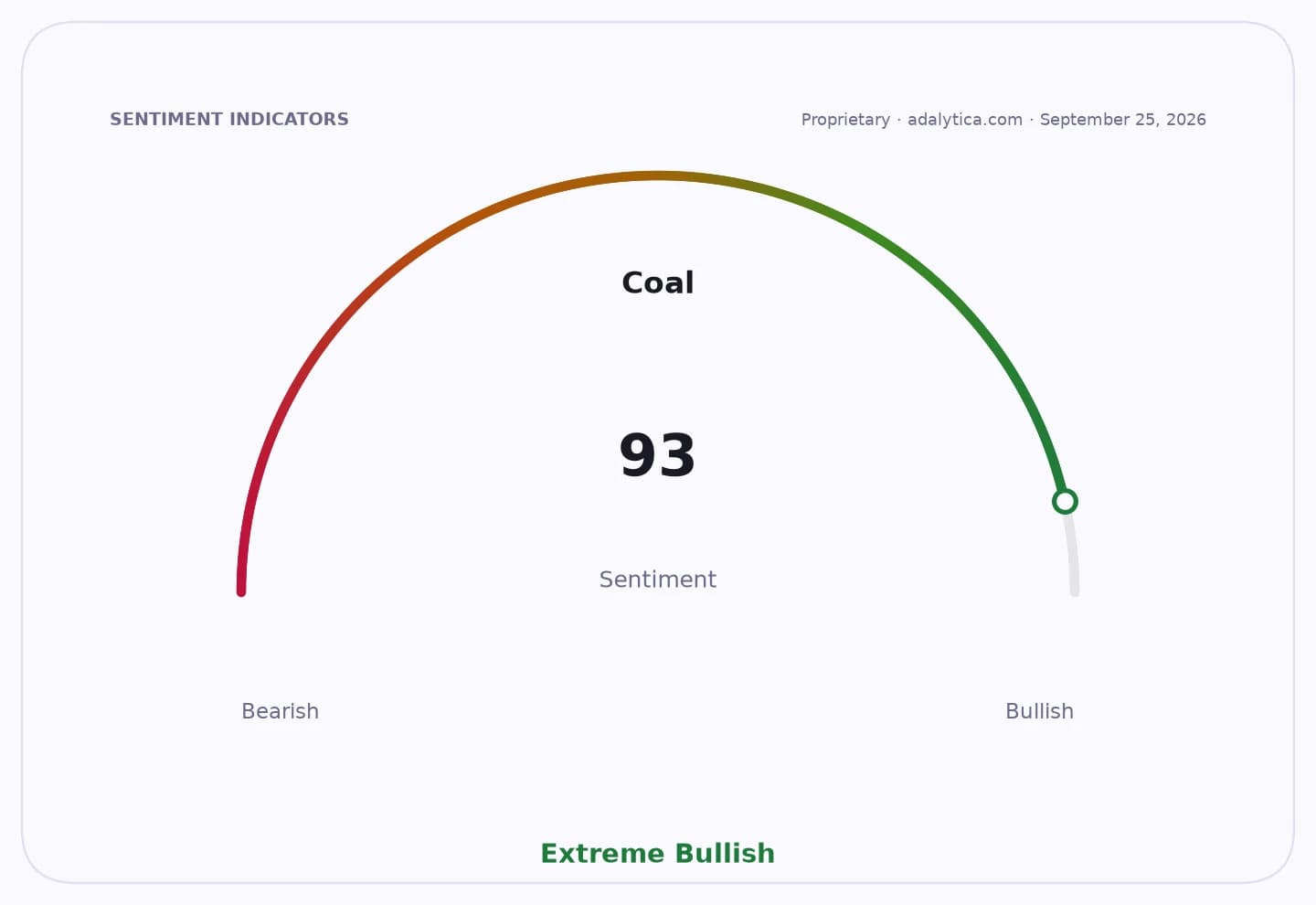
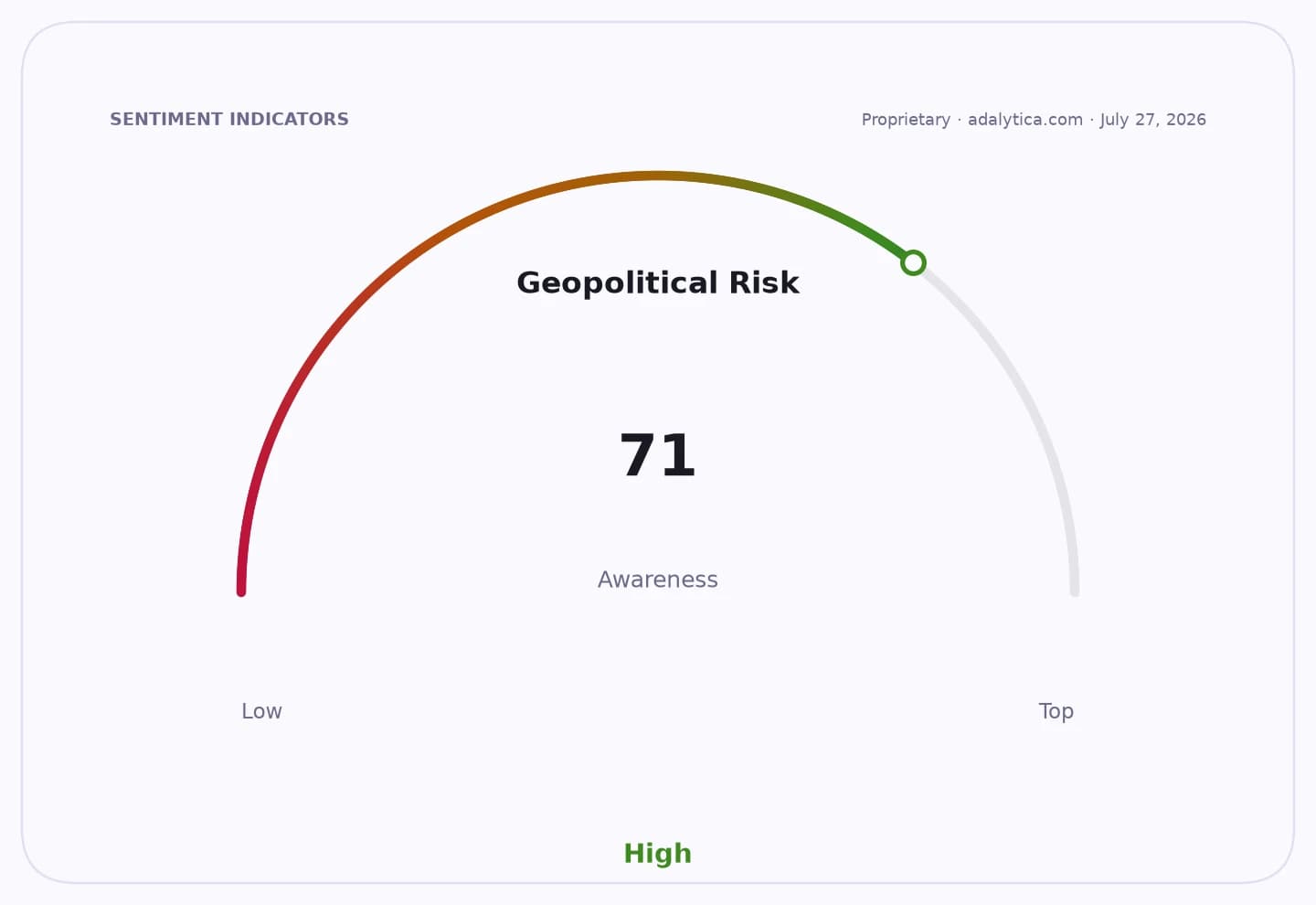
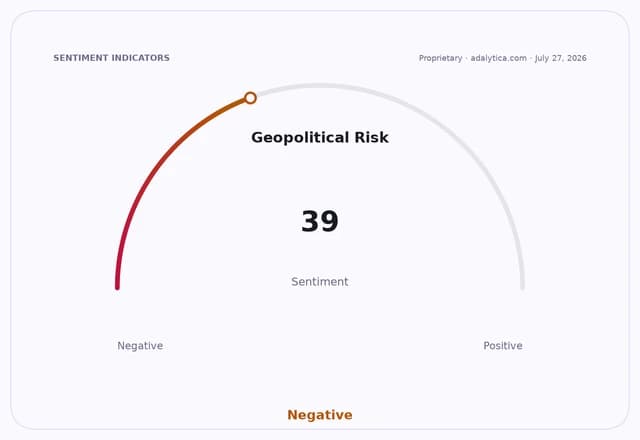
Sentiment IndicatorsⓘProprietary · adalytica.com · July 27, 2026
This is a snapshot — live sentiment, awareness and momentum for 130+ markets update continuously in the dashboard.Open AlphaPulse
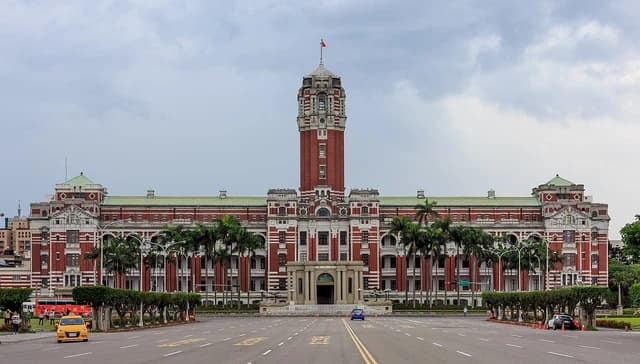
The benchmark 10-year Treasury yield, at 4.749% in the latest forecast, underscores how investors are already dealing with a higher-for-longer rate backdrop. When long-dated borrowing costs move up, markets generally become less forgiving of geopolitical shocks because valuations for growth companies, capital-intensive manufacturers and export chains depend more heavily on discounted future cash flows. That is especially relevant for Taiwan’s semiconductor supply chain, which sits at the center of global electronics production.
TSMC has been the clearest beneficiary of the AI and advanced-chip cycle, but its shares also show how quickly sentiment can swing when geopolitical and technical factors collide. The stock surged above $477 at the end of June before sliding to $403.41 on July 24, with its RSI falling to 27.9, a conventional technical reading that suggests the shares had moved into oversold territory. The decline does not change the company’s strategic importance, but it does show that investors are willing to take profits when Taiwan risk, export controls and macro uncertainty rise together.
Apple, meanwhile, is less directly exposed to Taiwan politics but remains vulnerable through its reliance on the region’s manufacturing ecosystem. Its shares rebounded to $333.02 on July 24 after a sharp midyear correction, suggesting investors still see upside in the iPhone maker’s earnings power. But any sustained disruption in Taiwan would threaten a supply chain that extends well beyond one company, potentially forcing higher inventory costs, delayed product launches and margin pressure across consumer electronics.
Boeing illustrates the opposite side of the trade: defense and aerospace names can benefit from rising security tensions, even as broader trade frictions complicate the global operating environment. Its shares were flat around $209.52 on July 24 and remain below the 50-day moving average, reflecting company-specific issues, but a more militarized Indo-Pacific could support long-cycle defense spending even if civil aviation and trade relations become harder to manage.
The latest reading from Adalytica’s US-China Relations Sentiment gauge, which sits at “Extreme Fear,” captures the market’s discomfort with the direction of travel. Investors are not pricing a Taiwan conflict as a base case, but they are increasingly treating the possibility as a tail risk with real economic consequences. That matters because even absent war, a deeper China-Russia defense partnership can strengthen Beijing’s coercive capabilities, widen the diplomatic squeeze on Taipei and force allies to spend more on deterrence.
For investors, the key question is not whether Taiwan becomes a headline overnight, but whether the risk premium keeps creeping into semiconductors, defense, shipping and China-exposed multinationals. The bullish case is that stronger deterrence, allied coordination and continued chip demand keep disruption contained. The bearish case is that military learning, tighter bloc politics and higher rates combine to make the system more fragile than equity markets currently assume.
The next catalysts will be military cooperation signals between Moscow and Beijing, any new US-Taiwan defense or trade initiatives, and signs that Beijing is intensifying diplomatic pressure on Taiwan’s remaining partners. Until then, the plane sale may be done, but the larger transaction in Asia security is still being written.
| Entity | Gains | Losses |
|---|---|---|
| China | ▲Military know-how | ▼Taiwan security balance |
| Taiwan | ▲US support | ▼Diplomatic space |
| TSMC | ▲Strategic importance | ▼Geopolitical risk premium |
| Boeing | ▲Defense demand | ▼Broad trade uncertainty |