Taiwan is warning that young people travelling to China face a widening mix of job scams, political influence operations and detention risks, deepening the security cost of cross-strait engagement at a time when Beijing is working harder to win over the island’s next generation.
Taiwan Warns Youth on China Travel and Job Scams

The warning matters economically because it raises the friction premium on one of the few remaining channels of people-to-people and commercial exchange between Taiwan and the mainland. For investors, that translates into a less predictable operating environment for Taiwanese workers, students and smaller companies with exposure to China, even as trade ties remain deeply embedded in regional supply chains.
Sentiment IndicatorsⓘProprietary · adalytica.com · September 6, 2026
This is a snapshot — live sentiment, awareness and momentum for 130+ markets update continuously in the dashboard.Open AlphaPulse
Straits Exchange Foundation Secretary-General Luo Wen-jia said Chinese organisers were increasingly bundling tourism, cultural exchanges and employment offers with what Taiwan views as Beijing’s “united front” strategy. The concern is not only propaganda. Taipei says some programs may be used to gather personal data, shape political views or place participants in legally exposed situations after they arrive on the mainland.
The economic backdrop makes the risk more acute. Luo pointed to China’s urban youth unemployment rate of 17.9% in July, arguing that promises of plentiful, high-paying jobs should be treated with caution. In a labour market where Chinese employers are already under pressure and young unemployment remains elevated, the pool of vulnerable jobseekers is large enough to sustain fraud and recruitment schemes that can ensnare Taiwanese nationals.
Taipei’s concerns also go beyond scams. Luo said criminal networks have allegedly used shell companies and intermediaries with Hong Kong or Macao documents to lure Taiwanese youth with short-term roles and attractive salaries, only for jobs and accommodation to vanish once they arrive. He also warned that China’s expanding national security framework creates a second layer of risk: visitors could be detained over social-media posts or links to entities Beijing accuses of violating technology-export restrictions.
That is why the issue matters for markets as well as diplomacy. Taiwan’s economy is highly exposed to China through trade, manufacturing and supply chains, but the political risk around travel, work and education now looks less manageable for households and smaller firms. The threat is not an immediate hit to exports or semiconductors, but rather a steady tightening of cross-strait confidence that could weigh on mobility, recruitment and corporate planning.
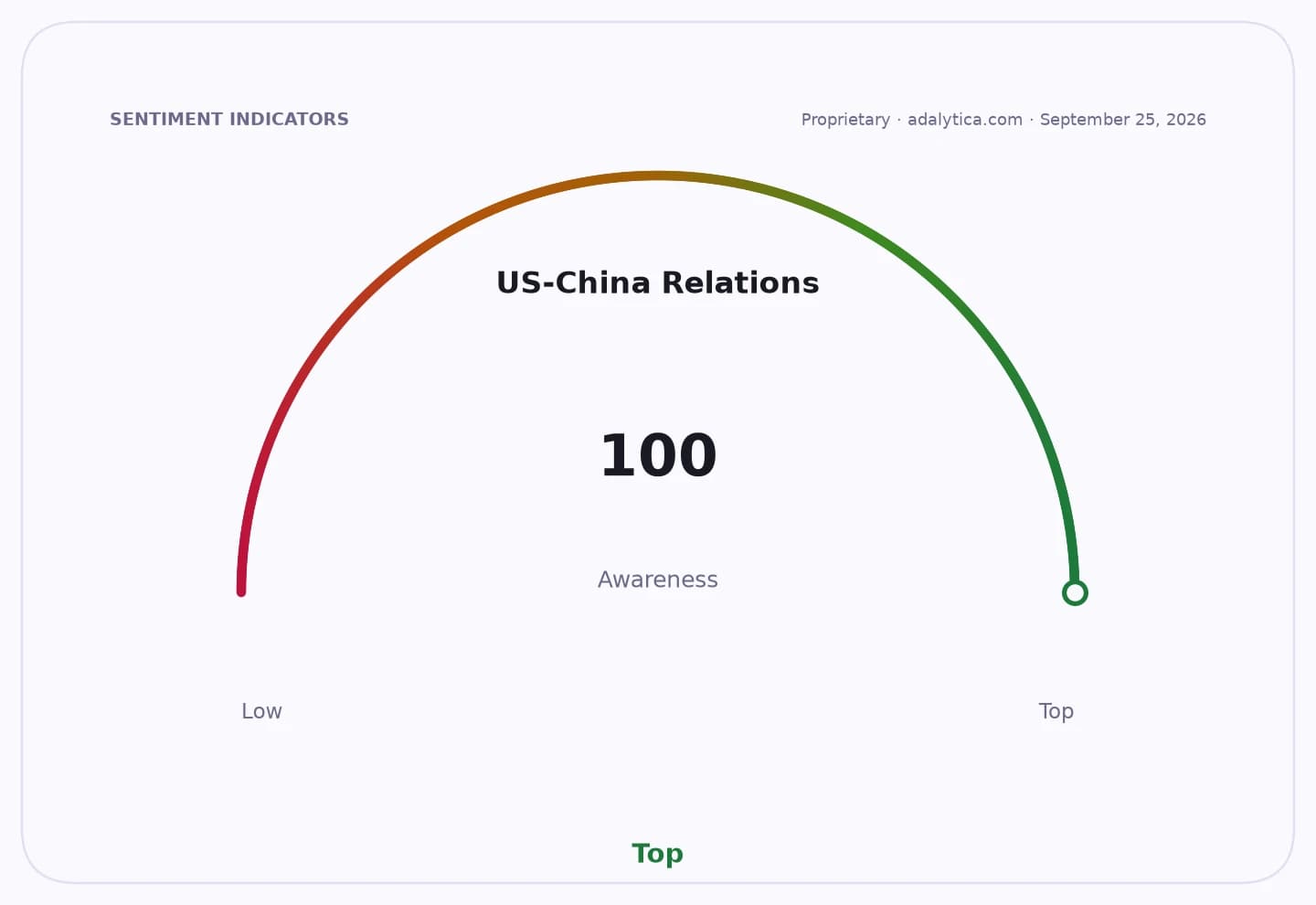
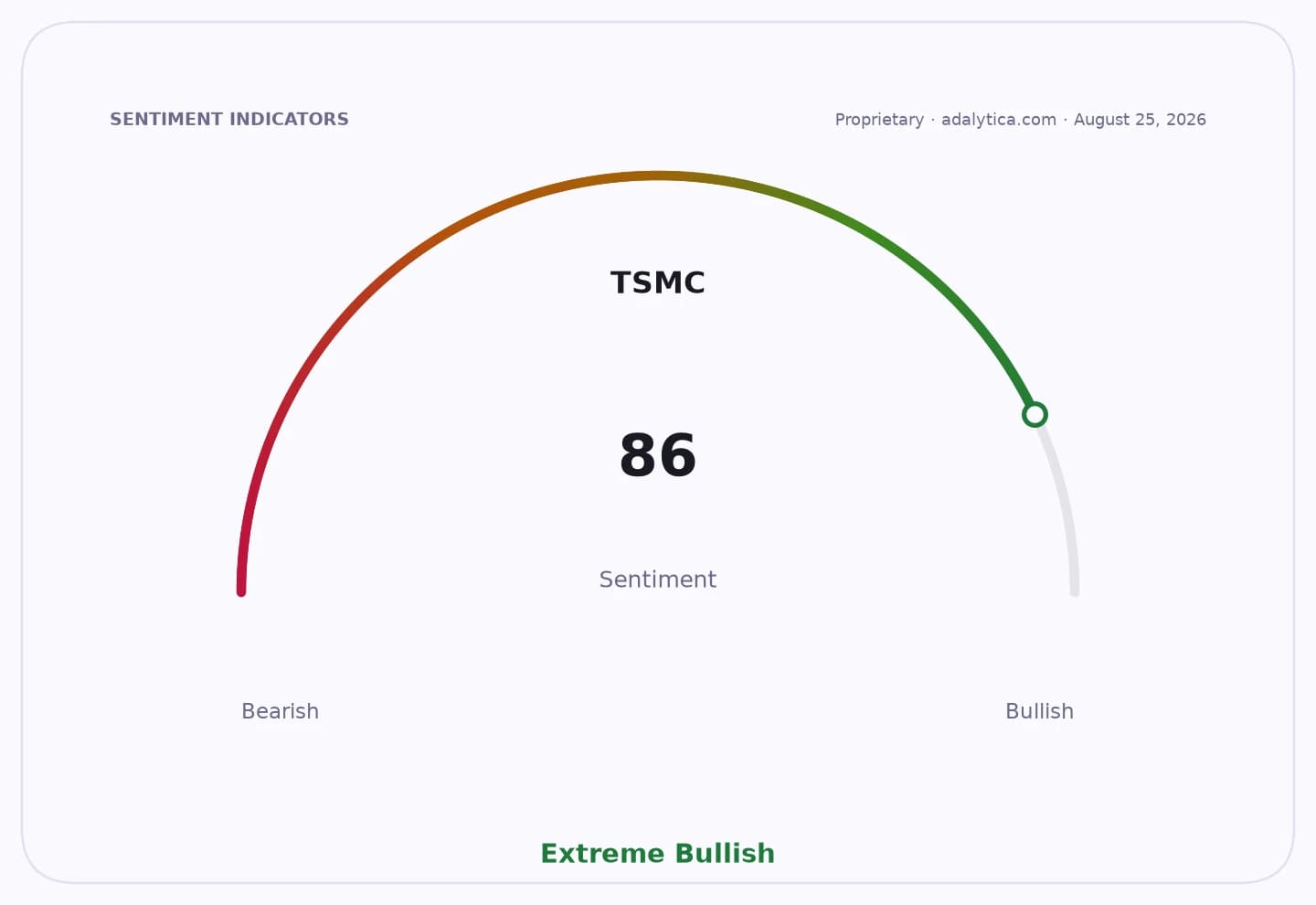
The warning lands against a backdrop of already-fragile US-China relations and elevated regional instability. Adalytica’s US-China Relations Sentiment gauge is at 100, or “Extreme Greed,” while awareness sits in “Fear,” reflecting how quickly political headlines can reprice risk across Asia. Taiwan’s own equities have also remained sensitive to geopolitical swings, even if chip heavyweight TSM has held above its 50-day moving average and near recent highs, showing that investors continue to separate core semiconductor demand from headline cross-strait tension.
For now, the story is less about immediate capital flight than about the slow erosion of trust that underpins travel, hiring and business development across the Taiwan Strait. If Taipei keeps broadening its warnings and Beijing keeps mixing incentives with coercion, the practical cost of engagement will rise — and so will the premium investors attach to firms and sectors most exposed to mainland uncertainty.
| Entity | Gains | Losses |
|---|---|---|
| Taiwan authorities | ▲stronger risk messaging | ▼deeper cross-strait tension |
| Taiwanese youth | ▲better awareness | ▼higher travel and work risk |
| China’s influence efforts | ▲short-term reach | ▼credibility with Taiwanese visitors |
| Taiwan-linked investors | ▲clearer political-risk pricing | ▼more uncertainty on China exposure |