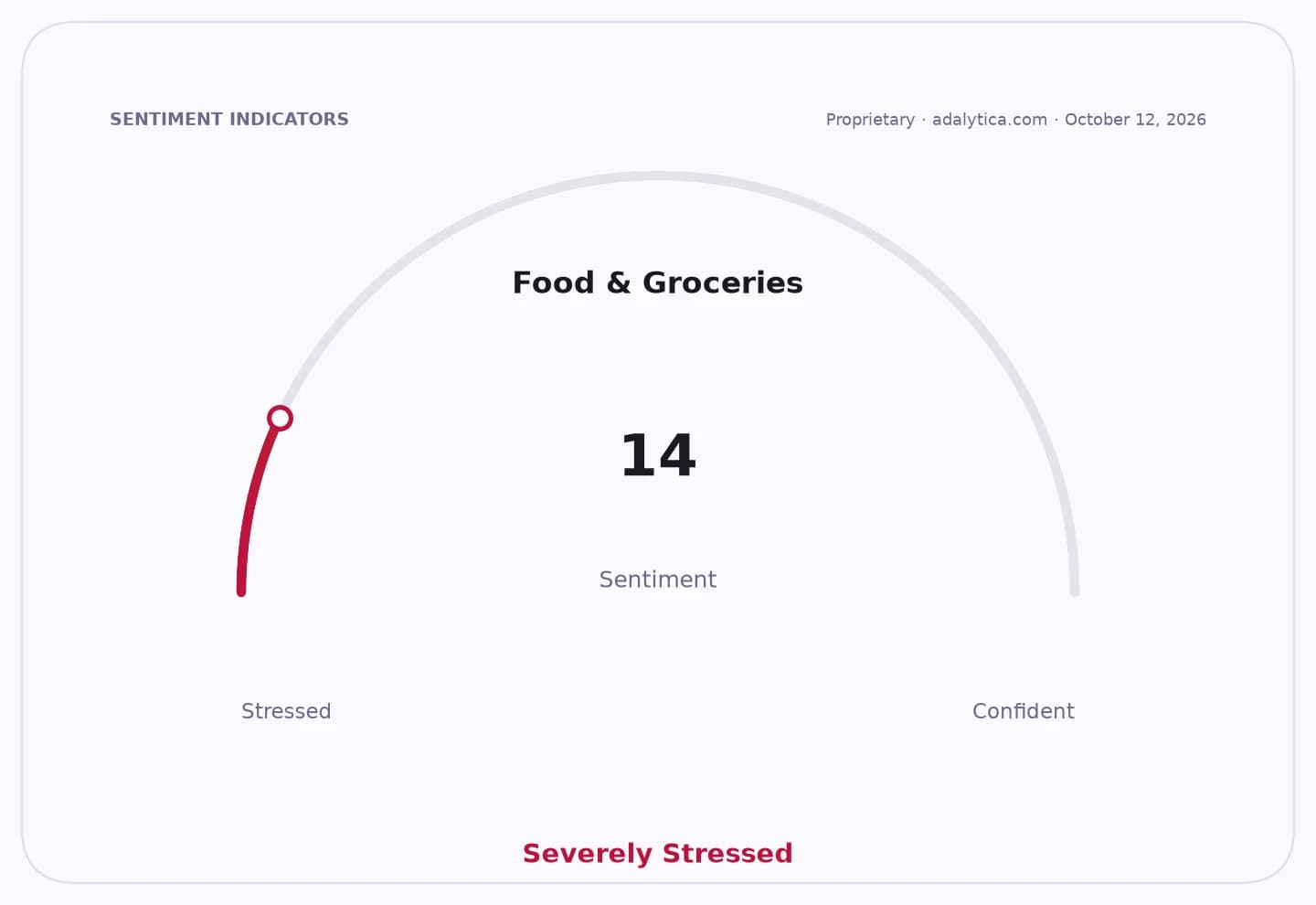
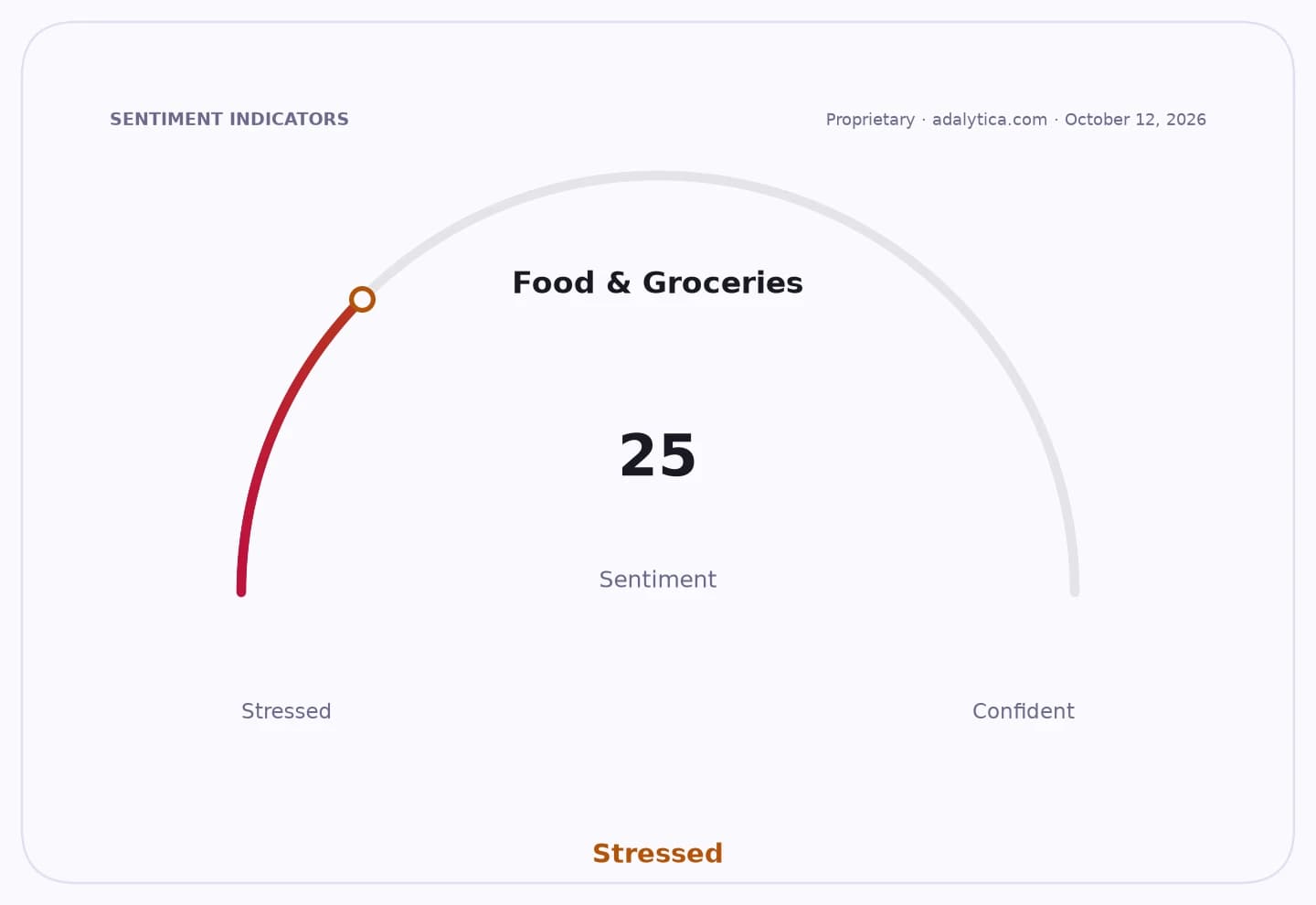
Festival shopping in Tamil Nadu is running into a painful inflation squeeze as rice, edible oils and pulses climb sharply just as households prepare for Navaratri and the broader October-to-January festive season.
Tamil Nadu food prices rise before festive season
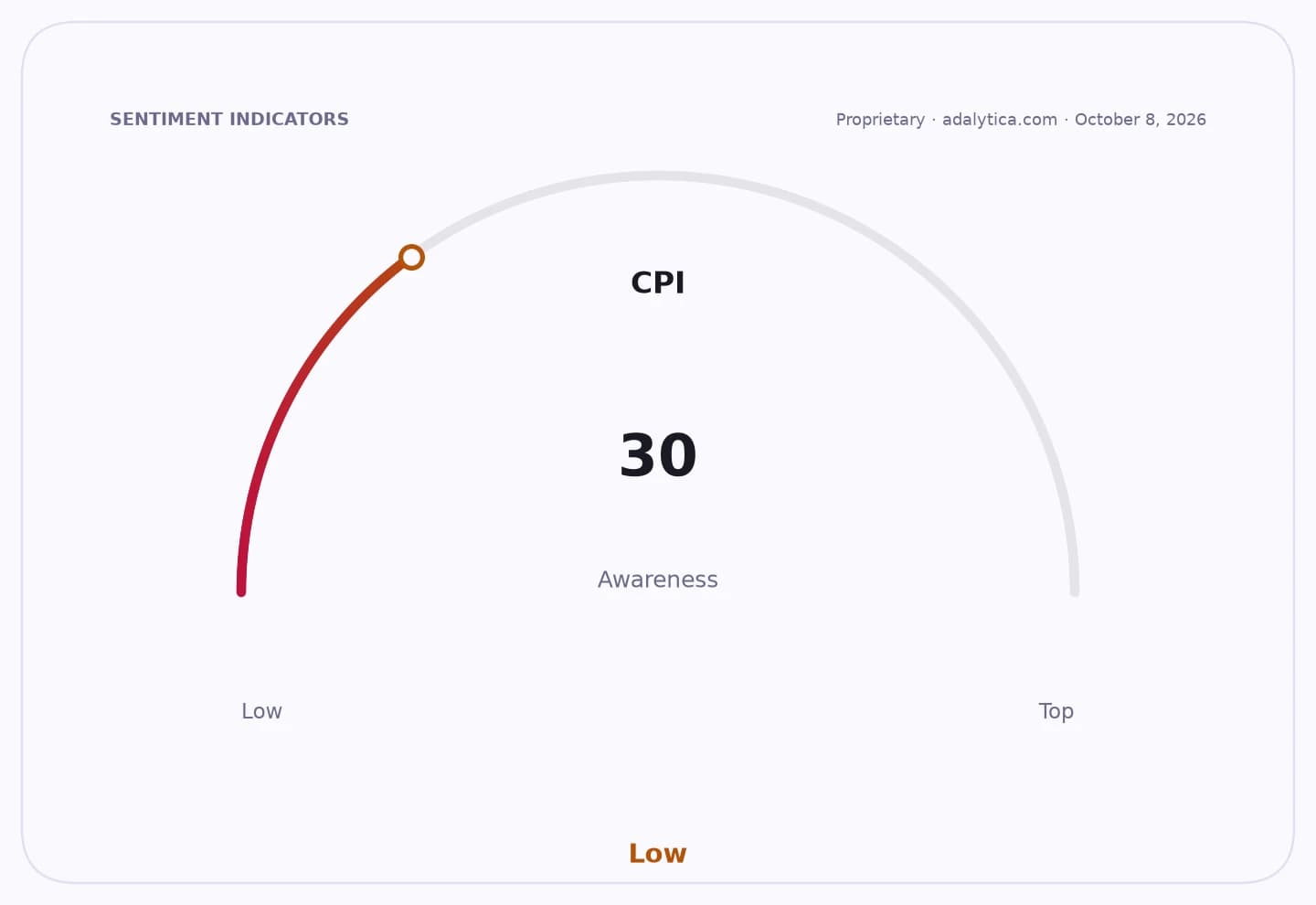
That matters because food inflation hits consumers where they are most vulnerable: daily meals and celebration budgets. When staples rise at the same time demand normally peaks, families have little room to substitute, and retailers can pass through higher costs quickly. The result is a direct hit to purchasing power at a time when spending should be strengthening, not being rationed.
Sentiment IndicatorsⓘProprietary · adalytica.com · October 8, 2026
This is a snapshot — live sentiment, awareness and momentum for 130+ markets update continuously in the dashboard.Open AlphaPulse
Traders in the state say rice prices have been raised three times in the past three months, with cumulative increases now reaching as much as Rs 10 to Rs 20 a kilogram. Rice supplies are being sourced from other states after weak monsoon rains, lower output and higher input costs crimped local availability. That has tightened the market just as festival buying begins to accelerate.
The strain is spreading to other kitchen staples. Groundnut oil has jumped to about Rs 410 a litre from Rs 365, while sunflower oil has risen to Rs 190 from Rs 165. Dal prices, including toor, moong and urad, are up by roughly Rs 20 to Rs 30 a kilogram, according to traders. Even though the central government recently cut the basic import duty on cooking oils, festival demand is overwhelming any near-term relief.
For investors, the setup is straightforward: food inflation in India is becoming less a one-off weather story and more a recurring demand-supply squeeze that can ripple through consumer behavior, margins and policy. Higher staples prices tend to favor packaged-food suppliers, brands with pricing power and retailers with scale, while pressuring low-income consumption and discretionary festive spending. If inflation stays sticky, it also raises the odds of tighter policy or at least a more cautious policy stance.
The market has seen this pattern before. When essential foods turn expensive right before a festival stretch, households cut back elsewhere, trade down in quality or delay purchases. That creates a second-order effect across FMCG, rural consumption and value retail. In a market that still underestimates the persistence of food-price shocks, the winners are the firms able to source efficiently and defend margins; the losers are consumers and commodity-sensitive buyers forced to absorb the increase.
The next week will matter as traders begin fresh festival stocking and old inventories are cleared. If the current trajectory holds, Tamil Nadu’s price shock could become a wider warning for India’s festive consumption cycle — and a reminder that in an inflationary food economy, staples are not defensive, they are the front line.
| Entity | Gains | Losses |
|---|---|---|
| Organized food retailers | ▲Pass through higher prices | ▼Margin pressure from costs |
| Packaged staples brands | ▲Pricing power | ▼Volume-sensitive buyers |
| Rice, oil and dal traders | ▲Higher turnover | ▼Consumer backlash |
| Households in Tamil Nadu | ▲— | ▼Festival budgets squeezed |