Rice prices in Tamil Nadu’s Tiruvarur district have climbed to as much as 30 rupees a kilogram, adding pressure to household food budgets as concerns mount over tighter supply and weather risks to the next harvest.
Tamil Nadu Rice Prices Rise to 30 Rupees a Kg
The increase matters because rice is a staple in southern India and a small move at the district level can quickly feed into broader retail inflation if it spreads to other markets. Food costs carry heavy weight in consumer spending patterns, so even localized price hikes can squeeze lower-income buyers and raise the chance of follow-on government action.
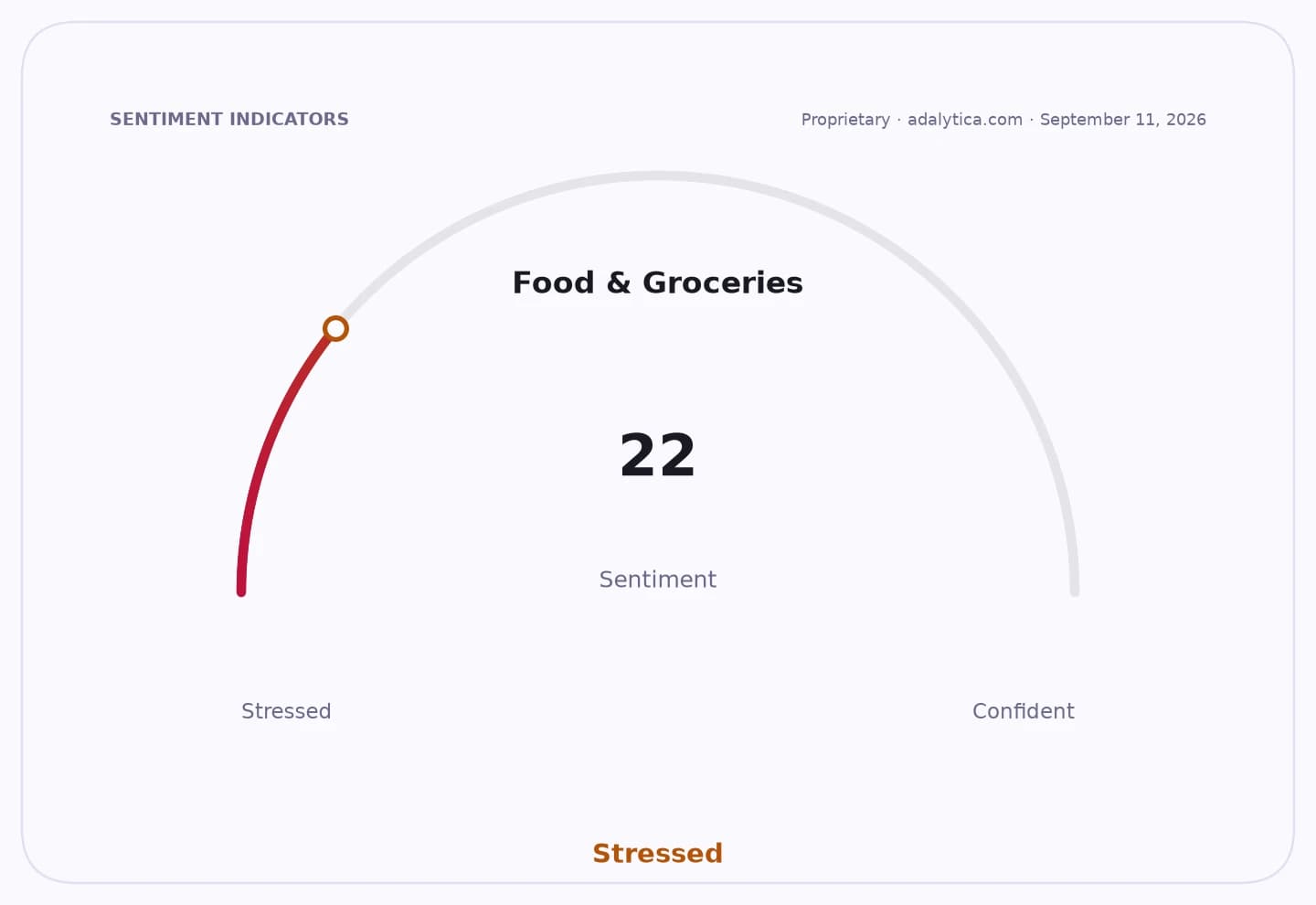
Sentiment IndicatorsⓘProprietary · adalytica.com · October 2, 2026
This is a snapshot — live sentiment, awareness and momentum for 130+ markets update continuously in the dashboard.Open AlphaPulse
Market conditions are already fragile. Rice shipments have fallen to about 30% of last year’s levels, while the government has been buying back 210,000 tons of stockpiled rice to steady the market. Authorities are also trying to maximize planting, as forecasts point to a nearly 12% drop in rice production over the next three months.
That combination leaves traders and consumers watching the monsoon and the next crop cycle closely. Broader rice prices have been described as largely stable overall, but value-added rice products may see more pricing power if supply remains tight and raw grain availability stays constrained.
For investors, the key issue is whether food inflation stays contained or starts to broaden. A sustained rise in rice prices would be a negative for consumer-facing businesses, import-sensitive buyers and inflation-sensitive assets, while producers and traders with inventory could benefit if shortages deepen.
| Entity | Gains | Losses |
|---|---|---|
| Rice sellers / traders | ▲Higher realizations | ▼Inventory risk if policy intervenes |
| Households in Tiruvarur | ▲— | ▼Higher food bills |
| Government / food authorities | ▲Price-stability mandate | ▼Pressure to intervene more |
| Consumer staples buyers | ▲— | ▼Margin pressure from cost inflation |