Tanzania’s economy is still growing at about 6%, its sovereign rating remains in the B+ bracket and public debt is falling as a share of output, but the real story for investors is that the country is moving from a world of easy concessional money to one where funding is scarcer and more expensive.
Tanzania Faces Scarcer, Costlier Funding

That shift matters because it changes the quality of Tanzania’s growth. For years, the investment case rested on a simple formula: steady expansion, manageable debt and access to cheap development financing. Now the supply of concessional lending is tightening, which means the government will have to rely more on market-based borrowing, tougher fiscal discipline and stronger project returns to keep its infrastructure and industrial agenda on track.
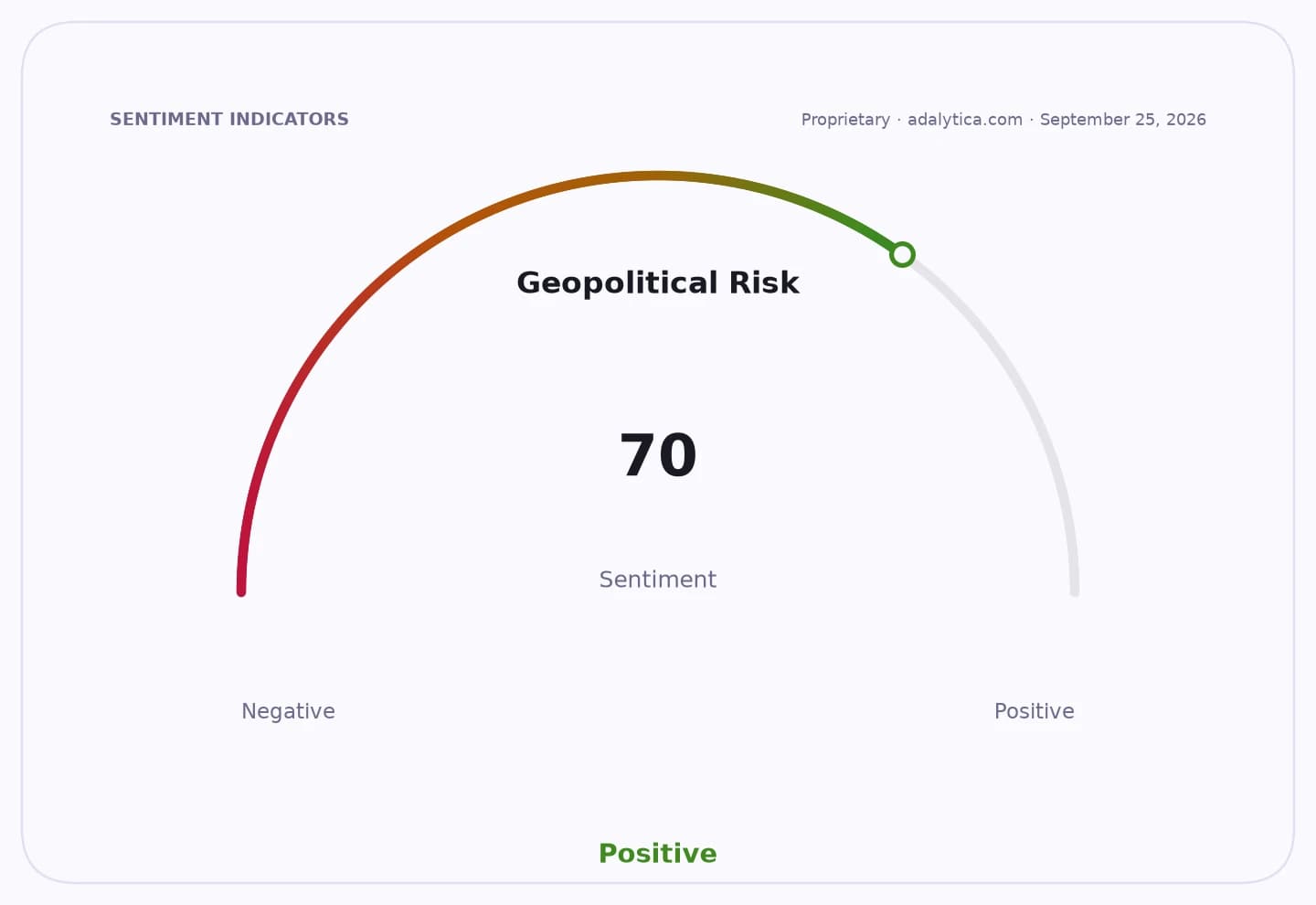
Sentiment IndicatorsⓘProprietary · adalytica.com · July 25, 2026
This is a snapshot — live sentiment, awareness and momentum for 130+ markets update continuously in the dashboard.Open AlphaPulse
The pressure is not yet visible in a fiscal crisis, and that is precisely why it is important. Tanzania still has better macro fundamentals than many frontier peers: growth near 6% is respectable, debt is declining, and a B+ rating signals the sovereign is still viewed as investment-grade adjacent by many emerging-market investors. But global rates remain elevated, and the Treasury curve shows why financing is no longer as forgiving. The U.S. 10-year yield is sitting around 4.75%, while the 2-year is near 4.41%, a reminder that the cost of dollar capital remains high. For frontier borrowers, that backdrop makes every refinancing, every Eurobond discussion and every development loan negotiation more consequential.
For investors, the implication is straightforward: the market is underestimating how quickly a “good fundamentals” story can become a “selectivity” story. Countries that can mobilize domestic savings, deepen local-currency funding and prioritize high-return infrastructure will win. Those that depend too heavily on concessional flows will face slower execution and more pressure on external balances. Tanzania fits into the first camp only if policy makers keep debt contained and channel scarce financing into projects that raise productivity rather than just expand spending.
That makes the country a potential beneficiary of the broader shift toward infrastructure self-help. If concessional lenders pull back, private capital, export-credit agencies and regional financiers become more important. That opens the door for investors to look beyond sovereign paper and toward the companies that build, power and service the economy: contractors, ports, logistics, energy and telecoms. The upside is not in chasing yield blindly, but in positioning for the assets that get paid when Tanzania is forced to spend more efficiently.
The market backdrop also argues for caution on frontier debt generally. A stronger dollar, tighter global liquidity and rising sovereign differentiation tend to punish weaker credits first. Adalytica’s U.S. dollar trade signals still show fear, while broad equity sentiment is deeply risk-off, which tells you capital remains skittish and selective. In that environment, Tanzania’s relative stability can stand out — but only if the government avoids complacency and treats scarce concessional funding as a constraint that improves capital allocation, not just a financing headache.
My thesis is that Tanzania is not entering a crisis; it is entering an inflection point. The countries and stocks that benefit from this phase will be those exposed to disciplined public investment, domestic infrastructure spending and regional trade, while the losers will be entities that depend on soft money and weak balance-sheet oversight. For investors willing to look ahead, that creates an asymmetric opportunity: favor the beneficiaries of a tighter funding regime, and avoid assuming today’s solid headline numbers guarantee tomorrow’s financing ease.
| Entity | Gains | Losses |
|---|---|---|
| Tanzania’s reformers | ▲Stronger discipline | ▼Easy-money complacency |
| Infrastructure and utility contractors | ▲New project demand | ▼Delayed public works |
| Local banks and domestic bond markets | ▲More local funding | ▼Crowded-out credit |
| Frontier borrowers reliant on concessional loans | ▲— | ▼Scarcer cheap capital |