Tanzania’s central bank has started publishing a government securities yield curve, a small technical change that could have an outsized impact on how the country borrows, how banks price credit and how investors judge Tanzanian assets.
Tanzania central bank publishes yield curve, shilling near 2,634
For long-term investors, that matters because a functioning yield curve is one of the building blocks of a mature capital market. It gives the market a clearer benchmark for short-, medium- and long-term interest rates, making it easier to value Treasury bills and bonds, compare returns across maturities and price everything from bank loans to corporate debt. In plain English: more transparency usually means lower frictions and better price discovery.
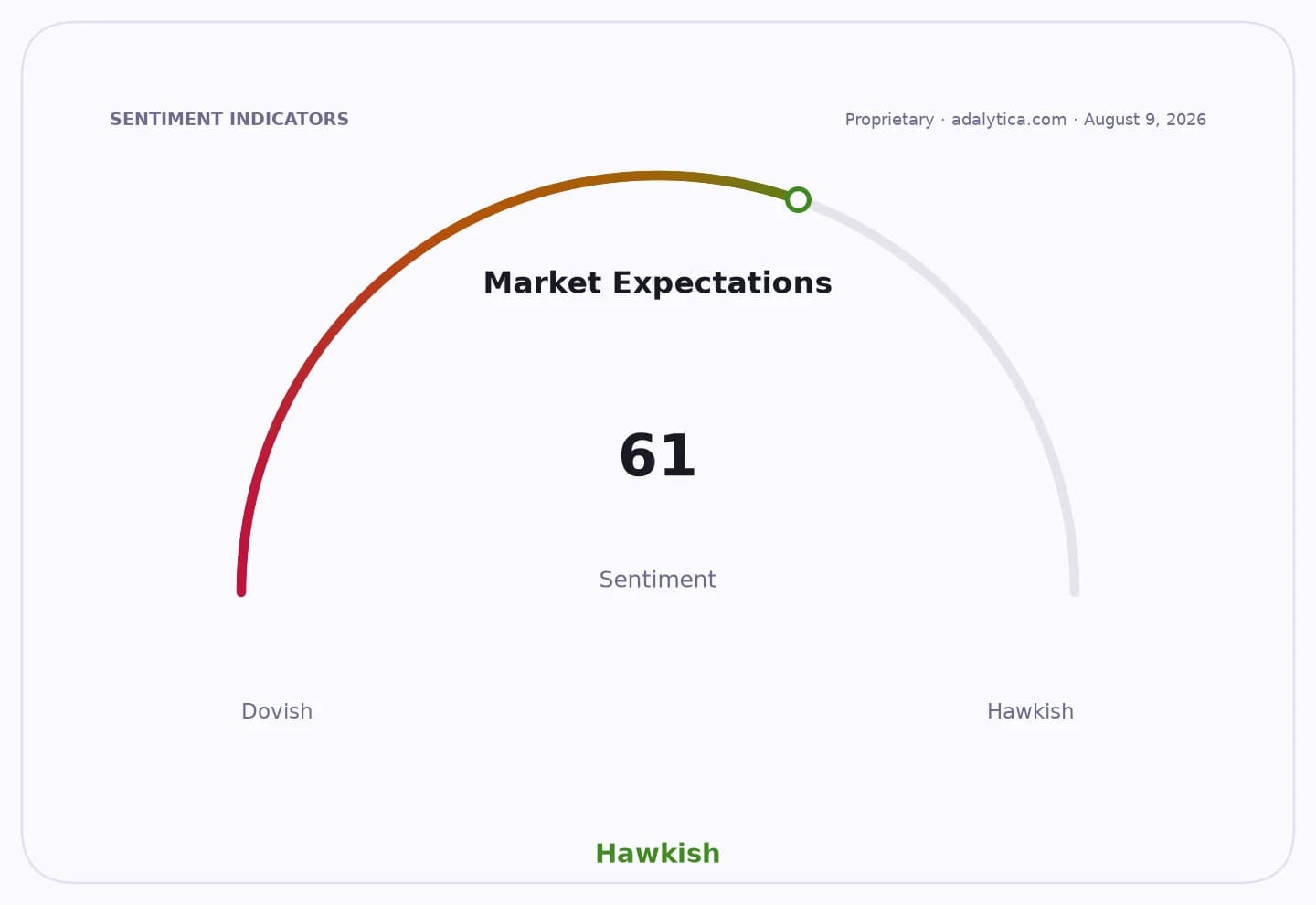
Sentiment IndicatorsⓘProprietary · adalytica.com · August 9, 2026
This is a snapshot — live sentiment, awareness and momentum for 130+ markets update continuously in the dashboard.Open AlphaPulse
The Bank of Tanzania’s move comes as global bond markets remain highly sensitive to inflation and policy expectations. In the U.S., the 2-year Treasury yield has been hovering around 4.2% to 4.3% while the 10-year sits near 4.6% to 4.7%, leaving the curve modestly positive after years of inversion. That matters for Tanzania because it underscores how central banks and debt markets everywhere are trying to re-anchor expectations after the inflation shock. Investors in frontier markets tend to reward exactly this kind of institutional improvement.
A published yield curve can also help the government manage its funding more efficiently. When issuers and buyers have a cleaner read on term premiums, the state can lengthen maturities with more confidence, while banks and pension funds get better tools to manage duration risk. Over time, that can support a deeper domestic investor base and reduce reliance on short-term funding.
There is also a currency angle. Tanzania’s shilling has been relatively steady around 2,634 per dollar, with technical indicators showing the currency well above both its 50-day and 200-day moving averages. That does not tell you everything about fundamentals, but it does suggest the market is not pricing a disorderly move. A more transparent local rate structure can help preserve confidence in the currency by making domestic assets easier to evaluate and compare.
The broader takeaway for investors is that this is the kind of market plumbing that can compound over years, not days. Countries that build reliable benchmarks, improve pricing and deepen local debt markets often end up with lower financing costs and more investable capital markets. That does not make Tanzanian assets risk-free, of course: inflation, fiscal discipline and foreign flows still matter. But it does make the market easier to trust, and trust is what turns a small bond market into a real one.
For patient investors watching frontier Africa, the key question is whether this yield curve becomes a one-off announcement or the foundation for a more liquid fixed-income market. If the Bank of Tanzania keeps building on it, this could be one of those quiet policy changes that pays off for years.
| Entity | Gains | Losses |
|---|---|---|
| Bank of Tanzania | ▲Better market credibility | ▼Less opaque pricing power |
| Government of Tanzania | ▲Cheaper term funding | ▼Short-term borrowing flexibility |
| Local banks and pension funds | ▲Clearer benchmarks | ▼Less room for manual pricing |
| Bond investors | ▲Better price discovery | ▼Fewer yield distortions |