The Canadian dollar is stuck near 1.41 per U.S. dollar even as oil prices climb, with fresh tariff threats blunting the usual support from higher crude and leaving investors focused on trade risk rather than commodities.
Tariff Fears Offset Oil Tailwind for Loonie

That matters because Canada’s currency typically tracks oil and broader risk appetite. West Texas Intermediate is around $78.15 a barrel on the latest forecast, up sharply from $72.45 earlier in the week, but the loonie is barely budging, a sign that tariff fears are overpowering the currency’s traditional energy tailwind.
Sentiment IndicatorsⓘProprietary · adalytica.com · July 22, 2026
This is a snapshot — live sentiment, awareness and momentum for 130+ markets update continuously in the dashboard.Open AlphaPulse

FXC, the Invesco CurrencyShares Canadian Dollar Trust, was last at 69.23, below its 50-day moving average of 69.92 and under its 200-day average of 70.51. The ETF’s relative strength index at 57.1 suggests momentum is neither stretched nor oversold, reinforcing the view that the market is waiting for a clearer catalyst rather than chasing the currency either way.
The latest US tariff push is broadening the pressure on trade-linked currencies. Washington is preparing levies on products from about 60 countries, with rates that could reach 50%, while the European Commission is trying to limit the damage by making sure duties on EU goods do not exceed the 15% cap in the July 2025 trade deal.
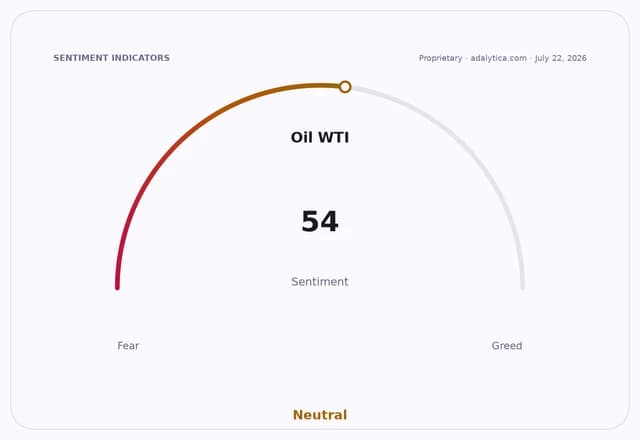
For Canada, the problem is not just direct exposure but the spillover from a more defensive global backdrop. Adalytica’s US dollar trade signals show neutral sentiment, but awareness has picked up, while oil trade awareness remains elevated, underscoring how investors are watching both the currency and commodity moves closely without committing to a strong directional view.
The split between crude and the loonie leaves the currency vulnerable to whichever force dominates next: a rebound in tariff tensions and risk aversion, or a firmer oil rally that restores the usual correlation. Traders will be watching whether the tariff headlines fade or intensify and whether Canadian data or central-bank expectations can give the currency a clearer lead.
| Entity | Gains | Losses |
|---|---|---|
| US dollar | ▲Safe-haven demand | ▼Exporters with weaker foreign demand |
| Canadian dollar | ▲Higher oil prices | ▼Tariff risk and risk aversion |
| Energy producers | ▲Better crude pricing | ▼Currency gains that would dilute local competitiveness |
| Import-dependent businesses | ▲Stable FX costs | ▼Higher import costs if tariffs hit trade flows |




